Roof Systems
Modified Bitumen Roofing in Nampa, ID
SBS and APP modified bitumen roofing in Nampa, ID, with layered sheet inspection, seam and flashing records, and winter-ready details documented at closeout.
Modified Bitumen Roofing
Granule loss along a lap line is the first thing to check on a modified bitumen roof, because the granules are what shield the asphalt from sunlight. When a cap sheet shows bare black patches in the wheel path of foot traffic, or in a band below a rooftop unit that sheds water, the asphalt is exposed and aging faster than the rest of the roof. That observation, with a photograph and a roof section number, starts a modified bitumen scope for a Nampa, ID building.
Modified bitumen, often called mod bit, is asphalt blended with a polymer, laid in reinforced sheets of two or more plies. The polymer choice, SBS rubber or APP plastic, changes how the sheet behaves in the cold and in the heat, and the scope names which one is on the roof or going on it.

SBS and APP Sheets
SBS modified sheets are rubberized and stay flexible when it is cold. They are usually set in hot asphalt, cold adhesive or a self-adhered base, and the laps are lapped and sealed with heat or adhesive. APP modified sheets are plastic-modified, resist heat well, and are typically heat-welded at the laps with a torch or hot-air equipment.
Winter design temperature here is 10 degrees Fahrenheit, while valley summers run dry and warm, so a roof here sees cold cracking stress in one season and hot-weather softening in another. SBS is often chosen for its low-temperature flexibility, and APP for its heat tolerance. Compared with a rubber sheet such as EPDM, both carry more mass and more plies. Neither choice is automatic, and the scope states why one was chosen for the building.
Ply Layout and Cap Sheet
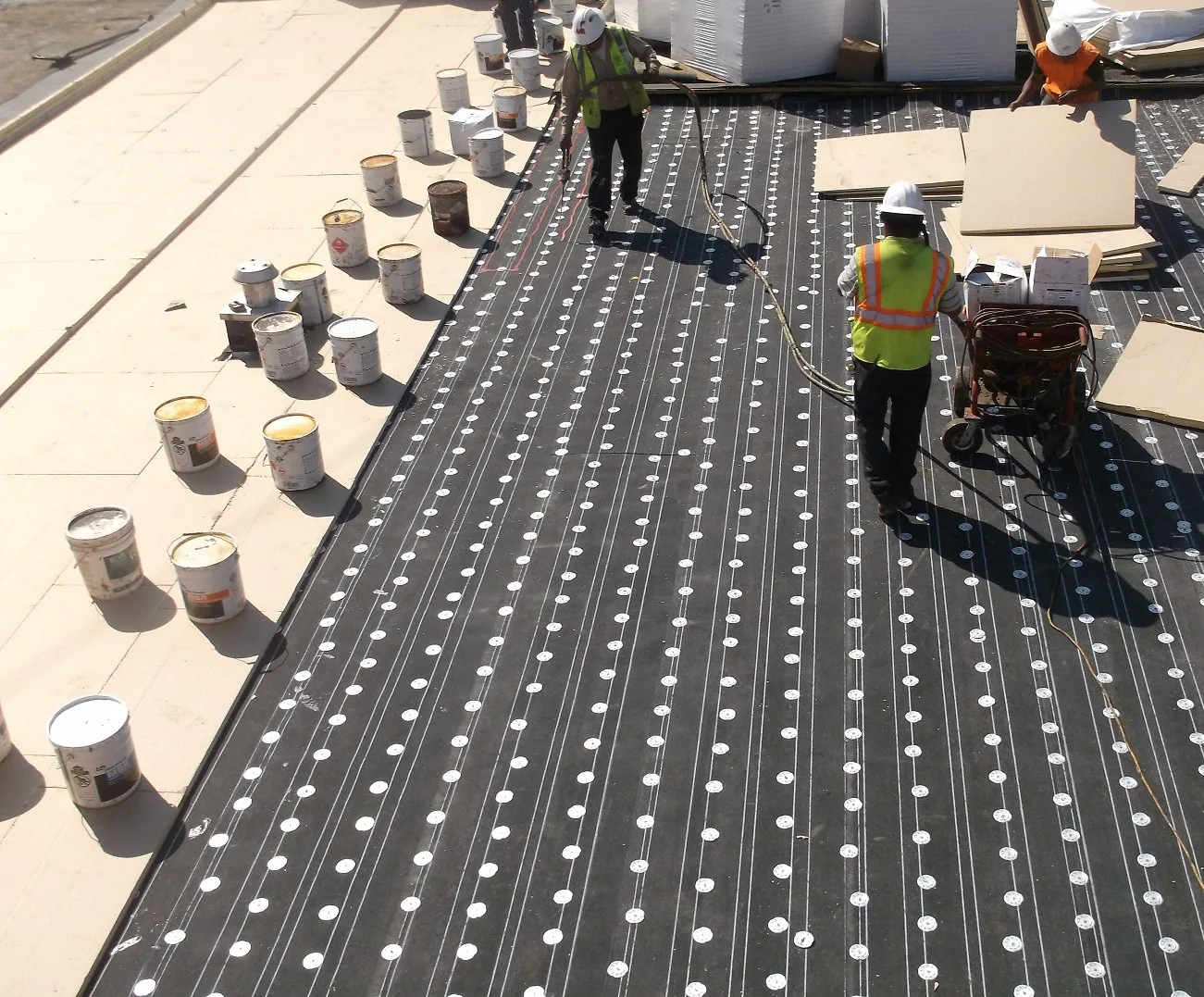
A typical modified bitumen assembly has a base ply fastened or adhered to insulation or a cover board, and a cap sheet over it. The cap carries the granules and the weather exposure, and the base ply adds redundancy if the cap is punctured. Laps in the two layers are staggered so no seam sits directly on top of another.
We record the number of plies, the lap width, and the method of attachment for each roof section. A cover board over the insulation protects the base ply from board edges and gives the adhesive a stable surface. Where an old built-up roof is being converted, the plies are counted from core samples taken during inspection, not assumed from the building's age.
Heat Application and Fire Controls
Torch-applied sheets use an open flame and demand written controls: fire watches, extinguishers within reach, a cooling period after work ends, and a clear understanding with the building owner about combustible substrates. Some commercial owners choose cold-applied or self-adhered systems instead, which avoid the open flame and are available in the same SBS formulations.
On an occupied building, the choice also affects odors and fumes near air intakes. We list the intake locations in the pre-job record and place temporary covers over them. Any hot work is logged by time and location, with the fire watch signed off at the end of each day. The log is part of the closeout file.
Snowmelt and Freeze-Thaw
Water entering a lap and freezing is how a small defect turns into a split. Over three quarters of the valley's annual precipitation falls between November and May, so most seam defects meet freezing weather within a season of opening. Local snow loading is set at 20 pounds per square foot on the ground and 25 pounds as the roof minimum, and that frames any snow that stays on a low area long enough to form ice.
We inspect laps at drains, scuppers and along the base of walls where meltwater concentrates. A snow and ice roof damage repair record notes whether the sheet has split, whether the split follows a lap, and whether insulation below has been wetted. Cold-weather repairs use adhesives rated for low temperatures, and they are re-checked once the roof warms.
Industrial and Commercial Decks
On the east side of Nampa, commercial activity at the Gateway District and along Garrity sits beside light and heavy industry. A multi-ply roof is a common answer on buildings that see foot traffic from maintenance staff, because the cap sheet tolerates abuse better than a thin single-ply sheet. East Nampa property owners comparing a multi-ply roof with a built-up system weigh the same inspection questions: how many plies, how they were attached, and what lies beneath them.
Where a roof is already a mod bit and is aging, the first question is whether to repair, recoat or replace. A full commercial roof replacement is written only after the moisture readings and core samples show how much of the assembly is worth keeping.
Flashing and Edge Details
Base flashing in mod bit is built from additional sheet strips, stripped into the field plies at walls, curbs and penetrations. The details fail at corners, where a stiff sheet is folded around an edge, and at the top termination, where a gap lets water behind the flashing. We photograph every corner before and after the repair and list the termination method used.
Edge metal is attached after the cap sheet is in place and sealed with a flashing strip. Nampa's 115 mph ultimate wind speed sets the pull-out resistance at the edge, and the fastener spacing and cleat design are listed in the scope. A loose edge is the usual way a wind event starts to peel a roof, so it gets its own inspection line.
Closeout File
The closeout file lists the sheet type and polymer, the number of plies, the attachment method, the lap widths, the hot-work log where it applies, and photographs of every flashing before it was covered. It also holds any scope revision made after tear-off, such as wet insulation found beneath a cap sheet, with the boundary of the wet area drawn on the roof plan. The follow-up date is set for the first thaw after installation, when laps and drains show how the roof handles a full winter cycle.
That sequence gives the next reader an exact starting point. A repair five years later can be matched to the original ply layout, and a granule loss pattern can be compared with the photographs taken on the closeout date.
Questions
How can I tell if granule loss has become a problem?
Bare asphalt that covers a continuous band or the whole width of a lap line is the sign. We photograph the area, measure its length, and note whether the exposed sheet has begun to craze or crack.
Is torch application necessary for modified bitumen?
No. Self-adhered and cold-applied systems avoid open flame. The scope names the method, the hot-work controls where a torch is used, and the fire watch schedule.
Can a mod bit roof be recoated?
Often yes, if the surface is sound and the insulation is dry. A moisture survey and core samples decide it. Coating a roof with wet insulation only traps the water.
Why are laps staggered between plies?
A single path from the surface to the deck would form wherever two seams aligned. Staggering the laps means water that gets past one seam meets a continuous sheet below it.
What does winter repair look like on this system?
Cold-rated adhesives and patches are used, the surface is dried, and the repair is re-checked when the weather warms. A permanent fix may wait for the weather window, with the temporary work logged.