Commercial Roofing Services
Commercial Roof Inspection in Nampa, ID
Hands-on commercial roof inspections in Nampa, ID, with numbered roof sections, a photo sequence, condition ratings, and written repair priorities.
Commercial Roof Inspection
Section numbers come before findings. An inspection that cannot say which roof section a crack, a blister, or a clogged drain belongs to leaves the owner with a list that cannot be priced, scheduled, or compared next year. So the first task on any roof is to divide it: each area at a different height, each change of deck or membrane, each separate drainage zone gets a number on a plan, and every later observation uses that number.
For a commercial owner in Nampa, ID, the result of a hands-on inspection is a written record of the roof as it stands on the day of the walk, with photographs, measured conditions, and a short list of actions ranked by urgency. It is the document a lender, an insurer, or a new property manager can read without standing on the roof.
Walk Sequence
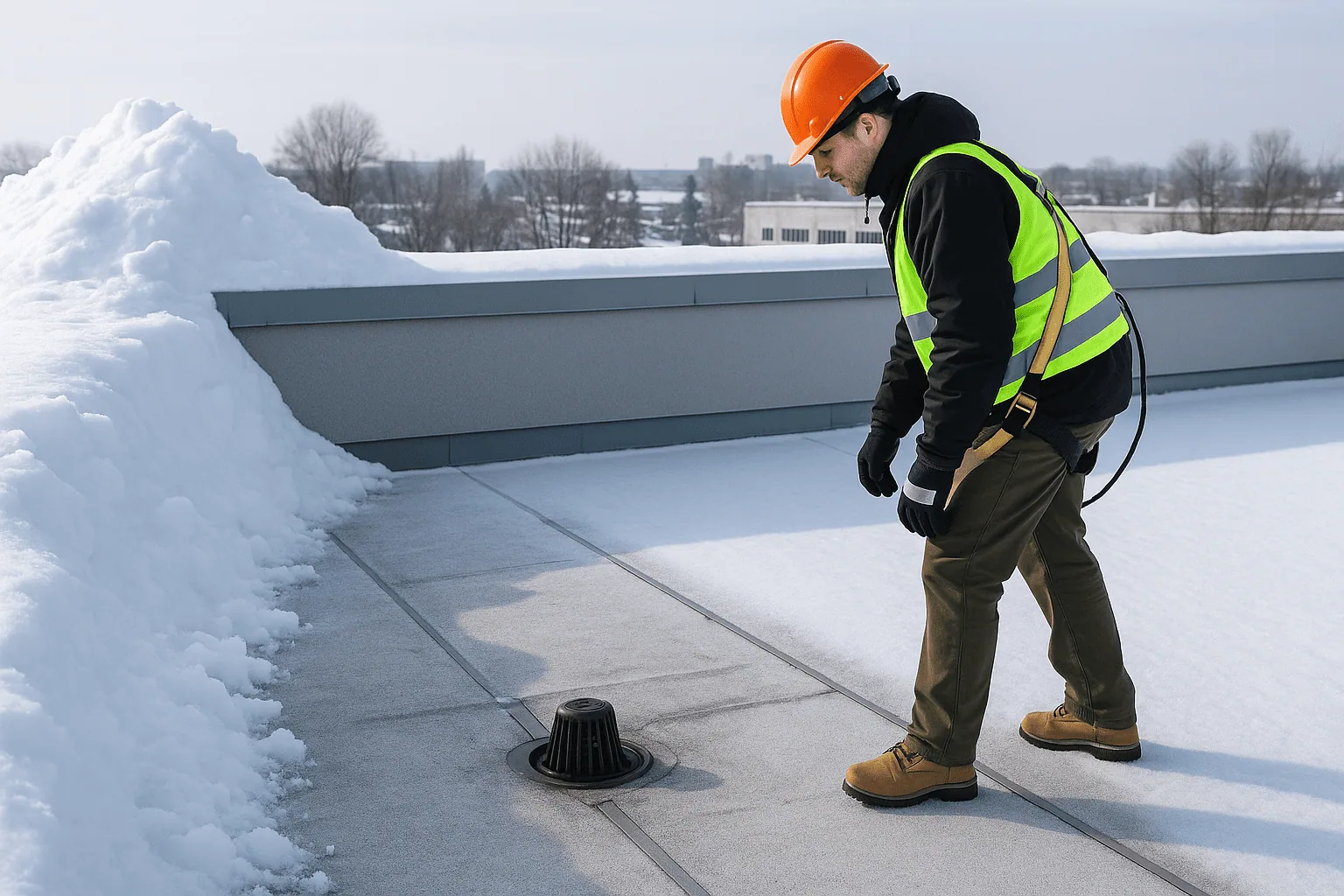
The walk follows the same order on every roof so nothing is skipped: perimeter and edges, field of the membrane, seams, drains and scuppers, penetrations and curbs, rooftop equipment, walls and parapets, and any skylights. At each stop the inspector records the condition, photographs it from a repeatable position, and notes whether the item needs a test before a decision. Interior stains and any prior leak reports are checked against the roof above, since the location of the stain often leads to the roof defect.
The inspector also records what could not be seen. A section under snow, an area blocked by equipment, or a roof that cannot be safely reached from a ladder goes into the file as unverified, with the reason. That line tells the reader exactly where the findings stop.
Drainage gets particular attention because standing water is the condition most often missed from an edge. The inspector looks at each drain bowl and scupper, checks debris, measures any ponded depth after rain, and photographs the low spots with a level or tape for scale. Along Ustick Road, the city plan describes a transition from agricultural land to industrial and regional commercial use. On any low-slope roof, drainage paths can run from far corners to a single outlet, so the walk follows the water to its exit rather than stopping at the first drain.
Condition Ratings
Each roof section receives a condition rating based on what the walk found: the membrane surface, the state of seams and flashing, the drainage path, the evidence of moisture, and the signs of past repair. The rating scale is plain, from sound through serviceable to failing, and the report states the observations behind every rating so the owner can see why one section ranked above another. Ratings help a portfolio owner decide where repair money should go first and which section belongs in a longer capital plan.
Ratings are paired with a repair priority: immediate, within the next season, or monitor. A cracked pipe boot over a mechanical room is immediate. A faded but sound surface is monitor. The pairing keeps small items from crowding out the one that will flood a stockroom, and it feeds directly into a capital plan when the owner wants one.
Photo Record
The photographs are the evidence. We take a wide frame of each roof section, a medium frame of each defect with its location marked, and a close frame showing the detail. File names tie to the section numbers on the plan. A year later the same positions can be reshot, and a side-by-side comparison shows whether a ponded area grew, whether a seam opened further, or whether a patch held.
For roofs that are large, steep, or fragile, a drone flight supplements the walk with overlapping images, which helps where the surface cannot bear foot traffic. The walk still provides the hands-on checks, such as probing a seam, pressing a blister, or testing a flashing, since an image cannot tell whether a lap is bonded.
Moisture and Test Results
Visual observation cannot show wet insulation, so the inspection includes moisture screening wherever the surface or the interior stains suggest it. A handheld meter pass across suspect areas, or an infrared moisture survey for a larger roof, produces a map of wet and dry zones. Where the map shows wet readings, a core cut confirms the finding and shows the insulation type and thickness, and the opening is resealed the same day.
Results are recorded as test results with the method, the location, and the date. The report separates confirmed conditions from suspected ones, so the owner can see which findings rest on a measurement and which still need one.
Cool-Season Readiness
The valley's wet season runs November through May and brings the bulk of its yearly precipitation, with a 20 psf ground snow load in the city criteria behind it. An inspection before that season focuses on what winter tests: drains and scuppers that must pass meltwater, edges and flashing that ice will lift, and any ponding that will freeze and thaw repeatedly. A spring inspection checks the same items for damage the winter caused.
In the south quadrant, where the plan places the historic downtown and the university district, an owner with several buildings gets a consistent comparison from one inspection that rates every section on the same scale. A school roof is best walked while classrooms are empty, since access over occupied rooms is simplest during a break in the academic calendar.
Report Delivery
The report follows a fixed order: a roof plan with section numbers, the condition rating of each section, the photograph set, the test results, the ranked repair list, and the open questions. Open questions name what the inspection could not settle and what test would settle it. A report that ends in a clear next step is useful to a facility manager who has to budget a repair, and to a buyer who has to price a purchase.
We deliver the report as a document the owner can forward, and we offer to review it by phone so the ranking is understood. Owners who want ongoing visits can fold the inspection into preventive maintenance, and buyers can use the same format for a due diligence survey before closing on a building in South Nampa or elsewhere.
Questions
What is in the inspection report?
A numbered roof plan, a condition rating for every section, the photograph set, any test results, a ranked repair list, and a short list of open questions. The file reads without a roof walk.
Why is a section marked unverified?
Snow, equipment, or unsafe access kept the inspector from checking it. The report names the reason so the owner knows where the findings stop and what follow-up visit would close the gap.
Is a visual inspection enough to find wet insulation?
Seldom. Wet insulation hides under dry-looking membrane, so a meter pass or infrared survey follows, and a core cut confirms the result. The report lists the test method beside each reading.
Should an inspection happen before winter or after it?
Both serve a purpose. The pre-winter walk checks drains, edges, and flashing before snow arrives, and the spring walk records what the freeze and thaw did. Many buildings need only one, chosen by the roof age and the repair history.
Can the report support a lender or insurer request?
Yes, when the request asks for roof condition. The dated photographs and ratings give a lender or insurer a record, and the open questions state what remains unproven.