Property Types We Roof
Warehouse Roofing in Nampa, ID
Warehouse roof replacement, repair and maintenance in Nampa, ID, with section-by-section condition records, drainage review and a written closeout file.
Warehouse Roofing
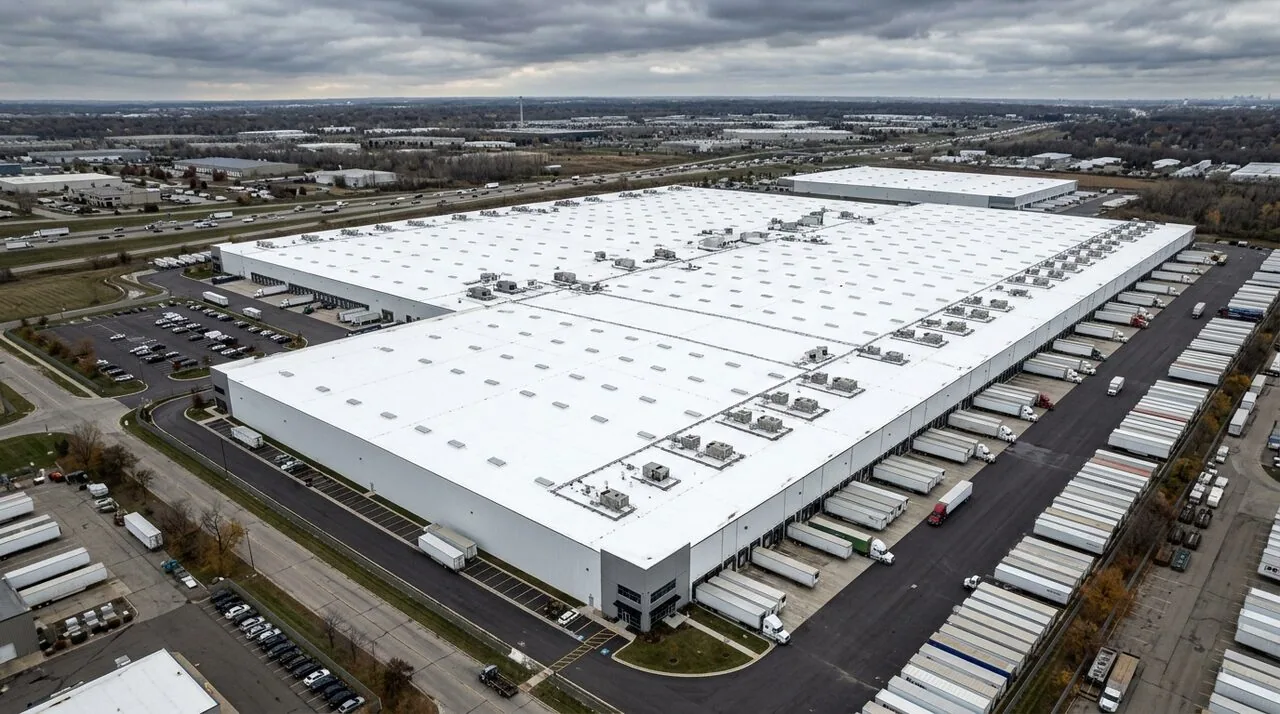
A roof plan with every dock door, skylight and exhaust fan marked on it is the first document a warehouse scope needs, because those items decide where a leak can start. A warehouse deck is wide and mostly open, and its roof is interrupted by dock-side details, skylights and fans that do more of the damage than the field of the membrane does. For a building in Nampa, ID, the work begins by numbering each roof section, walking it with the plan in hand, and marking what is there.
The condition notes that come out of that walk give the owner a defect count by section, a list of what has to be tested, and a repair limit that tells when patching stops making sense.
Industrial Tracts Near I-84
Large industrial tracts and regional commercial properties fill the north quadrant, the stretch of Nampa that runs from I-84 toward the Boise River. The city's North Nampa Industrial Area program aims at private investment and employment, and the same program lists strategic infrastructure work as an objective. For roof owners, that points to continuing demand for warehouse space in the North Nampa Industrial Area, and to roofs that will be maintained, recovered or replaced on a business schedule.
East of downtown, the plan describes industrial activity south of I-84 and north of the railroad. Each area has its own access, drainage and neighbors, and the scope reflects them.
The same pattern runs through nearby cities. Industrial employment in Meridian includes warehouses, storage and flex buildings, and Kuna has set aside an East Kuna Industrial Overlay for larger industrial development. A warehouse owner with buildings in more than one of these places benefits from one roof record format, so a defect count in Nampa can be compared with a defect count in Meridian on the same terms.
Common Roof Assemblies
Warehouse roofs are typically low-slope assemblies over steel or concrete decks: a single-ply membrane such as TPO over insulation, a multi-ply system, or a metal panel roof. We identify the assembly by cutting a core where the owner permits, or by reading the drawings. The assembly sets what repair methods are compatible.
The deck type matters for attachment and for fire. A steel deck can take screws through insulation, and a concrete deck needs adhesive or ballast. Wind uplift is calculated from the city's 115 mph ultimate wind speed and the building height, and the edge and corner zones receive the tightest fastening.
Dock, Skylight and Equipment Details
Dock-side parapets, loading-door canopies, skylights and rooftop fans create the interruptions that leak. Skylight curbs show frame gaps, cracked domes and failed sealant. Roof hatches and smoke vents have gaskets that harden. Exhaust fans have curbs with flashing that has pulled away.
Each detail gets a number on the plan and a photograph. A skylight and penetration flashing repair is priced by the count, and the same plan shows which units need new curbs. Equipment added over time may rest on sleepers that block drainage, and those sleepers are logged with a note about their effect on water flow.
Drainage Across Wide Decks
A wide deck moves a lot of water to a few drains. Interior drains clog with debris, and scuppers at the parapet can be blocked by dirt or ice. Ponding forms where the deck deflects or the slope was never enough. We measure each pond after rain and record whether a drain, a scupper or tapered insulation would clear it.
With a 20 pound ground snow basis, a 25 pound roof load minimum, and most of the valley's precipitation arriving between November and May, winter drainage is a safety question as well as a leak question. Snow and meltwater that stay on a roof add load, which is why the drains matter. Roof drains and scuppers are cleaned and tested before the cool season.
Working Over Active Operations
Warehouses run on schedules: shipping windows, inventory counts, seasonal peaks. Roof work over racking and product needs protection below, a plan for noise, and clear coordination about when forklifts and trucks use the dock side. We write those controls into the pre-job record and check them each morning.
If the building has temperature-sensitive stock, the scope states how openings will be closed at day's end and how weather will be watched. Occupied building reroofing is planned in sections so that no more roof is open than can be closed the same day.
The same sequencing applies to a distribution center, where throughput rarely stops, and to a manufacturing plant, where process equipment sits under the roof. In each, the first question is what must stay dry and what can tolerate a short opening.
Repair, Recover or Replace
The decision rests on moisture, attachment and the age of the assembly. An infrared survey and core samples show how much insulation is wet. If most of the roof is dry and attached, repair and maintenance extend its life. If wet insulation is widespread, a commercial roof replacement is the likely answer.
A recover is an option when the roof beneath is dry and flat enough to take a cover board. The file shows the numbers behind the choice: wet area, repair cost to date and the remaining service estimate, so the decision matches the capital plan.
Cost drivers are specific on a warehouse. Roof area sets the material volume, the number of curbs and skylights sets the detail labor, the deck type sets the attachment method, and tear-off depth sets disposal and schedule. Access also counts: a roof reached by a fixed ladder takes longer to load than one with a crane lane beside the dock, and the scope states how material will get up and debris will come down.
Closeout File
At turnover the owner receives a numbered roof plan, before and after photographs, test results, product sheets and the date of the next walk, all in one file. For owners with several buildings, it fits into a multi-site roof program so each building is compared on the same terms.
The first follow-up walk is set for after the first wet season, when drains, seams and details show how the roof handled meltwater. Any change from the original photographs is logged, and the next maintenance date is set from what the walk finds.
Because the file is dated and numbered, a buyer, lender or insurer can read it without a site visit.
One more entry belongs in the file: the date the roof was last walked after rain, with the drains that ran slowly noted by number. Those entries form the history that a later repair or a renewal decision rests on.
Questions
Why number every skylight and fan on the plan?
Because most warehouse leaks start at a detail, not in the field. The number links the photograph, the defect and the repair, so the file stays traceable.
How does a wide deck change the drainage plan?
A wide deck concentrates water at a few drains, so each drain is checked for clogging and the surrounding area is measured for ponding. Tapered insulation corrects slope where drains cannot.
Can roof work continue while racking is loaded?
Yes, with protection below and sectioned work above. The pre-job record names the protected zones and the daily closing procedure.
How is wet insulation found under a good-looking membrane?
An infrared scan at dusk shows warm, wet areas, and core samples confirm them. The wet boundary is drawn on the plan.
What does the closeout file give a warehouse owner?
A roof plan with numbered sections, photographs from before and after, test results and a follow-up date.