Roof Systems
PVC Roofing in Nampa, ID
PVC single-ply roofing in Nampa, ID for food plants, restaurants and flat commercial roofs, with welded seams, test records and a written closeout file.
PVC Roofing
Grease on a membrane is the field observation that most often settles the choice of PVC. A roof that sits below a kitchen exhaust fan, a rendering line or a process vent collects airborne fats and oils, and those residues attack some single-ply sheets faster than the weather does. PVC, a polyvinyl chloride sheet with hot-air welded seams, was developed for exactly that exposure, and it is the system we look at first when the condition note on a roof mentions staining around an exhaust stack.
This scope for Nampa, ID starts with that observation and then walks through the documents an owner needs: the exposure record, the seam test results, and the flashing photographs. Each of those is a piece of paper the owner can hand to a lender, an insurer or the next facility manager.
Chemical and Grease Exposure
PVC membranes carry plasticizers that make the sheet flexible, and a reinforced core, usually polyester or glass scrim, that gives it strength. The surface is formulated to shed many fats, oils and chemicals that would soften other thermoplastics. We do not treat that as a blanket promise. An exposure record is made before specifying: which units discharge onto the roof, what they exhaust, how far the plume travels, and whether the discharge is ever washed down.
The City of Nampa lists food processing among its target sectors and names employers such as Amalgamated Sugar and Sorrento-Lactalis. A building in that kind of operation may have vents, stacks and fans clustered on a single roof section, and the exposure record for that section is a separate document from the one for a plain office bay.
Weld Quality and Seam Record
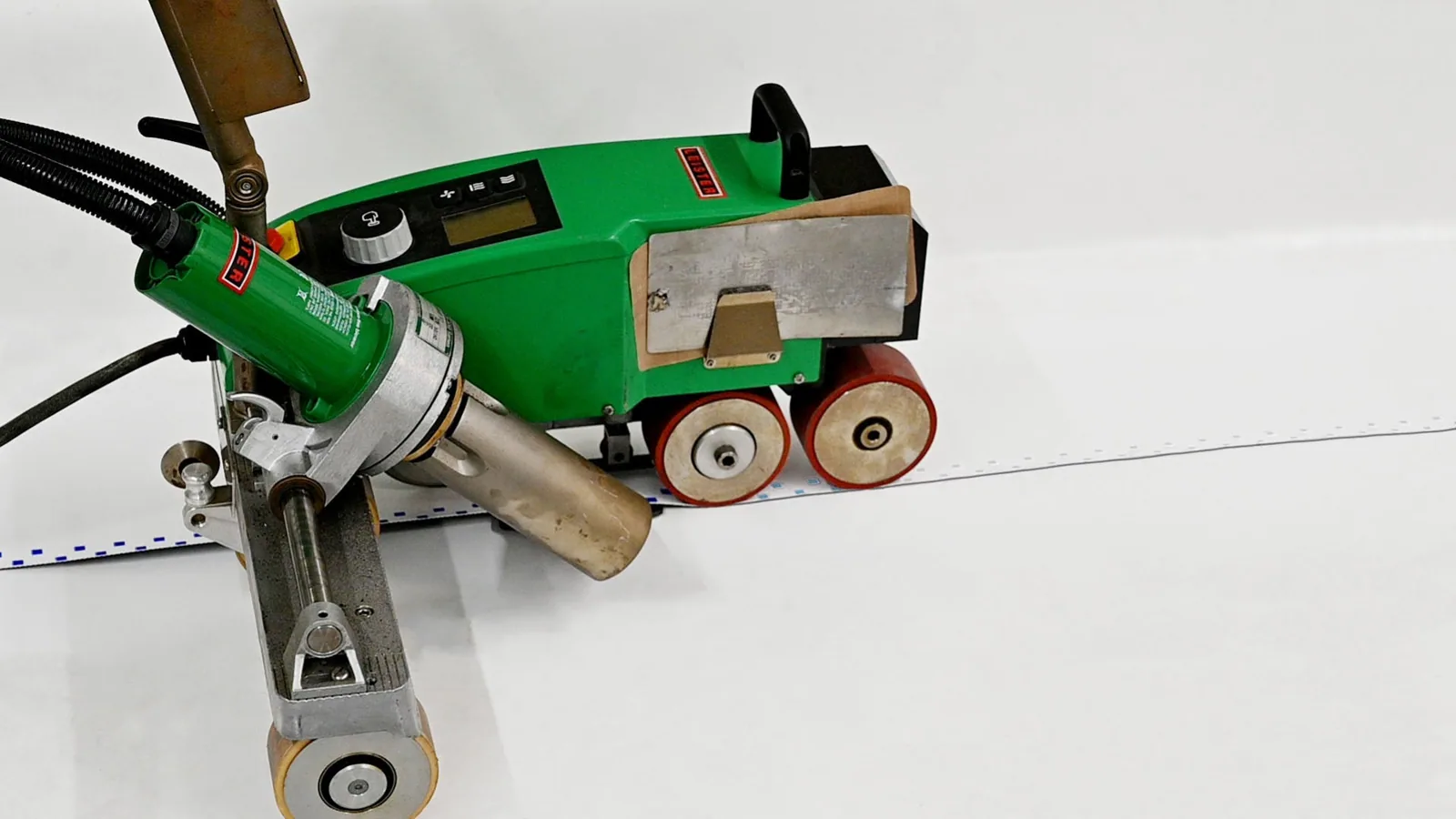
PVC welds at a lower temperature than TPO and produces a continuous fused seam when the surface is clean. Dust, pollen and the film left by exhaust all spoil a weld, so the lap area is wiped before the welder passes. Each seam is probed after it cools, and a test cut is taken at the start of each day to confirm settings. The cut sample is pulled by hand and checked for a break through the sheet rather than a peel at the weld.
The seam record lists the roof section, the welder settings, the weather at the time, and the number of seams re-welded. If a seam fails a second probe, the section is flagged and the sheet is reviewed, not simply patched. That log is part of the closeout file.
Assembly and Fire Rating
PVC resists burning better than most single-ply sheets, which helps meet fire-classification requirements on assemblies with foam insulation. With the 2018 building code and the 2018 energy code both on the city's adopted list, insulation thickness, cover board and membrane must satisfy the fire and the energy provisions together. We list each layer and its purpose in the scope, so a plan reviewer can follow the build-up without a phone call.
Fully adhered PVC over a cover board is common where the roof has traffic or where wind uplift at the edges is a concern. Mechanically attached systems use the same plates and fasteners as other single-ply roofs, with the fastener row hidden under the weld.
Cold Season Behavior
PVC sheet stiffens in cold weather, so winter handling is a scheduling question as well as a material one. Winter inversions can leave valley mornings colder than the Boise airport reports. When a repair or seam weld must happen in that season, the sheet is stored warm until it is rolled out, and welds are made only on dry, clean surfaces.
Winter design in Nampa assumes a low of 10 degrees Fahrenheit and frost to a depth of 24 inches. The first number guides expectations for membrane movement and the second guides foundation and equipment-pad work, which sometimes turns up in rooftop equipment scopes. We write the weather window for the work in the same document that lists the product.
Where PVC Fits in the Treasure Valley
Between the interstate and the Boise River, the city places industrial tracts and regional commercial buildings in its north quadrant. The plan names food processing among the activity there, and a building in that line of work may have a fume, a vent or a drain line as part of daily operations. In Meridian, where industrial employment includes warehouses, light manufacturing and flex space, the same question of what lands on the roof applies.
On the east side, the Gateway District mixes commercial activity with light and heavy industrial uses, so PVC and TPO can compete for the same roof section. When the exposure record is clean, a lower-cost TPO membrane may be sufficient. When it is not, the PVC premium is justified in writing.
Repair and Retrofit Limits
PVC repairs use heat-weldable patches. An older PVC sheet may have lost plasticizer over the years and turned brittle, which makes welding difficult and leaves tears at stress points. A brittle sheet found during a commercial roof inspection is documented with photographs and a hand-flex test, and the repair limit is set where welds no longer hold. Beyond that limit the question is replacement or a recover, not another patch.
Coating over a failing PVC roof is rarely a good answer. Related systems, such as KEE membranes, add a ketone ethylene ester modifier that slows plasticizer loss and can be a better fit where the roof is hot or heavily exposed.
Closeout File
The closeout file for a PVC roof holds the exposure record, the weld settings and test cuts, the probe log, photographs of each flashing detail, and a follow-up date. If a vent is later added, the file shows where the exposure changed and what walk pad or splash protection was installed beneath it. Owners managing many buildings can tie these files to a roof asset management record. Where a section was cleaned or replaced earlier, the file also dates that work, so a later reader can tell which sheet is original and which is new, and a seam that fails at the boundary between the two is repaired with the right detail.
Questions
Will grease from a kitchen exhaust damage a PVC roof?
PVC is formulated to resist many fats and oils, which is why it is specified below exhaust fans. The scope still records which units discharge onto the roof, and grease traps or splash pans are added where the plume lands on one spot.
Why is a test cut taken each morning?
The test cut confirms that the welder settings match the day's temperature and humidity. A hand pull on the cut should break the sheet, not the weld. The result goes in the seam record with the time and the weather.
Can PVC be installed in winter?
Yes, within limits. The rolls are stored warm, the surface must be dry and clean, and welds are checked with a probe as they are made. When the weather window closes, the open edges are temporarily sealed and the work resumes later.
How does PVC compare with TPO on a food plant roof?
PVC tolerates fats and oils better, and TPO generally costs less per square. The exposure record decides: where vents discharge onto the membrane, PVC is the stronger choice.
What happens to an old PVC sheet that turned brittle?
A hand-flex test and photographs show how far the loss has gone. If welds no longer fuse, the repair limit is reached, and the scope moves to a recover or replacement.
Related Roofing Work