Industries We Serve
Roofing for Manufacturers in Nampa, ID
Roof repair and replacement for manufacturing companies in Nampa, ID, with rooftop equipment records, production-aware scheduling, and documented repair limits.
Manufacturers
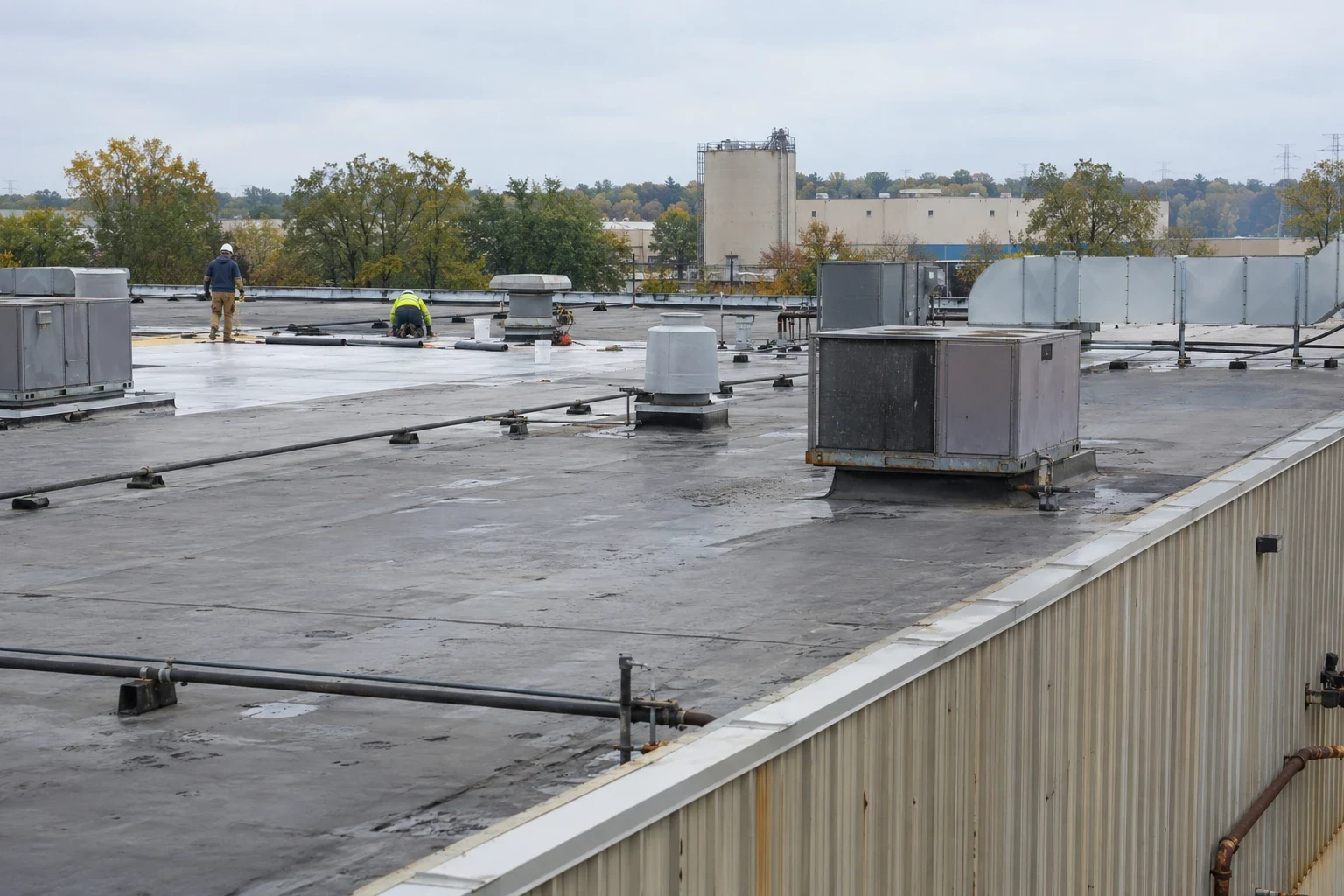
A roof over a production floor carries more than weather. Exhaust fans, make-up air units, process vents, conduit runs, and condensate lines all pass through the membrane, and each one is a place where water can enter or heat can escape. Manufacturers in Nampa, ID ask a different question than a landlord does: not only whether the roof leaks, but whether a leak could reach a line, a panel, or a stored product, and how the plant keeps running while the roof is worked on.
Our record for a manufacturing client therefore lists penetrations and equipment as carefully as it lists membrane condition. Every curb, pipe, and vent gets a number, a photograph, and a note on the flashing around it.
Industrial Context
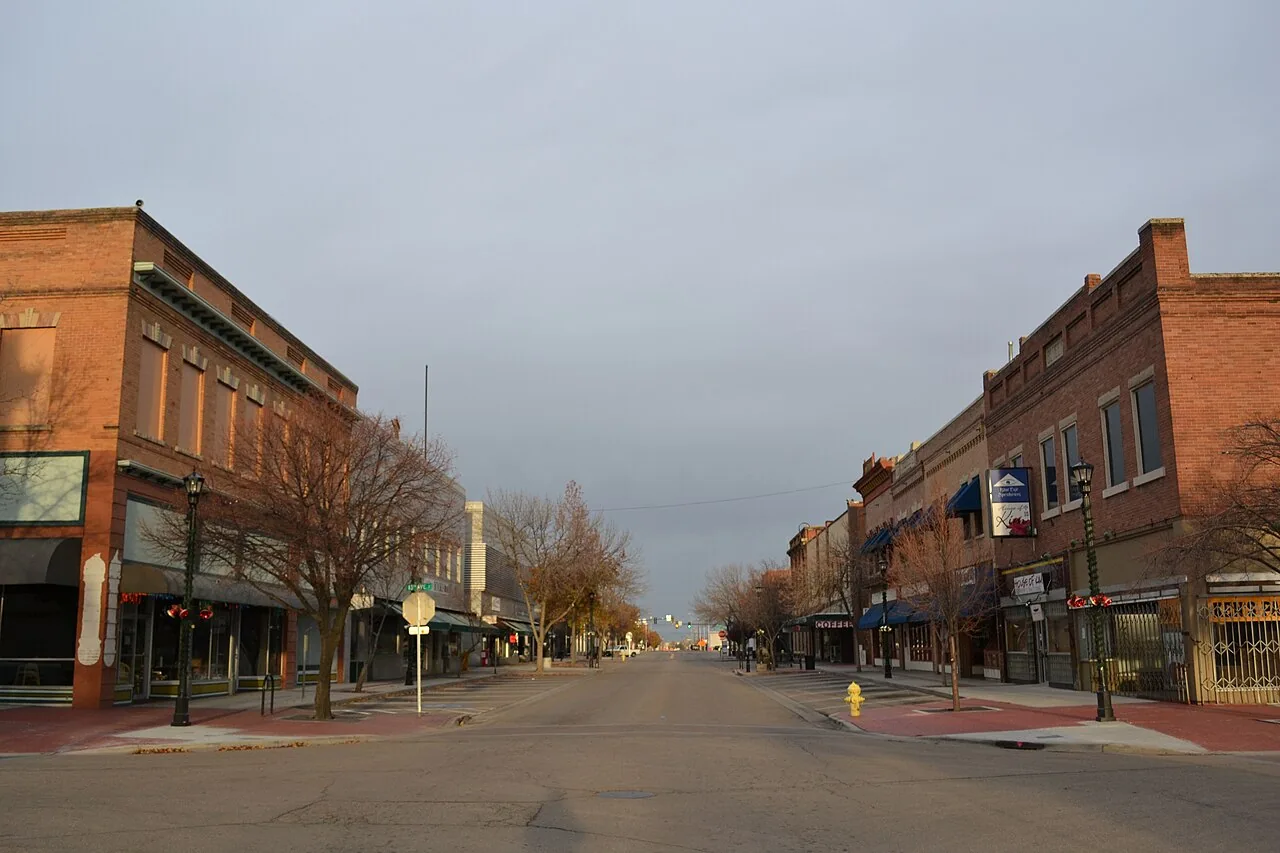
The city names food processing, agribusiness, technology, manufacturing, healthcare, and back-office work as target sectors, and the employers it lists include Woodgrain, Sorrento-Lactalis, Amalgamated Sugar, ON Semiconductor, and Amazon. Large industrial tracts sit near I-84 in the north quadrant, where the North Nampa Industrial Area program is aimed at infrastructure and private investment.
For a plant, this is a market with room to grow and roofs that may change with each expansion. Corridors such as the North Nampa industrial area and the east side's light and heavy industrial areas near the Gateway district hold buildings of many ages and many uses. Our reports describe each roof as found, without assuming a type from the district. A building in the east quadrant and one in the north will each be recorded by what the walk and the cores show.
Process Load on the Roof
Rooftop equipment concentrates weight and traffic on parts of the membrane that were designed as simple field area. A technician servicing a unit walks the same path every month, and a roof without walk pads shows that path as a worn trail. Condensate lines that discharge onto the membrane can stain, soften, or etch the surface depending on what runs through them. Exhaust from a process can deposit residues that attack some membranes more than others.
We log each source: the location, the equipment, the discharge point, and the membrane condition around it. Where a repeating load exists, the repair includes protection, such as walk pads, splash blocks, or a different curb and support detail. Where chemical exposure is suspected, the membrane choice is reviewed, and a PVC system may be considered for its resistance to many fats and oils, a question we settle with the manufacturer's published data for the specific exposure.
Heat, Cold, and the Building Envelope
Local design assumes winter lows near 10 degrees Fahrenheit and 20 psf of ground snow, and the valley's climate runs from a cool wet season into a dry warm one. A plant roof sees both ends: summer heat that softens and ages the surface, and winter conditions where condensation forms on cold decking under a warm production floor. In a heated plant with humid processes, vapor drives upward into the roof assembly, and where the insulation is not protected by a vapor retarder, moisture can collect and reduce the insulation's value.
We look for signs of this on the underside when access allows: stained decking, rusted fasteners, damp insulation at the edges of the roof. A moisture survey separates a leak at the surface from vapor condensing within the assembly, and the two need different fixes. A new membrane over wet insulation will not hold, so the first question in a plant is what the assembly holds, and the answer comes from cores and meter readings, not guesses.
For plants where cooling load matters, a reflective surface is one option, and the choice is made against the existing insulation and the deck condition, since a reflective membrane does not repair an assembly that is already wet.
Production-Aware Scheduling
Shutdowns for a plant are costly, so roofing is arranged to avoid them. A roof is divided into sections and worked one at a time, with temporary dry-in at each day's end. If a particular line is sensitive to vibration or dust, that line's bay is scheduled for a quiet period, and the crew's access route is kept clear of forklift and truck lanes. For dust-sensitive work, the plan covers sealing of roof openings and protection of intake screens.
When a plant works shifts, the schedule shows which hours carry noisy tasks above which areas. The operations manager approves the plan, and any changes to it are logged. Because Nampa receives most of its precipitation from November through May, major sections are scheduled in the dry warm season where the plant's calendar allows, and winter work is held to repairs and dry-in tasks.
Repair Versus Replacement
A plant manager needs a figure for the capital meeting. The repair limit is how we get to it. After the survey, each roof section is classed as repairable, recoverable, or due for replacement, and the reasons are written beside each class: wet insulation, seam condition, drainage, and the number of past patches. A coating restoration may suit a sound membrane that has weathered, while a section with saturated insulation needs the insulation replaced.
The file also lets a manufacturer compare plants. A company with several sites can use a capital plan to schedule roof spending across them, and a plant that shares a campus with a distribution operation can coordinate with the approach described for logistics operators.
Closeout File
At completion the plant receives the numbered roof plan with every penetration, the photographs from each phase, test results, warranty paperwork where one applies, and the follow-up date. The file is the plant's reference when a new line is installed and a new penetration must be cut, because it shows what lies around each opening and which detail should be repeated. The same manufacturing plant roof record supports insurers and lenders who ask for proof of condition, and it gives an adjuster working a claim under insurance restoration a baseline against which new damage can be measured. Plants in neighboring towns such as Caldwell can be filed in the same format.
Questions
How is a roof penetration for a new production line handled?
The location is marked on the plan, the curb or boot is flashed to the membrane type, and the opening is closed the same day. The new penetration is photographed and added to the equipment list.
Can the roof be replaced without stopping production?
Sections are worked in turn, and each is dried in before the shift ends. Lines sensitive to dust or vibration can be scheduled for quiet periods agreed with operations.
What do you check around exhaust and condensate?
The discharge point, the membrane surface near it, any staining or softening, and whether the flashing has opened. If the discharge is wearing the membrane, the repair includes a protection detail.
Which roof systems suit a plant with chemical or grease exposure?
The answer depends on what leaves the exhaust. We compare the manufacturer's published resistance data against the plant's actual exposure before recommending a membrane.
How does the plant see what a repair covered?
Each repair carries a section number, a before and after photograph, and a stated repair limit. The closeout file shows the boundary of the work.
Does the roof record help with insurance renewals?
It supplies dated photographs, condition ratings, and repair history that an underwriter may ask for. What the insurer does with them is the insurer's decision.