Commercial Roofing Services
Rooftop Unit Curbs and Equipment Supports in Nampa, ID
Curb, equipment support, and pipe support work for commercial roofs in Nampa, ID, with load paths, flashing heights, and a before-and-after photograph record.
Rooftop Unit Curbs and Equipment Supports
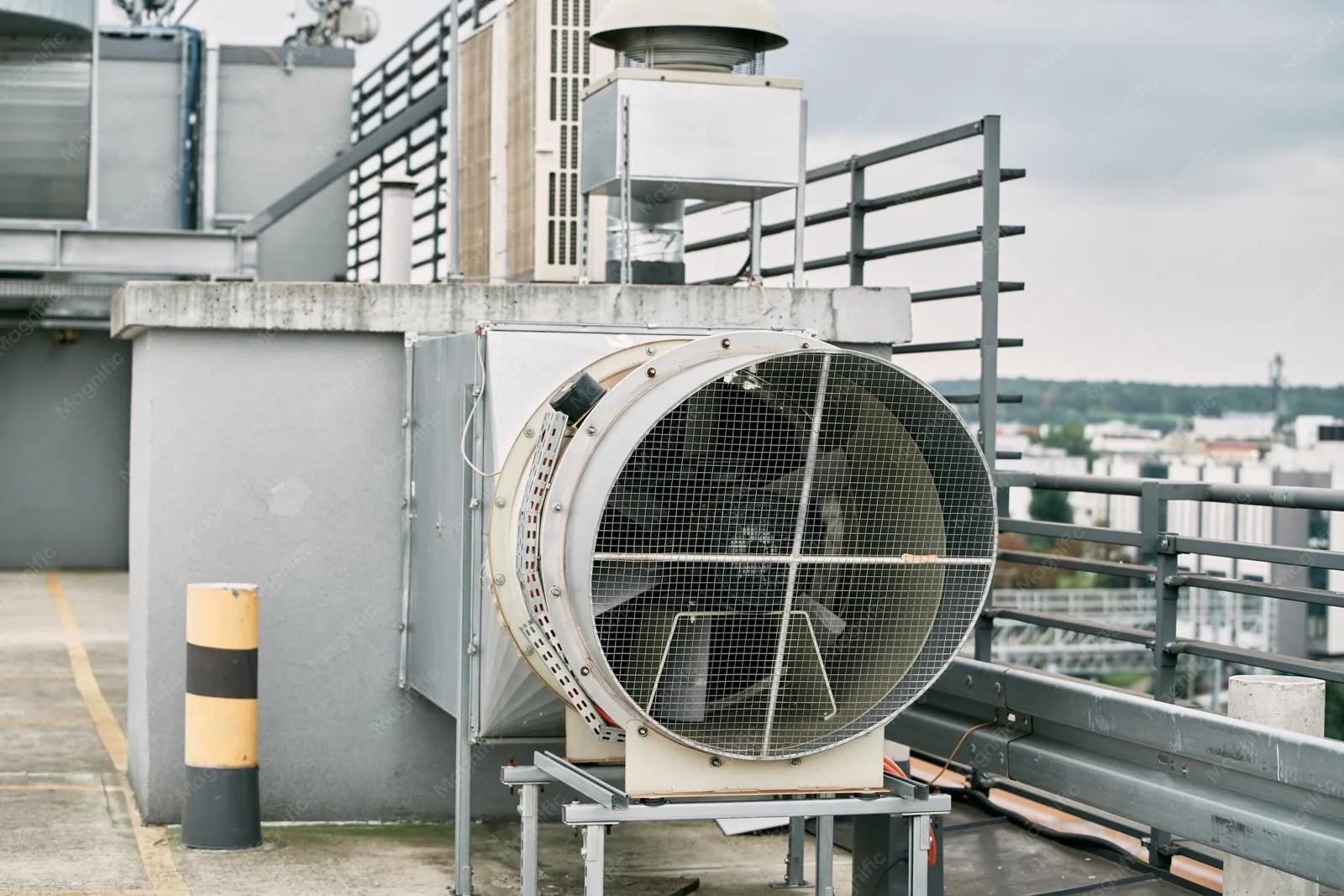
Look at what each unit stands on. A rooftop unit sits on a curb or a rail, the curb sits on the deck or on framing, and the roof membrane is flashed up the curb's sides to close the gap. Each of those three parts has its own failure. The first walk of an equipment area records the curb height, the condition of the flashing, the support under pipes and conduit, and any sign that the unit has shifted. A photograph from the same position at each unit makes later comparison possible.
In Nampa, ID, the equipment on a commercial roof matters twice: once for the weight it puts on the structure and once for the penetrations it makes in the membrane. A unit added after the original design changes how load is distributed, and the city's criteria give the reference numbers: roof design loads of at least 25 pounds per square foot uniform, plus a 20 pound ground snow load. Before anyone replaces a curb, the load path from the unit to the structure is traced and recorded.
Curb Construction and Height
A curb lifts the equipment connection above the roof surface so water running across the roof does not enter the unit or the duct below. The curb height above the finished membrane is a design number, and when a roof is recovered or re-insulated, the new surface rises and the effective height drops. Flashing standards set a minimum height above the membrane, so the curb may need to be extended before the new roof can be flashed correctly.
Curbs are built of wood, steel, or formed metal. A wood curb that stays wet rots at its base. A steel curb corrodes where flashing has let water behind it. The inspection checks the curb's fastening to the deck, its condition at the corners, and the integrity of any gaskets or sealant between curb and unit. Where the curb fails, it is replaced with one of matching dimensions and re-flashed in full, never patched over rot.
Curb Flashing Detail
Water runs against a curb from every side, so its flashing has to be continuous and well finished. On single-ply systems, the membrane wraps up the curb, with corners formed by a prefabricated or field-welded corner patch, and terminates under the unit's counterflashing or at a termination bar with sealant. On built-up and modified bitumen roofs, base flashing plies lap onto the field and run up the curb in staggered layers.
Most curb leaks start at corners, where the membrane is folded, and at the top edge, where the termination meets the unit's skirt. Our repairs rebuild these two locations first. The wider category of penetration flashing overlaps with this work, and the repair method is chosen to match the membrane in place.
Pipe and Conduit Supports
Pipes and conduit that run across a roof need supports that hold them off the membrane without puncturing it. Pads, sleepers, and pedestals spread the load. Pipes resting directly on the membrane abrade it in wind and thermal movement, and a pipe support with a bare metal base can cut through a membrane over time. The scope replaces failed pads, adds protective pads beneath supports, and repositions runs that are lying in water.
Where gas lines, refrigerant lines, and electrical conduit cross a roof, the supports must be spaced to prevent sagging, since a sagging line can pond water on one side and abrade a membrane on the other. Supports that are fastened through the membrane to the deck are flashed individually. Each support is photographed, and its location is recorded on the plan.
Wind and Tie-Downs
Equipment on a roof must resist wind as well as carry its own weight. The city's criteria set a 115 mph ultimate wind speed, and a rooftop unit that is not properly restrained presents a large surface to that wind. Curbs and rails are fastened to the structure, not only to the roof deck, and the fasteners are checked for corrosion and loosening. A unit that rocks under hand pressure at its corner is recorded with a photograph and a note of which fastener is loose.
After a high-wind event, units are checked for displacement. A shifted unit pulls on the curb flashing and may open a seam that appears as a leak days later. The tie-downs on a wind-damaged roof are among the first items inspected, since a loose unit is a safety concern as well as a leak concern.
Corridor Rules and Industrial Roofs
Under Nampa's Highway 16 Specific Area Plan, no structure within 500 feet of the highway may carry mechanical equipment on its roof. That is a design requirement specific to the State Highway 16 corridor, and it means new rooftop units cannot go on a building inside that distance. Anyone planning to add rooftop units to a building should check what plan covers its location before the curb is ordered.
North Nampa is where the city plan sets its industrial tracts and regional commercial uses, and for a manufacturing plant or distribution building, rooftop exhaust and make-up air units are common, and the city lists food processing and manufacturing among its target sectors. Each unit adds a penetration, and the equipment area becomes a primary part of the maintenance plan.
Trade Coordination
Changing a curb or lifting a unit takes more than one trade. A mechanical contractor disconnects ductwork, electrical power, and refrigerant lines, and a crane may be needed to lift the unit. The roofing crew prepares the curb and flashing between disconnect and reconnect, and the scheduling must keep the unit out of service for as short a time as possible. Nampa lists the 2018 International Mechanical Code among its adopted codes, and the mechanical contractor works to it.
The coordination plan states who disconnects, who lifts, who flashes, and who tests. Photographs record the roof surface before and after the lift, and the final record shows the new flashing at each corner. Equipment replaced on a roof receiving a new insulation layer is lifted once, not twice, when the schedules are aligned.
Questions
Can a curb be replaced without replacing the roof?
Yes, provided the surrounding membrane is sound enough to flash into. The unit is lifted, the curb replaced, the membrane flashed up the new curb, and the unit reset. The record shows the membrane condition around the curb before work starts.
What height should a curb be above the roof surface?
The manufacturer's flashing standard and the membrane type set the minimum. The height is measured from the finished roof surface, so a roof that has been recovered may need curb extensions. The scope states the measured height at each curb.
How do pipe supports damage a membrane?
Through abrasion and puncture. A bare support base moves with thermal expansion and wears the membrane beneath it. A protective pad under each support and a repair at any worn spot prevent it.
Who lifts the rooftop unit during curb work?
A mechanical contractor handles disconnects and rigging, and the roofing crew works while the unit is off the curb. We schedule with that trade so the outage is no longer than the work needs.
Does new equipment require a structural review?
It can, since added weight changes the load on the roof framing. The building's engineer or original drawings show whether the structure can carry it. We recommend that review before ordering a unit whose weight exceeds the one it replaces.