Roof Systems
EPDM Roofing in Nampa, ID
EPDM rubber membrane roofing in Nampa, ID: seam and splice records, ballast and drainage review, and repair limits for older black rubber roofs.
EPDM Roofing
Splice tape that has crept at the lap edge is the condition note that shows up first on an aging EPDM roof. The membrane itself, a cured sheet of ethylene propylene diene monomer rubber, can outlast its seams by a wide margin, so a Nampa, ID owner deciding what to do with a black rubber roof is usually deciding about the splices, the flashing and the drains, not about the sheet.
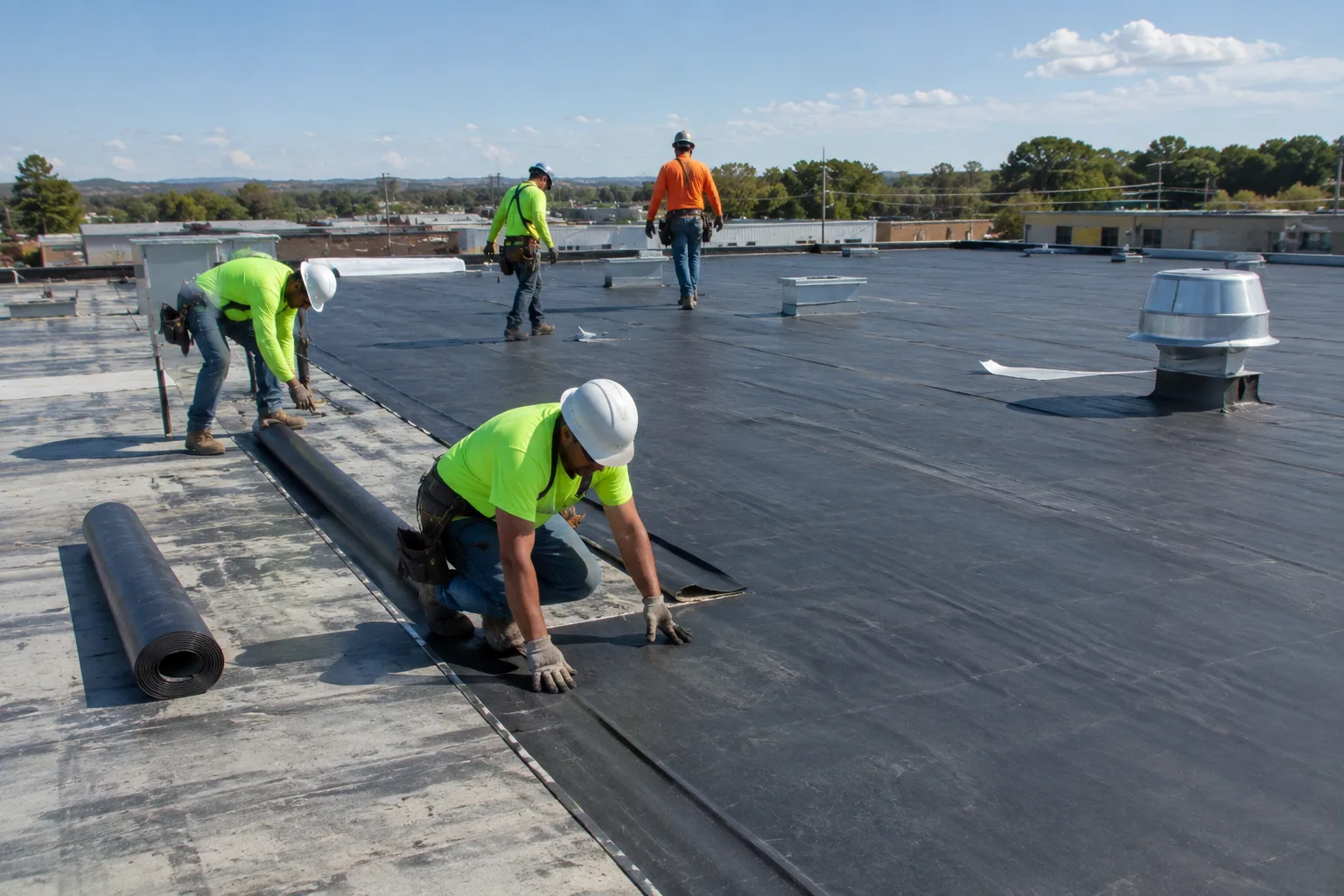
An EPDM scope begins with a walk across the roof section, a photograph of each lap that has opened, and a count of the places where the rubber has shrunk away from a wall. Those counts decide whether the roof is repaired, restored or replaced, and they go into the inspection record before any price is discussed.
What the Membrane Is
EPDM arrives in wide rolls, black or white, and is installed loose-laid and ballasted, mechanically attached, or fully adhered to the substrate. Because it is a cured rubber, it does not weld the way thermoplastics do. Seams are joined with liquid splice adhesive or with factory tape, and the quality of the bond depends on a clean, dry, primed surface and enough pressure applied along the whole lap.
Rubber stays flexible in cold weather, which is why the system has a long record on roofs that see hard winters. A 10 degree winter design temperature applies in Nampa, and most of the valley's moisture falls in the cool months. A flexible sheet moves with the deck as temperatures swing and does not crack at the folds the way a stiffened thermoplastic can.
Ballast and Design Load
A ballasted EPDM roof holds itself down with a layer of river rock or pavers, not with fasteners. That layer weighs several pounds per square foot, and the weight has to fit inside the structure's design load. Stone ballast spends part of a roof's load budget, which the city sets at a 25 pound uniform minimum with a 20 pound ground snow figure, so a structural review comes before any change to stone depth or rooftop equipment.
Before repairs, the stone is swept back in sections so the rubber below can be photographed. We note where ballast has migrated toward a drain, because gravel in a sump is a common reason that a roof drains slowly and ponds after a thaw. The review ends with a drainage path sketch, drawn from the slope that can be measured, not guessed.
Splice and Flashing Condition
Two details fail more often than the field sheet: the lap splice and the base flashing. Splice tape that has lost adhesion can be lifted gently by hand, and the lifted length is measured and logged. Base flashing pulls away from a parapet as the rubber shrinks with age, leaving a gap at the top edge where water enters behind it.
Repairs use primer and cured patches over a clean, dry surface, and the area is probed after the primer flashes off. Where a lap has opened for more than a few inches, the repair is a new strip of tape across the lap, not a dab of sealant. Our flashing failure repair scope sets the same photo sequence for rubber and for other membranes.
Drainage and Ponding Review
EPDM tolerates standing water better than most membranes, so ponding is often left alone until the surrounding seams or the structure suffer. That tolerance is a weakness in disguise, since a pond that stays for days adds weight, grows algae on the surface and concentrates the stress on nearby splices. Winter freeze-thaw acts on those ponds, and most of the valley's annual precipitation falls between November and May.
Each low area is marked and its depth measured after rain, and the record states which fix would clear it: a drain, a scupper or tapered boards. A ponding water repair can be as small as a new sump or as large as a tapered cover board section, and the record names which one the roof needs. Where the work is a small ponding correction, it is photographed before and after with a straightedge and a depth gauge in the frame, so the correction can be checked after the next thaw.
Older Buildings in Nampa
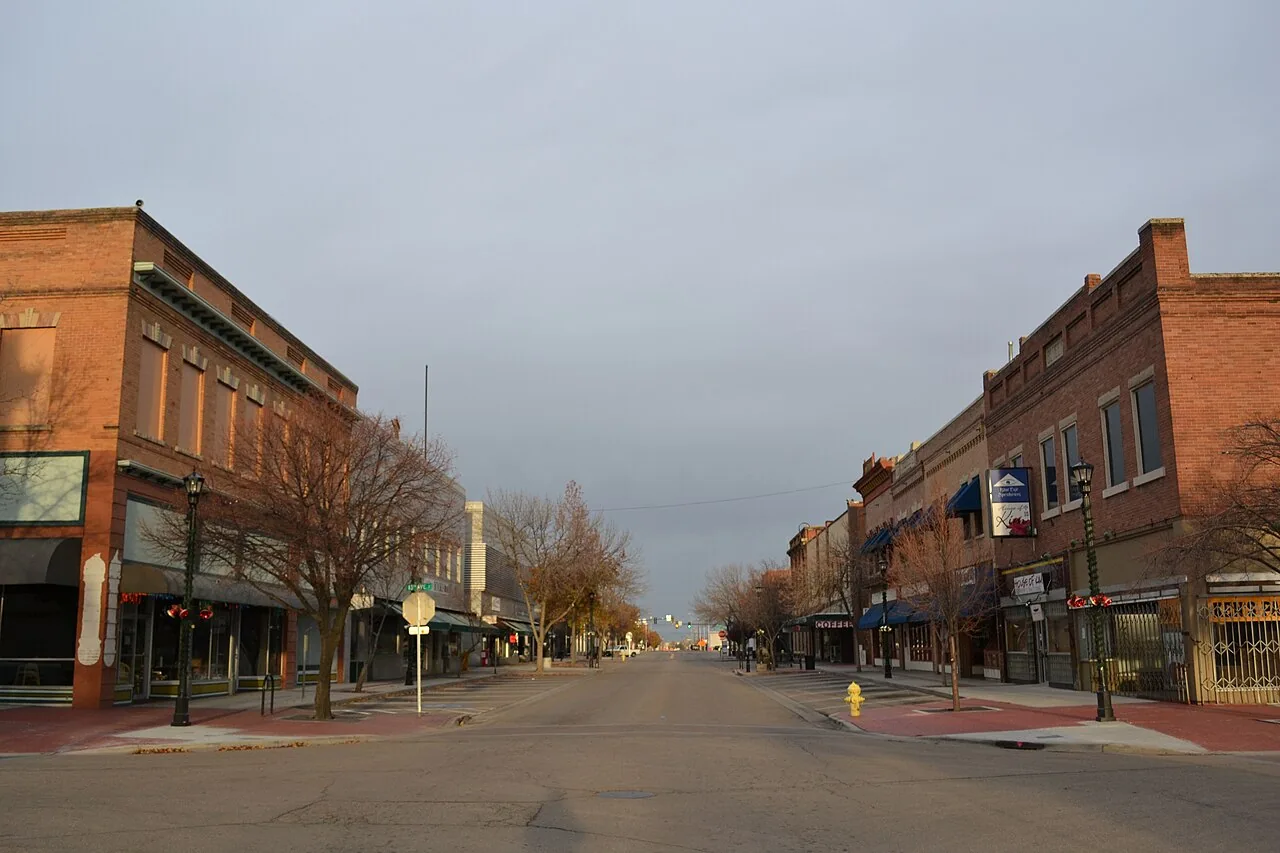
Nampa's historic downtown is treated as its own activity area in the south quadrant, with a downtown plan adopted in October 2025. A rubber membrane conforms to uneven flashing heights, so an older building with irregular wall details is a place where EPDM stays on the list. Downtown Nampa owners can ask for the existing-condition photographs to be tied to the same plan view used for the repair.
The 2018 International Existing Building Code is also on the city's code list, which matters when a re-roof at an older building triggers upgrades to insulation or drainage. We list those triggers in the scope so the owner sees them before the permit is filed.
The industrial tracts north of I-84 are the city's focus for the North Nampa Industrial Area program, which signals continued warehouse and manufacturing demand. On an industrial EPDM roof, the ballast, the sump locations and the perimeter edge metal get their own lines in the scope, since a lost stone at the edge can become a loose object in a wind event, and the record notes how the stone is retained at the perimeter and who sweeps it back after a storm.
Repair, Restore or Replace
The repair limit on an EPDM roof is the point where open splices outnumber sound ones, or where the insulation below the sheet is wet over a wide area. A moisture survey sets that boundary with data. Short of it, a program of preventive roof maintenance can stretch the life of the roof for years by renewing splices and flashing each season.
Beyond it, the options are a replacement with new rubber or a change of system, such as a TPO membrane or modified bitumen. The scope states why one is chosen over another, with the test results beside it, so the closeout file answers the question later when a manager asks why the roof looks the way it does.
Questions
Why do EPDM seams fail before the sheet does?
The sheet is cured rubber and ages slowly. Seams depend on adhesive or tape, which loses grip as it cycles through heat and cold. Lifted laps are measured, logged and rebuilt with new tape over a cleaned surface.
Can a ballasted roof carry added rooftop equipment?
Only after a structural review. Ballast uses part of the roof's capacity. New curbs, units or walk paths are added to the load record.
How is shrinkage at a wall repaired?
The shrunken flashing is cut back, the wall surface is prepared, and new flashing is adhered with a termination bar and sealant at the top. Photographs show the old condition, the prepared wall and the finished detail.
Does a black EPDM roof need a coating?
Not as a rule. Coating a rubber sheet is possible with the right primer, but it adds a layer to maintain. A white sheet or a cool roof plan may be a better route when reflectivity is the goal.
What does a follow-up walk after repair check?
The same laps, flashings and low areas that were logged are walked again after the first thaw. Any movement since the repair is photographed and added to the file.