Service Areas
Commercial Roofing in Boise, ID
Commercial roof inspection, repair, recover and replacement for Boise, ID property owners, with moisture surveys, photo records and written repair limits.
Boise
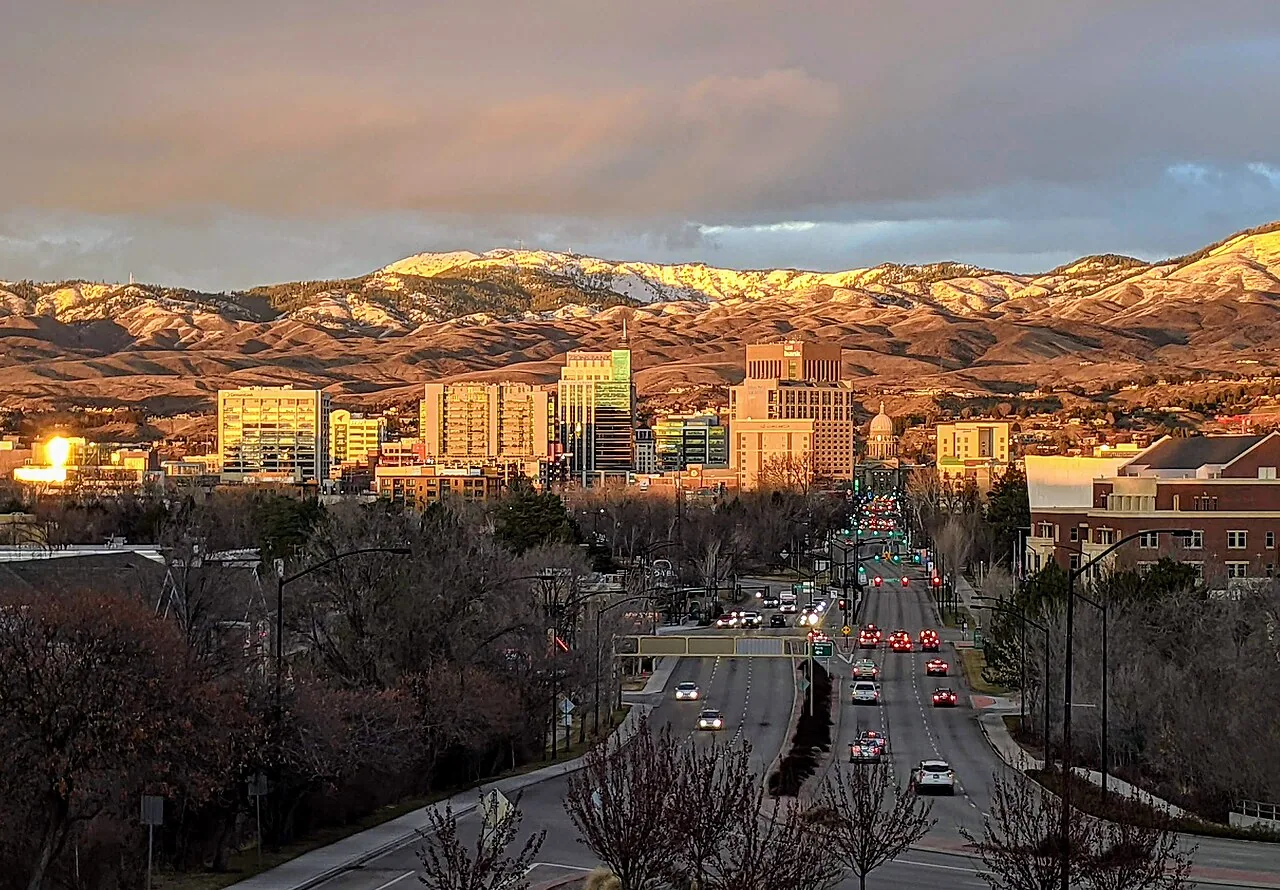
Construction, agriculture and manufacturing are the strong industries around the Boise metro, and manufacturing there includes semiconductors, recreational trailers, cheese and frozen potato products. On a roof above any process or production space, the first entry in the inspection record is the penetration count, because exhaust, washdown moisture and rooftop equipment all come through the membrane. Boise's center is about 16.7 miles east of Nampa's, which is a reachable drive on I-84 for a scheduled visit.
Property owners in Boise want what owners anywhere want: a clear account of the roof they have, with enough evidence to defend the repair or the replacement. We answer with a walk, a photo sequence taken from marked positions, a moisture survey when the surface leaves doubt, and a written scope that separates what we confirmed from what remains concealed.
Metro Context for Owners
The Idaho Department of Labor defines the Boise metropolitan statistical area as Ada, Boise, Canyon, Gem and Owyhee counties, a region that includes both Nampa and Boise. For an owner, that shared definition matters in one practical way: a portfolio may sit in more than one county, and the permit offices, inspectors and property records differ from one jurisdiction to the next. We keep a list of the issuing office on the first page of each building file, along with the permit number and the date.
A roof replacement in the metro is reviewed against the codes the local jurisdiction has adopted, and those can change between towns. Nampa's list includes the 2018 International Building Code and the 2018 International Energy Conservation Code for commercial buildings. A Boise owner should confirm which edition applies at the permit counter, and our scope states the assumption we used so it can be corrected before work begins.
Records matter most at the moment of sale or refinance. A buyer's engineer asks for roof age, repair history and any moisture findings, and an owner who has the file at hand answers in an afternoon instead of a month. We keep the file in a form that exports cleanly: dated photographs, a plan with section numbers, and a one-page summary of open items.
Industrial and Process Roofs
Manufacturing roofs differ from warehouse roofs in what comes up through them. Exhaust stacks, make-up air units, dust collectors and process piping all penetrate the membrane, and every penetration needs a flashing that suits the temperature and the chemical exposure. We check penetration flashing before the field sheet, because failures there are the likeliest source of a leak and the cheapest to correct when caught early.
Food processing adds washdown water that finds its way into curbs, and cold storage adds a vapor drive that can wet insulation from below. Both are reasons to look at what happens under the roof when we read it. We install PVC where grease or chemical exposure is a concern and TPO where it is not, and the scope names the system chosen for each exposure.
Winter Drainage and Summer Heat
Semi-arid conditions define the Treasure Valley, with the bulk of the precipitation landing between November and May and a long dry warm season on either side. Inversions and snow on the ground can chill valley locations below what the Boise airport records. For a roof, that translates into a calendar: drainage and ice checks through the winter, membrane work in the dry months.
For snow and cold, Nampa's criteria give 20 psf on the ground, 25 psf as the least roof design load and a winter design temperature of 10 degrees. They apply to Nampa, and a Boise building follows its own jurisdiction's numbers. We use them as a neighboring reference only, and the structural drawings for the building decide the real limit. Snow stacked behind a parapet or against a taller wall is the condition we look for, since that is where drift loads and meltwater concentrate.
Summer heat gets its own entry. A membrane that has been exposed to many dry seasons chalks, shrinks at its edges and pulls on the flashing at walls. We press along the base of each wall flashing and record any gap, since a gap that is small in June can take water in December. Cleaning the roof surface, resealing edges and replacing worn pipe boots often fits into a single maintenance visit.
Repair, Recover or Replace
Every roof reaches a point where the owner has to choose. A repair suits a localized failure with dry insulation. A recover suits a sound deck with a membrane that has aged but is dry underneath. A tear-off suits wet insulation spread across a section, or a deck that has been damaged. The moisture survey and the core samples, not an opinion, decide which of the three the roof qualifies for.
Cost depends on the roof area, the insulation thickness, the number of penetrations, access, and whether the building stays in operation. A building that cannot pause its work gets staged sections and sometimes night hours. The scope prices each stage separately, so an owner can see how much of the total comes from the schedule rather than the material.
The written scope lists the sequence: tear-off or prep, insulation, cover board, membrane, flashing, edge metal, cleanup. Each step has its own inspection point, and the photographs from those points go into the closeout file. A change in scope, such as wet insulation found on opening the roof, is entered as a revision with the date, the area and the price, so the owner approves it before the crew continues.
Portfolios Across Counties
An asset manager with roofs in several metro towns can use one file format on all of them. A multi-site roof program sets a common inspection interval, a common report and a ranked list of roofs by condition. The same format applies to buildings in Meridian, Garden City and Nampa, which makes comparison easy when the budget meeting arrives.
For a first meeting, bring a list of buildings by address and age, any roof plans, and the leak history. We will ask which roofs are under warranty, which tenants are sensitive to noise, and which buildings are being considered for sale.
Questions
Do you take calls for buildings in Boise itself?
Yes. Boise is about 16.7 miles east of Nampa along the I-84 route, and we schedule inspections and repairs there the same way we do closer to home. Emergency calls are answered at any hour.
How does a process roof differ from a plain storage roof when you inspect it?
We count and photograph the penetrations first, then check how each one is flashed. Process exhaust and washdown moisture wear flashing faster than the field membrane, so the leak risk usually sits there.
Which county's permit office applies to my roof replacement?
The office for the jurisdiction where the building sits. The original permit, or the property record, shows it, and we ask for that detail before preparing a replacement scope.
Can moisture survey results be used with an insurer?
They can support a claim by showing the boundary of wet insulation and the date it was measured. We document the findings and the photographs so a claim file has the evidence it needs.
What if a roof section is still under a manufacturer's warranty?
Send the warranty paperwork before work starts. Some warranties limit who may repair the membrane or require notice first, so we read the terms and shape the repair to fit them.