Service Areas
Commercial Roofing in Kuna, ID
Commercial roofing for Kuna, ID: inspections, repairs and replacements for downtown mixed-use buildings and the East Kuna industrial overlay.
Kuna
Two zoning overlays in Kuna tell a roofer where the commercial buildings are likely to be. The East Kuna Industrial Overlay is intended for larger-scale industrial development, and the Downtown Overlay is designed for mixed retail, office, residential, food-service and entertainment uses. Those two areas call for different roof methods, one built for scale and the other for small, busy parcels with tenants below. Kuna's center is about 9.0 miles southeast of Nampa's, which puts either overlay within a short drive of our crew.
Our first step is the same in both. We walk the roof, photograph each section from marked positions, and write the findings into an inspection record that the owner can keep. The record states what was seen, how it was checked and what remains unknown, so that a repair limit is drawn from evidence and a replacement scope follows from tests rather than a guess.
Downtown Mixed-Use Roofs
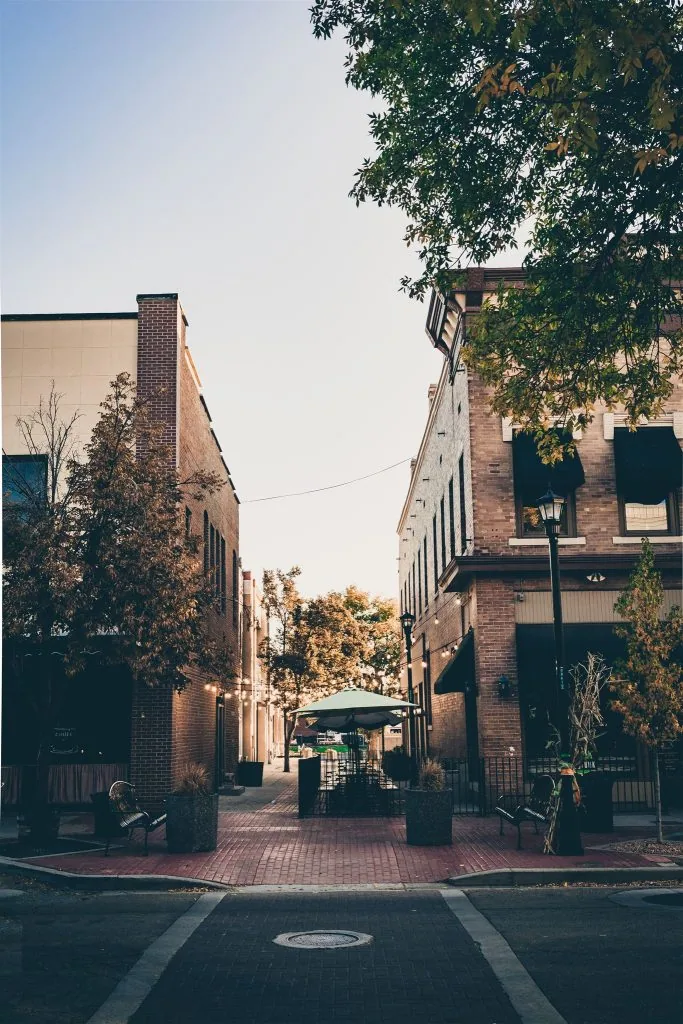
A mixed-use building has a roof that serves several tenants at once. A restaurant exhaust fan sits next to an office air handler, a storefront parapet shares a wall with the neighbor, and the drain for one unit may carry water from three. Food-service uses produce grease, which settles on membrane near kitchen exhaust and can degrade some materials, so the walk includes a close look at the surface downwind of each hood.
Residential units above or beside commercial space add another concern: a leak is felt in a bedroom, not a storeroom. We ask who occupies the space below each roof section and record the interior stain locations next to the roof plan. When the owner has to talk to several tenants, the file shows them where the roof was opened and where it was not. A leak repair starts at the stain's high side and follows the water uphill along the seam or flashing.
Parapets and shared walls deserve their own entry. Where one roof meets a taller neighbor, water runs down the wall onto the membrane, and the counterflashing has to catch it. We look at the termination bar, the sealant line and the flashing height at each wall, and we measure the height when the record needs a number. Old sealant that has cracked is not a lasting repair, so the scope calls for new termination metal where the wall allows it.
Planning for Larger Industrial Roofs
Large-scale industrial development raises questions that small buildings do not. Roofs that cover wide floor areas need interior drains and tapered insulation to keep water moving, and a drain that fails can hold a great deal of water on one section. We chart the drainage path on the roof plan and check how overflow scuppers are placed, since a secondary path is the last protection against collapse of a ponded section.
Each roof is read before it is described. A building in the overlay may be new, with a closeout file from its installer, or it may be waiting for a roof it has not yet received. For new construction, we can review the roof submittals and the layers in the specified assembly. For an existing building, we start from the walk and from drone imagery of areas that are hard to reach by foot.
A warehouse or distribution building in a large-scale overlay may have its roof under construction while other trades are still working below. We coordinate access with the general contractor so that penetrations for later equipment are flashed once, by one crew, and photographed before the next trade covers them.
Climate Reference and Timing
The nearest published design numbers are Nampa's, which pair a 20 pound ground snow load with a 25 pound minimum roof design load, a 24-inch frost depth and a 115 mile per hour ultimate wind speed. Those figures and we use them as planning context for Kuna, not as a calculation for a specific building. The structural drawings decide the load a deck can carry.
More than 75 percent of the valley's annual precipitation arrives between November and May. Winter is therefore the season of drainage checks, ice at edges and temporary repairs, while the dry warm months are the time for seam welding, flashing replacement and new membrane. We schedule inspections in late winter so the spring scope is ready before the weather window opens.
Frost depth matters more to the foundation than to the roof, but it signals how cold the valley gets, and cold months slow adhesives and sealants. Cold-weather repairs use materials rated for the temperature, and they are inspected again in spring when the weather lets the seams cure fully.
Options and Cost Drivers
Owners usually weigh a patch against a recover or a full replacement. A patch is right when the failure is local and the insulation is dry. A recover fits when the deck is sound and the old membrane can take a new one over it. A replacement is the answer when moisture has spread through the insulation or the deck is compromised. Moisture testing is how we tell which situation applies.
Cost follows the area, the insulation, the number of penetrations and curbs, the access route and the schedule. A downtown roof with a lift that cannot reach it may need hoisting by hand, and an industrial roof with many skylights needs more flashing work. We list those drivers in the scope as separate lines, so an owner can compare options on the same basis.
Insulation is the line item most likely to move the total. Wet board must be removed, and the amount found depends on how long water has been entering. A roof section opened for repair gets a stated unit price for replacing wet insulation, so the final cost follows the measured area instead of a guess made from the surface.
Records at Handover
A finished Kuna job leaves the owner with dated photographs, a roof plan showing each repair limit, the test results, the product sheets and a follow-up date. A Kuna owner who also holds property along Highway 20/26 or in Meridian can set those files side by side when planning future roof spending, since each is kept in the same format.
The file also carries the contacts that matter later: who authorized the work, who signed off, which tenants were notified and when. If a question comes up a year on, the answer is already written, and the follow-up inspection is on the calendar with a date beside it.
Questions
What changes about a roof above a restaurant?
Kitchen exhaust leaves grease on the membrane and flashing near the hood. We inspect that surface closely and clean it or replace the affected material, since grease can soften some membranes over time.
Do you inspect new buildings before the owner accepts the roof?
We can walk a new roof and review its photographs against the specified assembly. Any defect found goes into a written list for the installer to correct before the owner signs off.
Can tenants stay in the building during a replacement?
Yes, with planning. Work proceeds by roof section, noisy steps are scheduled for agreed hours, and the area above sensitive spaces is closed in first.
What if the roof drains were never cleaned?
Strainers and sumps get cleared and photographed on the first visit. If water stays on the roof afterward, the problem lies in the slope or the line below, and the scope adds a correction.
How is the East Kuna industrial overlay relevant to my roof plan?
It tells us that large buildings are intended for that area, so we plan for wide roof sections, interior drains and equipment curbs. The actual roof is still read on site before anything is priced.