Commercial Roofing Services
Emergency Roof Repair in Nampa, ID
Around-the-clock emergency roof response in Nampa, ID: tarping, dry-in, and photo documentation, followed by a written plan for the permanent repair.
Emergency Roof Repair
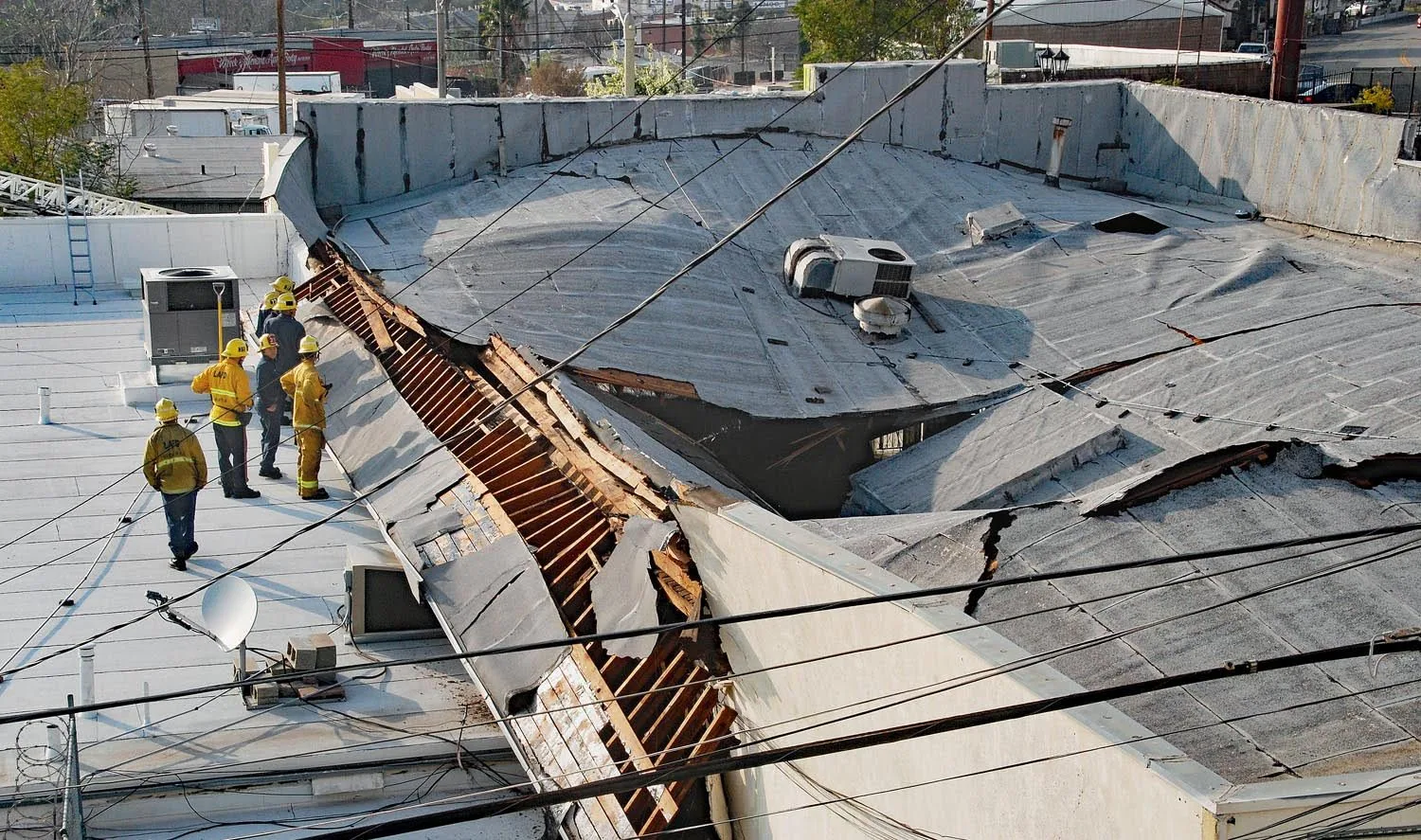
The time stamp on the first photograph is the first record in an emergency file. It shows when the damage was reported, what the roof looked like on arrival, and how long the building stayed open to weather. Everything after that, from tarps to insurance paperwork, depends on that first set of images, so the crew photographs the roof before any material is placed on it.
Our emergency line is answered overnight, on weekends, and through holidays, and the first call sorts the problem into two groups: conditions that endanger people or stock now, and conditions that can wait for daylight. For a commercial building in Nampa, ID, the goal of the first visit is narrow and measurable: stop water entry, secure loose material, and leave a written record of the roof as it stood.

Response Log
The log opens with the caller, the building, the roof access route, and what the caller saw: wind damage, a collapsed section, water through a ceiling, or smoke damage. It continues with the weather at the time and the forecast for the next twelve hours, because a tarp plan for a dry night differs from a plan for an incoming front. The crew reports arrival time, roof condition, and the safety status of the roof surface before anyone steps onto it.
Roof safety comes first. A membrane soaked with water, a deck with open edges, or snow cover that hides skylights can each be dangerous. If the surface is unsafe, the response shifts to interior protection and perimeter work from a lift until it can be walked. That decision goes in the file with the reason, so the owner knows why the first visit looked the way it did.
Tarping and Dry-In
Dry-in means closing the opening so water stops entering, and it is built with whatever the damage allows: heavy tarps secured with battens over a breach, a temporary membrane patch over a split, sealed sheet metal over a failed flashing, or plywood over a damaged curb opening. Tarps are fastened to solid roof structure, not to the membrane alone, and the edges are weighted and sealed so wind does not lift them. A loose tarp on a flat roof can do more damage than the original opening.
Before covering, wet insulation within the opening is cut out and removed when it can be done safely, since a tarp over saturated board holds moisture in the roof. We photograph the opening, the removed material, the dry-in installation, and the finished edge. The set of images becomes the working record for the permanent repair, whether that is a planned repair or a section of replacement.
Wind and Snow Triggers
Two stresses drive emergency damage on a Nampa roof: a 115 mph ultimate wind speed in the city's design criteria, which also lists no special wind region and no wind-borne-debris zone, and a 20 psf ground snow load. Wind lifts membrane at edges, parapets, and rooftop equipment, and the wind damage pattern shows as peeled corners and displaced flashing. Snow adds load, then melts into drains and laps, and the ice damage pattern shows as backed-up water and failed terminations.
Most of the valley's yearly precipitation arrives between November and May, so cool-season storms test a roof hardest. Fall is the time to clear drains and secure edges, since a clean drain and a tight edge change what a winter storm can do.
Reaching the Building
Access can slow a response as much as the damage itself. Nampa's plans name I-84 overpasses at Middleton Road, Karcher Road, Northside Boulevard, 11th Avenue, Franklin Avenue, Garrity Boulevard, and Robinson-Star Road, and a closed ramp or a flooded underpass changes the route a truck takes. We plan the approach for industrial buildings along the Highway 20/26 corridor and commercial sites in the Garrity Boulevard corridor by checking access gates, dock hours, and lift positions on the first call.
If the roof is reached only through a locked mechanical room or a tenant suite, the building contact who holds that key is recorded in the log at the start, so an overnight call does not stall at the door.
Documentation for Insurance
An insurer wants dated images, a description of the cause as observed, and proof that the owner limited further loss. The emergency file supplies those: arrival photographs, moisture readings where taken, the dry-in installed, and a list of materials used. Cause statements stay factual, such as peeled corner, displaced coping, or ponded water at a drain, and the file leaves out a cause the roof cannot show.
Our claim documentation support carries that record forward into the estimate and the scope of the permanent repair, and the storm damage repair that follows can match the emergency file line by line. We recommend owners keep invoices for the temporary work and notify their carrier promptly, since the policy terms control the timing.
Handoff to Permanent Repair
The emergency file ends with a handoff, not a goodbye. Within a few days the crew returns in daylight to look at what the dry-in covered: the deck beneath the tarp, the insulation around the opening, and the condition of neighboring seams that were stressed by the same event. A moisture survey of the area around the breach shows whether water traveled beyond the visible damage, and the findings set the limits of the permanent scope.
The permanent repair is then priced from measured quantities rather than from the emergency scramble. Temporary materials come off, wet insulation is replaced to the boundary the survey drew, and the new membrane or flashing is tied into sound existing roof. The closeout adds the follow-up date, usually after the next significant rain or thaw, when the repaired area is walked again and compared against the arrival photographs.
Where the damage reveals a broader condition, such as aged membrane across the whole section, the file says so and presents the options to the owner without pressure, because an emergency is a poor moment to sign a full replacement and a good moment to start gathering the facts for one.
Questions
What happens on the first emergency visit?
The crew photographs the roof as found, checks whether the surface is safe to walk, and closes the opening with a tarp or temporary patch. A written record of the roof condition and the forecast stays with the owner.
Is a tarp a repair?
No. A tarp holds the building dry until a permanent repair can be scheduled. Each tarp is logged with its location and fastening, along with a return date for the permanent work.
Does the response change in winter?
Yes. Snow cover can hide skylights and openings, so the crew probes before walking, and cold surfaces limit adhesives. Work in the cool season leans on mechanical fastening and sealed sheet metal.
Who should be called first, my carrier or the roofer?
Call the roofer for dry-in, since policies commonly expect the owner to limit further loss. Then notify the carrier and send the emergency file, which already holds the dated images the adjuster asks for.
How soon after a windstorm should the roof be checked?
Within a day if possible. Peeled edges and displaced coping look minor from the ground but let rain under the membrane, so a fast walk of the perimeter often finds the problem before the next storm.