Commercial Roofing Services
Storm Damage Roof Repair in Nampa, ID
Storm damage assessment and repair for commercial roofs in Nampa, ID: dated photographs, temporary dry-in, and a scoped permanent repair tied to the findings.
Storm Damage Roof Repair
The first record after a storm is the water path, not the damage. Before a crew lifts a single flap of membrane, someone should trace where water entered the building, photograph each stain or drip with a date, and mark the matching spot on the roof. That sequence connects what the tenant saw inside to what the roof shows outside, and it gives the repair a location instead of a guess. Wind, snow, and ice each leave a different pattern, and the pattern points to the cause.
For commercial roofs in Nampa, ID, the planning numbers are plain. Design values in the city's criteria run to 115 mph for ultimate wind speed and 20 pounds per square foot for ground snow, and the document marks Nampa as outside any special wind region or wind-borne-debris zone. Those figures describe what a roof was designed to carry, not what any single storm delivered, so the repair record has to rely on what is visible on the roof itself.
First-Day Response
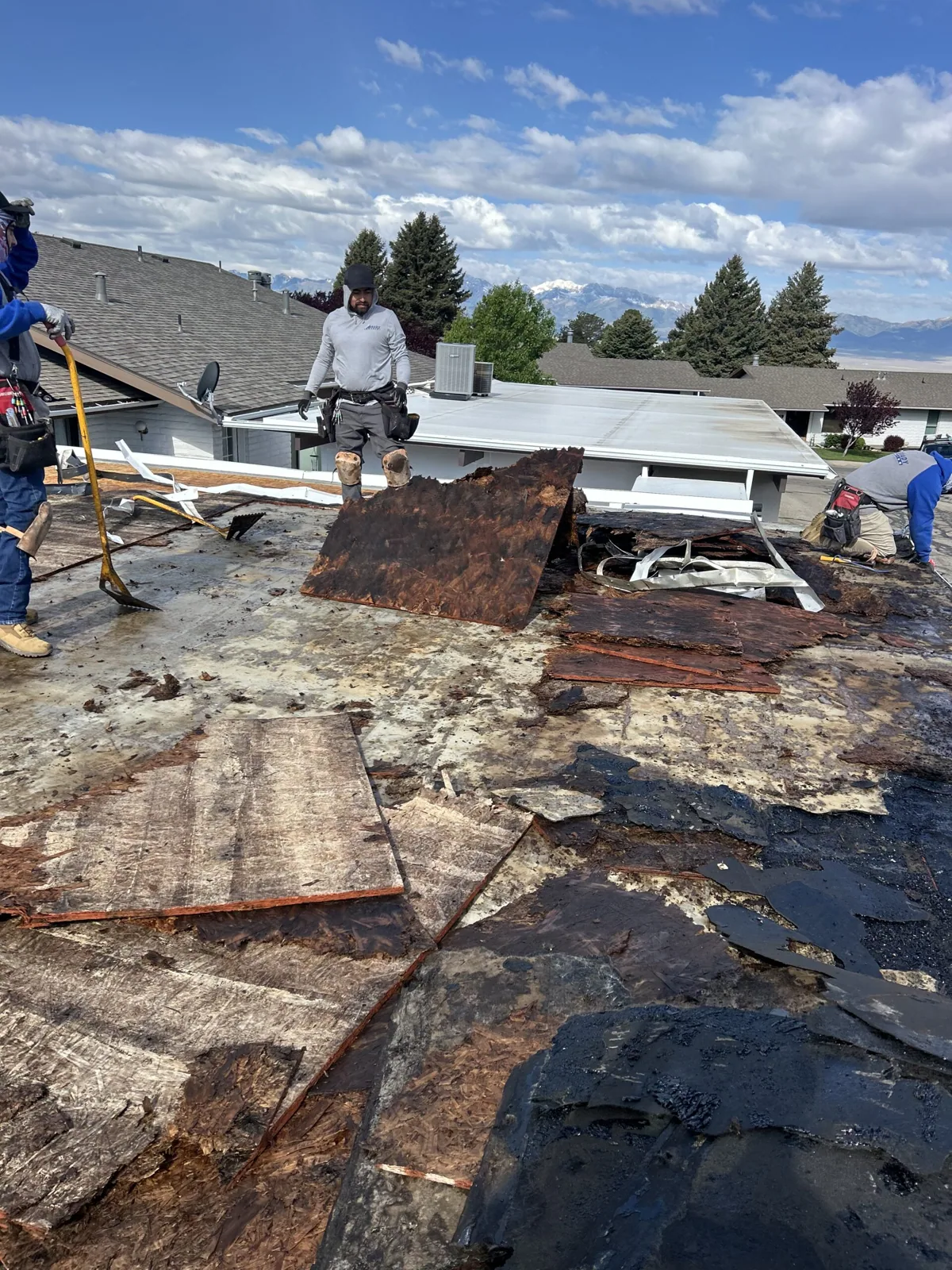
The first visit has two jobs: stop further water entry and document the roof before anything is moved. Temporary measures include tarping an opened section, sealing a torn flashing with a mastic and fabric patch, and clearing a blocked drain so water leaves the roof. Each temporary repair is labeled as temporary in the file, with its location and a date for the permanent fix.
Where access is unsafe, a drone inspection gives a first view of the roof surface without anyone walking on a compromised deck. Photographs from the air show displaced membrane, missing edge metal, and debris, and they help decide where a person can step. Emergency crews work through nights and weekends, so the dry-in does not wait for business hours.
Wind and Snow Patterns
Wind damage concentrates at edges, corners, and penetrations, where uplift pressure is highest. A lifted perimeter flashing, a peeled corner of membrane, or displaced coping stones point to uplift, and the fasteners or adhesive at the failed point show whether the attachment was sound. Our repair notes record the condition of the attachment at each failure, since that decides whether the fix is a patch or a re-securement of the whole edge. A roof with wind damage gets that attachment check before any patch is priced.
Snow and ice leave a different mark. Meltwater runs to drains and scuppers, and if those are blocked it backs up beneath flashings and through seams. Ice at gutters can lift edge metal, and drifted snow loads the roof unevenly near parapets and taller equipment. Damage from snow and ice often shows first as a stain beneath a drain or low area, well after the storm has passed.
Moisture Survey After the Storm
A roof that looks closed can still hold water. When membrane has been breached, water spreads sideways through insulation, and the stain inside the building may sit far from the opening. Moisture mapping with infrared imaging or a meter grid finds the wet boundary, which sets the limit of the repair. Without that map, a crew may patch the opening and leave wet insulation that continues to soften the deck.
The infrared moisture survey is most useful when the roof is dry on the surface and cool air has settled, since temperature differences show wet insulation more clearly. Cores at the edge of the wet zone confirm the reading. The result is a roof plan with a shaded wet area, which the owner can compare with the proposed repair boundary before approving it.
Roof Types Across Nampa
The city's plan places industrial tracts and regional commercial properties in the quadrant north of I-84, and it puts the Gateway District in the east quadrant beside light and heavy industrial areas. Storm damage on those roofs can involve rooftop equipment: displaced fan covers, torn curb flashing, and pipe boots lifted by movement. After a wind event on the Highway 20/26 corridor, a roof with many penetrations needs a detail-by-detail walk, not only a look at the field.
Winter storms add inversions and snow cover that can leave the valley colder than Boise readings suggest. Cold, damp surfaces limit what permanent repairs can be made, so work in those conditions is staged: stabilize first, then return in a dry window to complete the repair with proper adhesion. The file shows both visits.
Deck Condition and Access
A storm can weaken a roof deck without opening the membrane. Standing water over a low area, a saturated insulation board, or a corroded metal panel can all reduce what the deck will carry. Before anyone walks the damaged section, the crew probes soft spots from solid ground, marks the boundary, and keeps equipment and foot traffic on the sound parts of the roof. If a deck section looks compromised, the scope adds a structural check by the building's engineer before any new load goes on.
Occupied buildings add a second concern. Ceiling tiles holding water, wet electrical equipment beneath a leak, and stored goods below an opening all need attention inside the building as the roof work proceeds. We coordinate with the facility manager on what to move and what to cover, and the interior photographs become part of the same dated record as the roof photographs.
Permanent Repair Scope
The permanent scope lists each repair by location, with the method, the material, and the photograph that justifies it. Membrane tears are patched or sectioned out, damaged insulation is cut out and replaced with dry board, and flashings are rebuilt where uplift has pulled them loose. Edge metal is re-secured or replaced to the wind criteria that apply to the building.
Where storm damage is part of a larger insurance matter, the same scope feeds the claim documentation, so the repair description and the photograph set match what the carrier's adjuster is shown. When damage reveals older deterioration, the file separates storm-related items from pre-existing ones, which keeps the repair estimate accurate and the claim clean.
Questions
How soon after a storm should the roof be checked?
As soon as it is safe to reach the roof. Water entry continues until it is stopped, and photographs taken early show the damage before debris moves or repairs begin. A leak inside the building is reason enough to call before the weather clears.
Can a storm-damaged roof be repaired in cold weather?
Temporary repairs can be made in cold weather and are labeled as temporary. Permanent repairs need dry, clean surfaces within the adhesive's temperature range, so they are scheduled for a suitable window and logged with a return date.
What if the damage looks cosmetic?
Cosmetic marks on a surface can still hide a bruised or cracked membrane. A walk with probe testing at the suspect areas shows whether the membrane still seals. The record states the finding either way, so the owner has a dated condition on file.
Does a storm repair affect the existing roof warranty?
It can. Warranty terms usually define who may repair the membrane and which methods apply. Check the warranty before work begins, and send us a copy so the repair method and materials are chosen to fit its terms where they can be.
How is storm damage separated from old wear?
By location and pattern. Fresh uplift marks, clean tear edges, and new debris point to a recent event, while weathered splits and long-standing stains point to older causes. The scope lists them separately with photographs.