Industries We Serve
Roofing for Insurance Adjusters and Restoration Contractors in Nampa, ID
Roof documentation for adjusters and restoration contractors in Nampa, ID: dated photographs, moisture maps, scope separation, and temporary dry-in after loss.
Insurance Adjusters and Restoration Contractors
A claim file is only as useful as its photographs are dated and located. Adjusters and restoration contractors working roof losses in Nampa, ID need to separate what the event damaged from what age, wear, and neglect had already done, and the way to do it is to number the roof sections, photograph each defect from a fixed position, and write the observation next to the image. We build roof records in that form, so a reader who was not on the roof can follow the finding.
We do not decide coverage. The insurer does. What we supply is the roof side of the file: condition, cause as observed, temporary protection, and a repair scope that keeps work proven on the roof apart from hidden conditions that still need a test.

Temporary Protection
After a loss, the first job is to stop more water from entering. A tarp, a temporary membrane patch, or a sealed opening goes on quickly, and each is photographed before and after. The record states the roof section, the opening size, the method, and the date. That documentation matters because the policy generally expects the owner to protect the property from further damage, and the insurer will want to see that it was done and what it cost. Emergency roof repair is available around the clock for this reason.
Temporary work is also scoped. A patch that stays through winter needs a follow-up date, and a tarp over an open deck needs a check after the next wind. The follow-up goes into the file so that a stopgap does not stay on the roof for years.
Observed Cause and Scope Separation
A roof can show hail marks, wind lifting, impact damage, and a long list of age-related defects at the same time. We record each defect by location and type, and we mark which ones show signs consistent with the reported event and which show signs of earlier conditions, such as long-standing ponding or a seam that was already open. We describe what we see, not what the policy covers.
The city's design criteria use a 115 mph ultimate wind speed, list no special wind region or debris zone, and assume 20 psf of ground snow. Those figures are planning references and not evidence of what occurred on a specific roof. For a wind claim, the record shows where the membrane lifted, where fasteners pulled, and where edge metal moved, the same sections a wind damage repair scope would address. For a snow claim, the record shows where drifts formed, where drains were blocked, and where ponded water stood, which relates to snow and ice damage.
Moisture Mapping
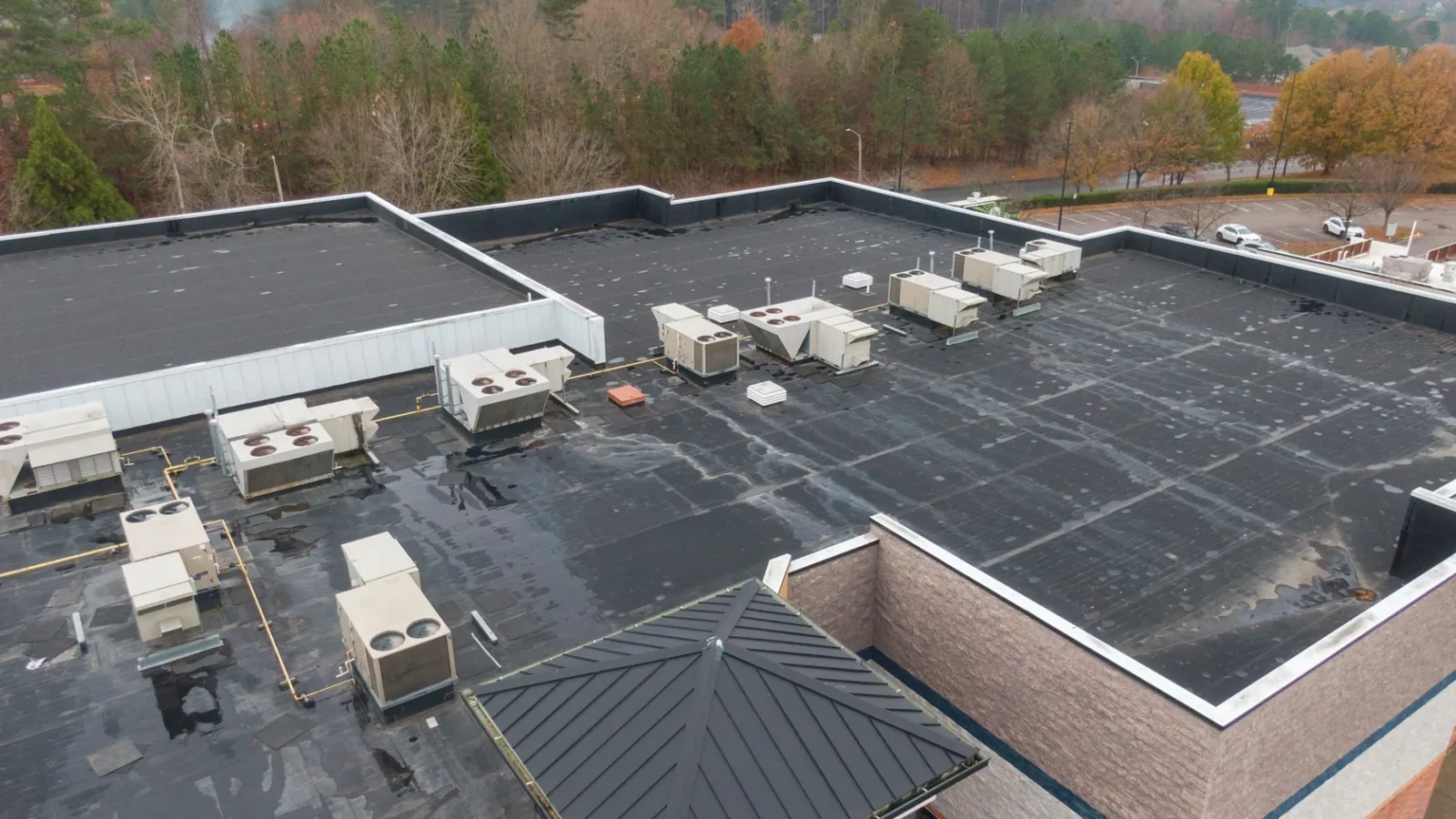
Wet insulation is the hidden part of a loss. A surface that looks repaired can hide saturated insulation that will fail later. We use an infrared moisture survey and cores to locate and confirm wet areas, and we draw the boundary on the plan. The map separates the area that must be replaced from the area that can be repaired, and it provides a baseline for later disputes.
For large or fragile roofs, a drone inspection adds overlapping images without putting weight on a damaged surface. The images are numbered the same way as the ground photographs so reviewers can compare them. Where a roof is unsafe to walk, the file says so and states what was assessed from the air. Public owners filing a loss, such as the offices described for public agencies, often need those images attached to an incident report, and the numbering carries across both documents.
Fire and Smoke Losses
Fire losses carry their own record. Heat damage, melted membranes, charred decks, and water from suppression all appear on the roof, often together. Our file for a fire-damaged roof begins with structural safety: whether the deck can carry a crew and whether the fire marshal has released the site. After that, sections are numbered and each is photographed, and wet insulation from firefighting water is mapped.
Restoration contractors who work the interior need to know the status of the roof above them. The interior team receives the roof plan and the closing date for the roof, so drying and demolition are not undone by a fresh leak.
Multi-Building Losses
A storm or a fire can reach several buildings in one area. A loss touching properties along a single route, such as the Garrity Boulevard corridor in the east quadrant or the Highway 20/26 corridor in the north, is recorded building by building, with the same numbering and the same photograph positions on each roof. An adjuster comparing two buildings sees the same set of observations in the same order, which makes differences in damage easier to read.
Restoration contractors who manage the whole site benefit from a single schedule. We list which roofs need emergency protection first, which can wait for the next dry day, and which have access issues such as locked equipment yards or occupied upper floors. Garrity corridor properties and those further along the interstate are scheduled in the order of exposure, not in the order of the phone calls.
When a claim stretches across a winter, the record is updated at each visit. An opening left unrepaired in November faces months of the wet season, since the valley gets the bulk of its precipitation by May, and the follow-up date on temporary protection is what keeps a small problem small.
Claim Documentation
The claim file we assemble for properties in Nampa or the neighboring towns of Caldwell and Meridian includes the photo sequence, the condition notes, the moisture map, the temporary protection record, the proposed repair scope with pricing, and any test results. Owners who need help organizing it can use our claim documentation support. Our records do not promise a result. They show the roof as it stood on each date of the visit, which gives the adjuster and the owner the same starting facts.
Property managers who handle claims for several buildings, including property management companies, benefit from one format across all sites. When a claim relates to a storm, the storm damage repair scope follows the same numbering, so adjusters see the same sections from the initial report to the final repair.
Questions
What does an adjuster receive from a roof inspection after a loss?
A numbered roof plan, dated photographs, condition observations, a moisture map where needed, and a scope that separates confirmed repairs from items needing a test.
How is event damage distinguished from older conditions?
By location, pattern, and the surrounding evidence. Fresh impact marks and lifted edges differ from long-standing ponding and weathered seams, and the photographs show each one.
Can a roof be covered quickly after a loss?
Temporary protection goes on first, with before and after photographs. The record states the method, the date, and the follow-up check.
Do you decide whether a claim is covered?
No. Coverage belongs to the insurer. We supply the roof condition, the observed cause, and the repair scope.
What is the role of a drone on a claim?
It documents a roof that is unsafe or too fragile to walk. Overlapping images are numbered to match the ground photographs.
How do restoration crews coordinate with the roof work?
They receive the roof plan and the dry-in dates. Interior drying and demolition then proceed on a schedule that does not conflict with roof openings.