Roof Damage Repair
Fire Damage Roof Repair in Nampa, ID
Fire and smoke damage roof repair for commercial buildings in Nampa, ID: structural clearance, temporary dry-in, moisture mapping, and documented scope.
Fire Damage Roof Repair
Clearance comes before the first photograph. After a fire at a commercial building in Nampa, ID, no one goes on the roof until the authority having jurisdiction has released the site and, where the deck may be compromised, a structural opinion confirms that it can carry a crew. Then the record begins: the roof is divided into numbered sections, each section is photographed from a fixed point, and the observations are written next to the images. The fire may have burned through a corner, softened a membrane across a wide area, or left the roof intact while water from firefighting soaked the insulation below.
That variation is why the first report separates heat damage, water damage, and smoke damage. Each has its own repair.
Heat and Burn Damage
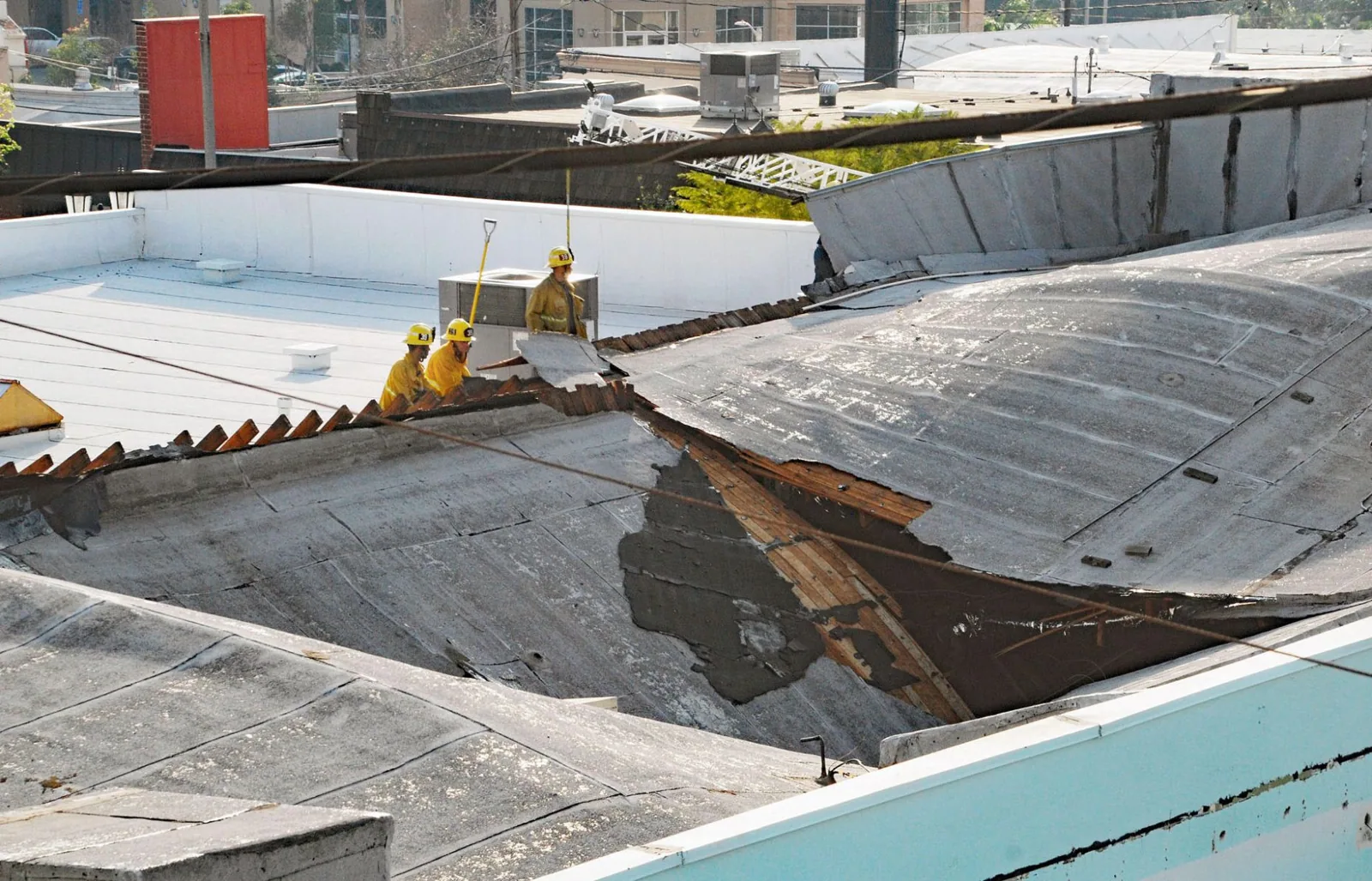
Heat changes roofing materials long before flame touches them. A single-ply membrane can shrink, blister, or melt. Modified bitumen and built-up roofs can bubble and slide. Foam insulation can distort. Metal decks can warp, and metal panels can discolor and lose their coating. Where flame reaches the roof, wood decking can char, and the char may extend deeper than it looks from the surface.
We map the damaged area, probe its edges, and test where sound material begins. A membrane that looks intact may have lost flexibility, so a bend test or a sample may be needed. The boundary between damaged and sound is the repair limit, and it is drawn on the plan with photographs. The limit often extends well beyond the visible burn, and the file states why.
Suppression Water and Wet Insulation
Firefighting puts large volumes of water on and through a building. The water that reaches the roof assembly can soak insulation across areas far from the flame. If the insulation stays wet, the new membrane will trap that moisture and the roof will fail early. A moisture map with an infrared survey and cores shows where the wet insulation is, and the map decides where tear-off is needed, and any ponding left by a damaged drain is measured in the same visit.
The drying question matters too. Some insulation can dry in place with the membrane removed and the weather cooperating. Some, once saturated, must be replaced. Treasure Valley winters add complexity: better than three quarters of the year's precipitation arrives between November and May, so an open roof in the cool wet season is a risk, and the temporary protection plan has to hold through weather.
Temporary Protection
After clearance, the first work is to stop more water entering. A temporary membrane, tarps with ballast, or sealed openings go over the damaged area, and the work is photographed before and after. Emergency roof repair is available at any hour for exactly this reason. The temporary protection has a follow-up date in the file, because tarps move in wind and a temporary patch does not last through a winter.
The interior restoration team needs to know the roof's status. The roof plan and the date the roof is closed go to the interior team first, which keeps drying equipment, demolition, and rebuilding from being undone by a new leak. Coordination with the restoration contractors is part of the record, and the same file serves adjusters and contractors on insurance and restoration projects.
Access After a Fire
A fire scene limits access in ways that other roof work does not. The site may be fenced, utilities may be off, the stairs and roof hatch may be damaged, and the ground around the building may hold firefighting debris and water. We plan the way onto the roof before the day: where the lift can stand, whether a ladder is safe, and whether the interior roof access can be used at all. Delivery routes matter as well, since trucks reach many sites over the I-84 overpasses at Karcher Road and Franklin Avenue that the city plan lists. A building on Garrity Boulevard and one near the 12th Avenue corridor may offer very different room for a lift, and the plan records what the site gives.
Lighting and power are often unavailable, so the crew works in daylight and brings its own. Where hot work is needed near damaged material, a fire watch is set. The record notes who authorized each step, which protects the owner and the crew.
Debris removal is part of the sequence. Burned membrane, wet insulation, and charred decking are removed in sections, bagged or boxed, and lowered, not dropped. The work area below is protected, and the dumpster location is set before tear-off begins. Each load is logged with the roof section it came from, which gives the insurer a record of quantities and gives the owner a check on what was removed.
Smoke, Soot, and Contamination
Smoke leaves residue on membranes, in insulation, and inside the deck flutes. Soot can stain a surface without damaging it, and some residues interfere with adhesion. If a repair requires adhesion to a smoked surface, the area is cleaned and tested before work begins. Roof-mounted equipment, such as air handlers, may have drawn smoke into the building, and the units need an inspection before they are restarted. We flag them in the report for the mechanical contractor.
Smoke-damaged insulation that has not been wetted is often serviceable, but odor can persist in some materials. The decision to keep or replace belongs to the owner and the restoration team, and the file records what was found and what was decided.
Code and Documentation
Among the codes the city has adopted are the 2018 editions of the International Building, Fire, and Existing Building codes. A fire repair that replaces a significant portion of the roof triggers questions about insulation levels, fire classification of the assembly, and the structural condition of the deck. We prepare the roof portion of the documentation for the building department and the insurer: photographs, test results, the repair limit, and the proposed assembly.
For commercial properties near downtown Nampa or along the rail corridor, where buildings may share walls or sit close together, the report also lists adjacent roofs that need inspection for spread damage. The plan does not describe the buildings, so the record lists what the walk shows.
Claim Records and Permanent Repair
When the owner files an insurance claim, our file serves as the roof portion. It includes the numbered plan, dated photographs, test results, the temporary protection record, and a repair scope that keeps proven work apart from concealed conditions awaiting a test. Claim documentation support is available to organize it. The file does not state what the policy covers. After the scope is agreed, permanent repair or replacement proceeds in the sequence the plan sets.
Where heat has aged a membrane on a section that did not burn, the report separates old wear from new damage, using the same surface tests as for heat and UV degradation, so the insurer is not asked to pay for sun damage that predates the fire.
Questions
When can a roof inspection begin after a fire?
Once the site is released and the deck is cleared as safe to walk. Until then, any assessment is limited to what can be seen from outside.
How is wet insulation from firefighting found?
With an infrared scan and cores at marked points. The map shows where water traveled and where it did not.
Does smoke damage require replacing the roof?
Not by itself. Smoke leaves residue that may need cleaning, and the owner decides whether any insulation needs replacing for odor.
What happens to rooftop equipment after a fire?
The units are flagged for inspection by a mechanical contractor before restart, since smoke may have entered them.
How long does temporary protection last?
It depends on the method and the weather. Each has a follow-up date in the file so it is checked and renewed before it fails.
Do you state what insurance will cover?
No. What a policy pays is for the insurer to say. We supply the roof condition, the temporary work, and the proposed repair scope.