Service Areas
Commercial Roofing on the 12th Avenue Corridor, Nampa, ID
Leak repair, ponding correction, coating, and recover work for commercial roofs along the 12th Avenue Road corridor in Nampa, ID, with dated photo records.
12th Avenue Corridor
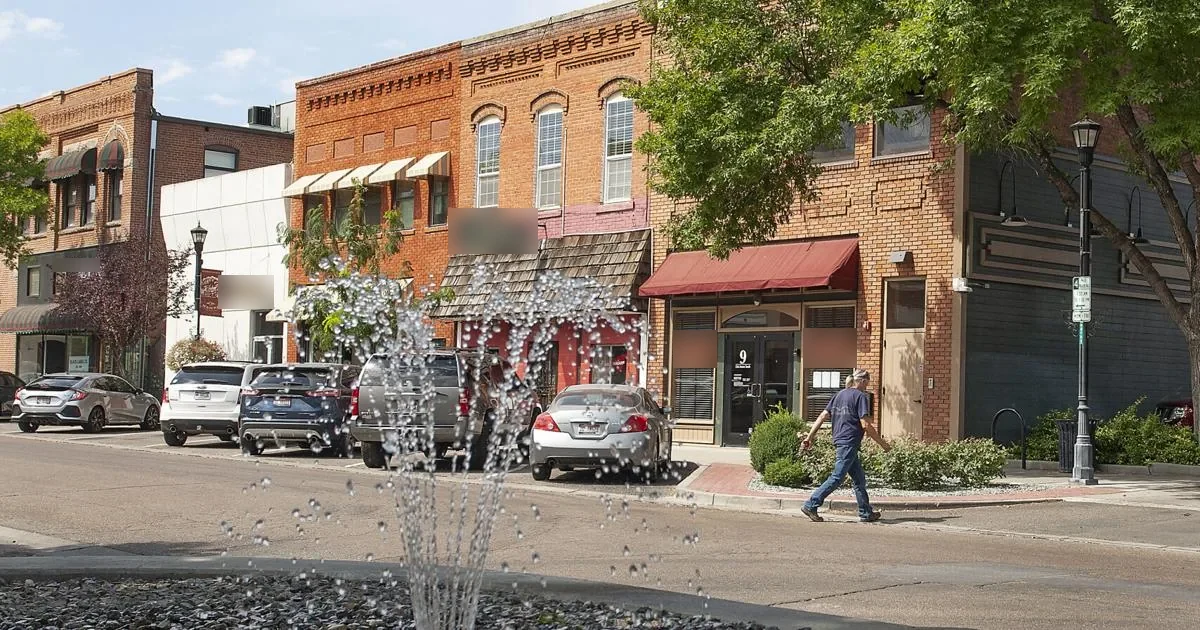
One road, two quadrants: the city's plan uses 12th Avenue Road as the western boundary of the south quadrant and as a planning edge of the west quadrant, and it identifies commercial development along the road on both sides of that line. For a roofer in Nampa, ID the practical meaning is that an owner on this corridor may find the road named in two different planning discussions while holding a single roof. The file for that roof should stand on its own and answer the same questions regardless of which plan a reader opens.
Those questions are short. Where does water enter? What is the membrane made of, and how old is it? Where are the drains? What has been repaired, and when? We answer them with a numbered roof plan, a photo sequence taken from fixed positions, and a list of tests that remain open.
A Road That Belongs to Two Planning Areas
The plan calls 12th Avenue Road the south quadrant's major corridor and gives it commercial development potential. It also notes commercial development along the road in the west quadrant. We do not know from the plan what building types sit on the road, so we ask the owner, then walk the roof and record what is there. A roof file that begins with the building's actual use is more reliable than one that begins with an assumption.
The overlap has a documentation benefit. Owners in South Nampa and West Nampa receive the same roof record format, so an owner with property on both sides of the road can compare roofs section by section, and a lender reviewing both properties sees one method.
Retail and Service Roofs
Commercial buildings that serve the public share a set of roof problems that are worth checking by name. Entrances and loading doors create flashing details at the wall. Rooftop units for heating and cooling add curbs. Kitchen or process exhaust, where present, wears the membrane around its outlet. A shopping center roof may span several tenants, and a leak in one bay often traces to a seam or a drain a few bays away.
That is why we trace water backward from the interior stain to the likely roof opening and test the path with a hose, one section at a time. A restaurant roof adds grease and exhaust to the list. A tenant's complaint about a stain over a counter often depends on where the water actually enters the deck, and the record shows the path.
Design Load and Wind Reference
Three design numbers matter on a roof here: 20 psf for ground snow, 25 psf as the uniform roof load floor, and 115 mph for ultimate wind. Those numbers are planning references for the market. They do not replace the structural documents for a particular building, and they do not tell us what a given deck can carry once a recover layer, new insulation, or new equipment is added.
On a corridor roof, the practical use of the numbers is a check before adding weight. If an owner asks for a recover over an existing membrane, we compare the added layers and any ballast against the design load, and we ask for the structural drawings. For wind, we look at the perimeter, since edge metal, coping, and the outer rows of fasteners are where uplift begins. Edge metal that has loosened is photographed and listed as a repair item even when no leak is present.
Leak Tracing Sequence
Tracing a leak on a commercial roof follows a sequence. First, photograph the interior stain and record the date and the last rain or melt. Second, mark the roof above it and look at the nearest flashing, seam, drain, and penetration. Third, run a hose test beginning downslope and moving upslope in short intervals, with someone inside watching. Fourth, if the entry point is still unclear, scan with infrared to see whether the insulation is wet.
The result of that sequence is a location and a cause. A leak repair then applies to a defined spot, with a repair limit drawn on the plan. If the sequence shows more than one entry point, or wet insulation across a wide area, the repair scope grows, and the report says so. After repair, the same hose path is run again to confirm that the leak is closed.
Standing Water and Drain Paths
A roof along a commercial corridor may drain to the rear, to the side, or to an interior system, and the record states which. Water that stays on the roof 48 hours after rain or melt is recorded as ponding with the depth and location. The cause is usually a clogged outlet, a slightly deflected deck, or a drain set too high, and each has its own fix. Ponding water repair may be as simple as clearing a strainer or as involved as adding tapered insulation.
Standing water in winter freezes, and ice pressing on a seam can open it. The Treasure Valley receives most of its annual precipitation from November through May, so a drain that works in October is the most economical protection a flat roof has through the cold months.
Recover, Coat, or Replace
When a corridor roof reaches the point of decision, the choice depends on moisture. A dry insulation layer and a sound deck allow a recover overlay, where a new membrane goes over the old one. A roof with sound seams and dry insulation can also be restored with a silicone coating. Wet insulation or damaged decking means a tear-off. The infrared scan and the cores decide which path is open, and the report shows the readings.
Each path has different timing. A coating is applied in warm, dry weather and cures quickly, a recover takes longer because it needs fasteners or adhesive across the full area, and a tear-off involves removal, disposal, and new insulation. We write the drivers into the scope revision, including access, tenant hours, and the weather window.
Closeout File
At closeout the owner receives the roof plan, the before and after photographs, the leak trace results, the finished repair limits, and the date of the next walk. For a roof with an emergency response in its history, the file also records the temporary measure and when the permanent repair replaced it. Calls after hours are answered, and emergency roof repair is available around the clock.
Questions
Should I treat 12th Avenue Road as a south or west address for my roof file?
The roof file does not depend on it. The road is a planning edge for both quadrants, and the file identifies the building by use, roof sections, and records, so it reads the same under either description.
How do you tell which bay a leak really comes from in a multi-tenant building?
We trace upslope from the stain, test with a hose in short stretches, and map the results. The leak often enters a bay or two away from where it shows inside.
How long can water stand on the roof before it matters?
Water remaining two days after rain or melt is recorded as ponding. A few hours of runoff is normal, but repeated standing water in the same place calls for a drainage fix.
Can a coating stop an active leak?
Not by itself. The leak is repaired first, then the insulation is tested, and a coating goes on only if the roof is dry underneath.
What is the first call after finding water inside the building?
Photograph the stain, move stock and equipment, and call us with the location. We can place a temporary cover the same day and schedule the trace for the next dry window.