Roof Systems
Silicone Roof Coatings in Nampa, ID
Silicone roof coating systems in Nampa, ID: adhesion testing, moisture screening, ponding tolerance and applied-thickness records for commercial roofs.
Silicone Roof Coatings
A pull test on a small coated patch decides whether a silicone coating belongs on a roof at all. Silicone is a liquid-applied polymer that cures into a continuous rubbery film, and it bonds well to many surfaces and poorly to a few. Before anyone orders drums of material, a test patch is coated, left to cure and pulled, and the result is written beside the roof section it came from.
For a building in Nampa, ID, the silicone scope starts with three entries in the inspection record: the adhesion result, the moisture result, and the drainage condition. The coating is a restoration tool, and it works only on a roof that has not passed its repair limit.

How Silicone Behaves
Silicone resists ultraviolet exposure without breaking down in the way many organic coatings do, and it stays flexible across a wide temperature range. Its most useful trait on flat roofs is its tolerance of standing water. A silicone film that sits under a pond for days does not soften or wash away, which is why it is the first chemistry considered for a roof with persistent low areas.
Its drawbacks are real. The surface attracts dirt, which dulls reflectivity until the roof is washed. Once silicone is on a roof, other coating types do not bond to it well, so the choice is nearly permanent. And it is slippery when wet, which calls for granules or walk pads at access points.
Cleaning is part of the system, not an afterthought. Before any coating, the roof is washed with a method that does not drive water into laps, and a rinse test confirms the surface is free of oil, algae and chalk. A film applied over contamination peels at the first stress, so the wash and the rinse test are logged by roof section.
Moisture and Substrate Screening
A coating seals the top of the roof and nothing below it. If the insulation is wet, the coating traps the water and the roof deteriorates from the inside. An infrared moisture survey and a set of core samples are the first steps, and the wet areas are drawn on the roof plan and cut out before coating begins.
The substrate is also checked for type and condition. Silicone bonds to modified bitumen, metal, BUR, PVC, TPO and EPDM with the right primer, and each substrate has its own cleaning and priming method. Seams, flashings and fastener heads are repaired first, since coating over an open seam covers the problem for a season and not longer.
Ponding and Drainage
Silicone tolerates ponding, but a pond still adds weight and concentrates stress at seams. A roof that holds water in one corner and snow in another spends its reserve load capacity unevenly, and the city's 25 pound roof minimum and 20 pound snow basis leave limited margin. We measure the depth of each pond after rain and note whether a drain, a scupper or tapered insulation would remove it.
A ponding water repair that corrects the slope works together with the coating. Coating a pond can protect the membrane beneath, but it does not drain the roof, and the record states plainly which ponds were corrected and which were coated over.
Application and Film Thickness
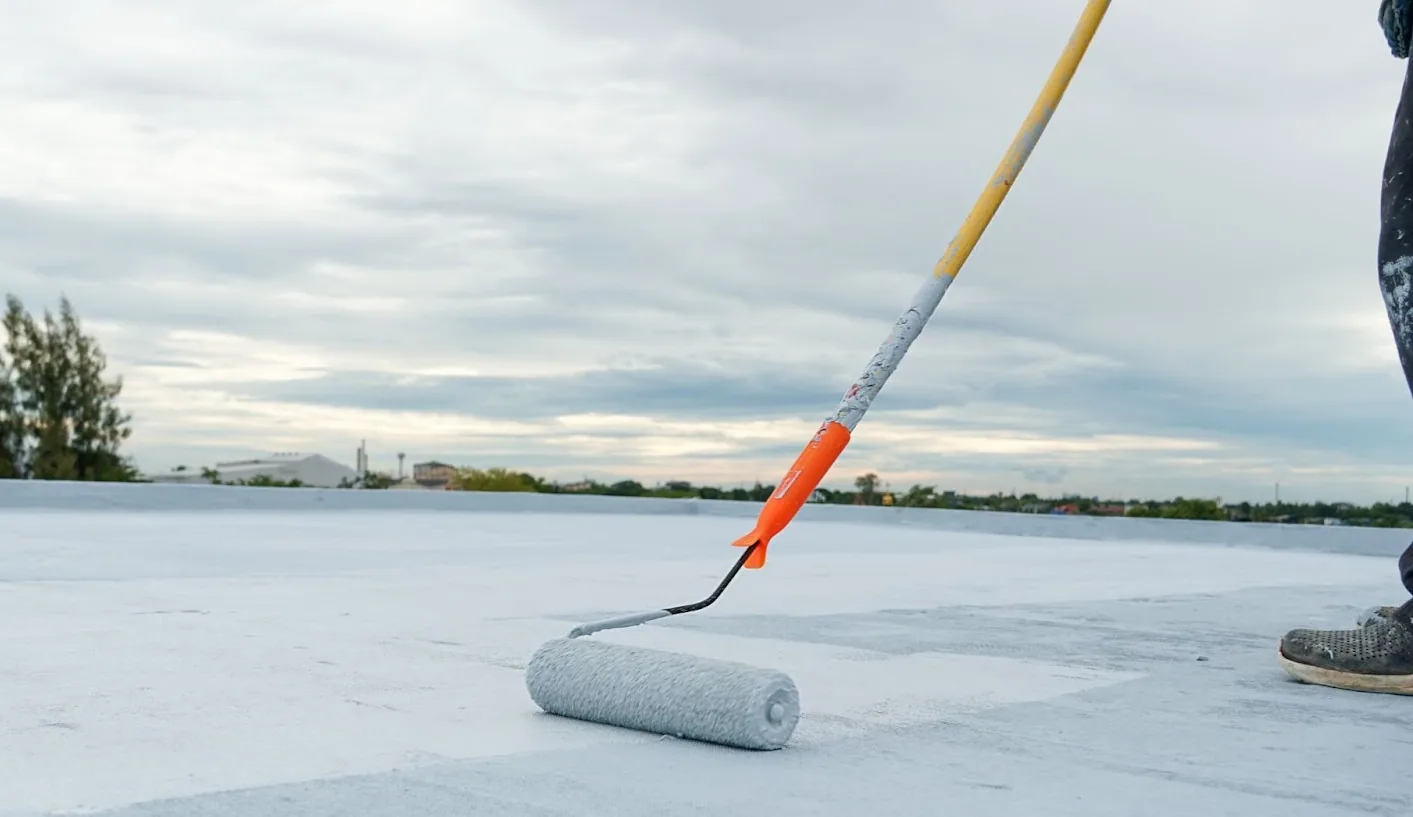
The coating is applied by roller or spray in passes. The first pass seals and primes details, and later passes build the film to the thickness the product requires. Thickness is checked with wet-film gauges during application and verified on cured test patches. Too thin a film wears early, and too thick a film wastes material and can fail to cure through.
Weather sets the schedule. Silicone needs a dry surface and cures with moisture from the air, so humid or rainy days affect the work. The valley's dry warm season is the best window, and the cool season carries most of the year's precipitation. We log the temperature, humidity and surface moisture for each coating day.
Edges need attention at every pass. The coating is cut in at parapets, curbs and drains first, so the field roller never has to chase a detail, and the boundary where one day's work meets the next is marked on the plan. A lap line between days is a place where thickness can run thin, and it gets a measured check.
Restoration Candidates in Nampa
The west quadrant plan identifies commercial development along Caldwell Boulevard, and a building there whose roof still has dry insulation and sound seams can weigh coating against replacement. Coating extends the service life and reflects sunlight, a benefit during the dry warm season.
In Caldwell, about 6 miles northwest, Sky Ranch and the Highway 19 Manufacturing Corridor are among the industrial and commercial areas Caldwell identifies, so owners in both cities face the same restoration choices. A roof coating restoration scope covers the tests, the repairs that come first and the coating chemistry.
The Gateway District on the east side pairs commercial activity with light and heavy industry, and the north quadrant holds large industrial tracts. Roofs in either area that carry many penetrations get a detail pass before coating: every pipe boot, curb corner and drain bowl is primed, reinforced with fabric where the product calls for it, and photographed before the field coat covers it.
A coating plan for a building in North Nampa or East Nampa starts from the same checklist: moisture, adhesion, drainage and seam condition.
Silicone Against Acrylic
Acrylic coatings cost less per square, take recoating easily, and suit sloped roofs that drain freely. Silicone suits roofs that pond and roofs where long-term UV exposure is the main concern. The decision is written from the drainage and substrate record, and the scope shows the alternative so an owner can compare.
A roof that has been coated with silicone before needs another silicone coat, so the file records the product chemistry and the date. Records like this prevent an incompatible coating from being applied years later by someone who cannot tell what is already there.
Closeout File
The closeout file holds the adhesion test, the moisture survey, the repair photographs, the weather log, the thickness readings, the product data and the recoat interval. A follow-up walk after the first wet season checks edges, seams and low areas against the original photographs.
When ownership changes, this file is the document a buyer reads to see what is on the roof, what was tested and when the recoat falls due. It keeps the new owner from guessing at a coating that cannot be seen from the ground.
Questions
Can silicone go over any existing roof?
Over most, with the right primer. A test patch is pulled to confirm adhesion, and a roof with wet insulation is repaired before coating.
Why does a coated roof turn gray?
Silicone attracts dirt, which dulls the white surface. Washing restores reflectivity, and the maintenance plan lists the interval.
Can a different coating be applied over silicone later?
Generally no, because most other coatings do not bond to it. Another silicone coat is the usual path, which is why the file records the chemistry.
Does silicone fix a leaking seam?
It seals small defects, but open seams and failed flashings are repaired first. A coating covers a defect for a season and then it returns.
How thick is the applied film?
The thickness is set by the product requirement and checked with wet-film gauges and cured test patches. The readings go into the closeout file.