Roof Systems
Acrylic Roof Coatings in Nampa, ID
Acrylic roof coating systems in Nampa, ID: seasonal application windows, drainage screening, seam reinforcement and recoat schedules for commercial roofs.
Acrylic Roof Coatings
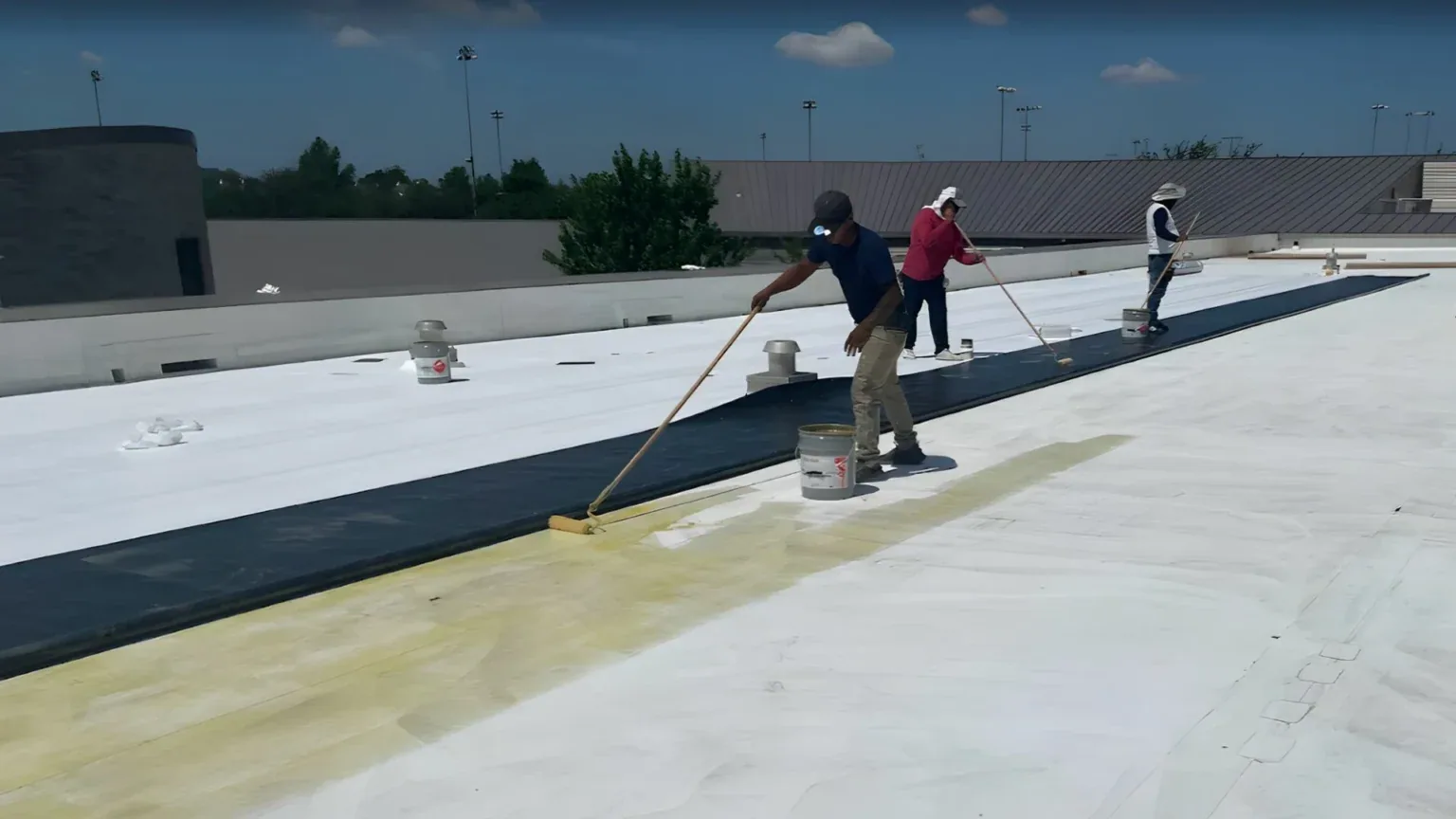
The first thing to check on a roof being considered for acrylic coating is whether water leaves it. Acrylic is a water-based coating that cures by evaporation, and a film that sits under a pond for days can soften, whiten and lift. A roof that drains in a day or two after rain is a candidate. A roof with standing water is a candidate for a different chemistry, or for drainage work first.
For a building in Nampa, ID, the acrylic scope begins with a drainage walk after rain: where water stood, for how long, and what was left behind. Those observations go into the condition notes with photographs, and they decide whether acrylic is the right product.
What Acrylic Does Well
Acrylic coatings are reflective, easy to apply, simple to repair and economical for large areas. They bond to many substrates after cleaning, including metal, modified bitumen, BUR and single-ply membranes. They can be recoated with more acrylic years later without stripping the existing film, which makes the maintenance cycle predictable.
A reflective white surface runs cooler through the dry summer, and that eases the heating and cooling cycle on the substrate underneath. That is the benefit behind many cool roof projects, and it works best on roofs where sun exposure is the dominant stress. The trade-off is that acrylic does not tolerate ponding as well as silicone, and it must be kept in a dry cure window.
Weather Windows and Cure
Acrylic needs warm, dry weather on both sides of the application: dry surface before, enough hours of no rain or dew after. Cool temperatures slow the cure, and rain on an uncured film can wash it away. Most of the valley's moisture lands between November and May, which leaves the dry warm season as the practical coating window.
We schedule coating for that season and keep a weather log for each day: surface temperature, air temperature, humidity and any dew. If the forecast turns, the crew stops at a seam or a boundary that can be left safely, not in the middle of a field. The log is part of the file.
Cold mornings matter here: inversions can leave valley sites colder than the airport thermometer. A coating applied on a cold, damp morning may look fine by evening and then wash or craze after the first dew. That is why the log records surface temperature at the time of application, not just the air reading, and why the crew waits for the roof to warm.
Cleaning and Seam Reinforcement
The coating is only as good as the surface under it. The roof is cleaned of dirt, chalk, algae and loose material, and rinsed. Rust on metal is removed or converted, and failed sealants are cut out. A bond test, a coated and cured patch that is peeled by hand, confirms that the coating adheres.
Seams, flashings and fastener heads receive reinforcement before the field coat. A polyester fabric is embedded in wet coating over seams and penetrations to bridge movement, and a second coat covers it. On exposed-fastener roofs, fasteners are replaced or tightened first, which ties into the metal roof retrofit process. The reinforced details are photographed before the field coat so the work remains visible in the record.
Repair Limits Before Coating
Coating does not repair a roof that is past repair. A wet insulation layer, a membrane that is split along many seams or a deck that has deteriorated cannot be fixed by a film on top. A moisture survey and core samples set the repair limit, and the scope says plainly where coating stops and replacement begins.
On a roof that is sound, a coating can extend service life. A preventive roof maintenance program that cleans and inspects the coating each year, and recoats on a set interval, keeps the film thick enough to protect the substrate. The interval is written into the file and depends on exposure and traffic.
Cost drivers are plain on a coated roof. Square footage sets the volume of coating, the number of details sets the labor, and the amount of repair before coating sets the schedule. A roof with few penetrations and sound seams coats quickly. A roof with dozens of curbs, a patchwork of old repairs and several roof levels takes longer, and the scope prices those items by line so the owner sees where the money goes.
Large Flat and Low-Slope Roofs
Meridian's comprehensive plan identifies industrial employment uses including warehouses, storage, light manufacturing and flex buildings, and Kuna maps an East Kuna Industrial Overlay for larger-scale industrial development. Owners in Meridian and Kuna face the same restoration question as owners inside Nampa when a low-slope roof is aging: whether a coating extends it enough to defer replacement.
Inside Nampa, the large industrial tracts of the north quadrant are the target of the city's industrial-area program. A building on a wide roof can use acrylic where the slope drains and keep a more water-tolerant product for any low area. Mixed systems on one roof are written into the scope by section.
Sun Damage and Recoat Timing
Ultraviolet light erodes coatings over time, and the erosion shows as chalking, thinning and loss of reflectivity. A heat and sun damage repair record includes a chalk test, a thickness measurement at selected points and photographs of worn areas at walk paths and around equipment.
Recoating before the film is gone saves work. A thin film can be cleaned and topped, while a failed film needs stripping or a primer. The file sets the recoat date from exposure, and the inspection walk before that date confirms whether the film can wait.
Closeout File
The closeout file contains the drainage notes, the bond test, the moisture survey, the weather logs, the product data, the film thickness readings and the recoat interval. It also holds photographs of every reinforced detail before it was coated.
The file also notes who may walk the roof and where. Foot traffic wears a coating faster than weather does, and a marked walk path with extra film or granules keeps service technicians from scuffing the field. When equipment is added, the file is updated, and the new walk route is drawn on the plan.
At the first anniversary, a short walk compares the edges, seams and walk paths with the original photographs. Early thinning is easier to correct with a light topcoat than with a full recoat later, and the walk also confirms that drains stayed clear and that no new equipment has been set on the coated field since turnover.
Questions
Why does acrylic fail under standing water?
It is water-based and can soften when it stays wet for days. Roofs with ponds get drainage correction or a silicone coating, and the scope records which areas needed.
When can acrylic be applied in the Treasure Valley?
In warm, dry weather with no rain or dew expected for the cure period. Because most precipitation falls from November through May, the dry warm season is the practical window.
Can acrylic be recoated?
Yes. A clean, sound acrylic film accepts another acrylic coat without stripping. The recoat date is set in the file.
Does coating replace repair?
No. Seams, flashings and wet insulation are repaired first, since coating over a defect covers it only briefly.
How is bond tested?
A small area is coated and cured, then peeled by hand. The result is logged by roof section before the full coating starts.