Property Types We Roof
Restaurant Roofing in Nampa, ID
Coordinate Nampa restaurant roof inspections, equipment transitions, drainage, and repairs around kitchen service and guest access.
Restaurant Roofing
Restaurant roofs can combine a dining room, kitchen exhaust, rooftop equipment, patios, and service areas under one property record. A useful Nampa inspection starts with the operator's access rules and the exact roof zones above the reported condition. We map drains, curbs, penetrations, seams, and earlier repairs, then separate what was observed from what needs testing. Commercial activity concentrates around Gateway and Garrity and along corridors elsewhere in Nampa, and none of that describes an individual restaurant roof. The property contact confirms the location, hours, and safe access point. Near the Karcher Road Corridor, we still verify the actual address and loading approach before arranging a visit.
Nampa has a specific Gateway District plan, and that district is one planning area among several. When a field visit is planned in the Karcher Road Corridor, we confirm the operator, entrance, roof-access point, and any delivery restrictions directly. A corridor name may help locate a property, but it cannot replace a current site map or permission to enter. The visit record keeps the address, building label, and roof-zone identifier together so a future service call can distinguish the restaurant's own roof from adjacent commercial property.

Coordinate with kitchen and dining operations
Before entering a roof, we confirm hatch or ladder access, escort needs, customer entrances, deliveries, patio activity, and any hours when noise or staging should be avoided. The manager identifies who can approve a work zone or pause access if operations change. A commercial roof inspection is divided into sections that can be found again on a plan, rather than described only by an interior room name. We note restricted routes, equipment that cannot be moved, and surfaces hidden from view. If a roof area cannot be reached safely or an occupied space needs separate protection, that limit is recorded and a return or alternate method is considered with the owner.
For occupied dining areas, the manager confirms whether staff need advance notice before a roof hatch is opened or tools are moved through a shared corridor. The approved route and contact are listed with the inspection date.
Kitchen exhaust and rooftop transitions
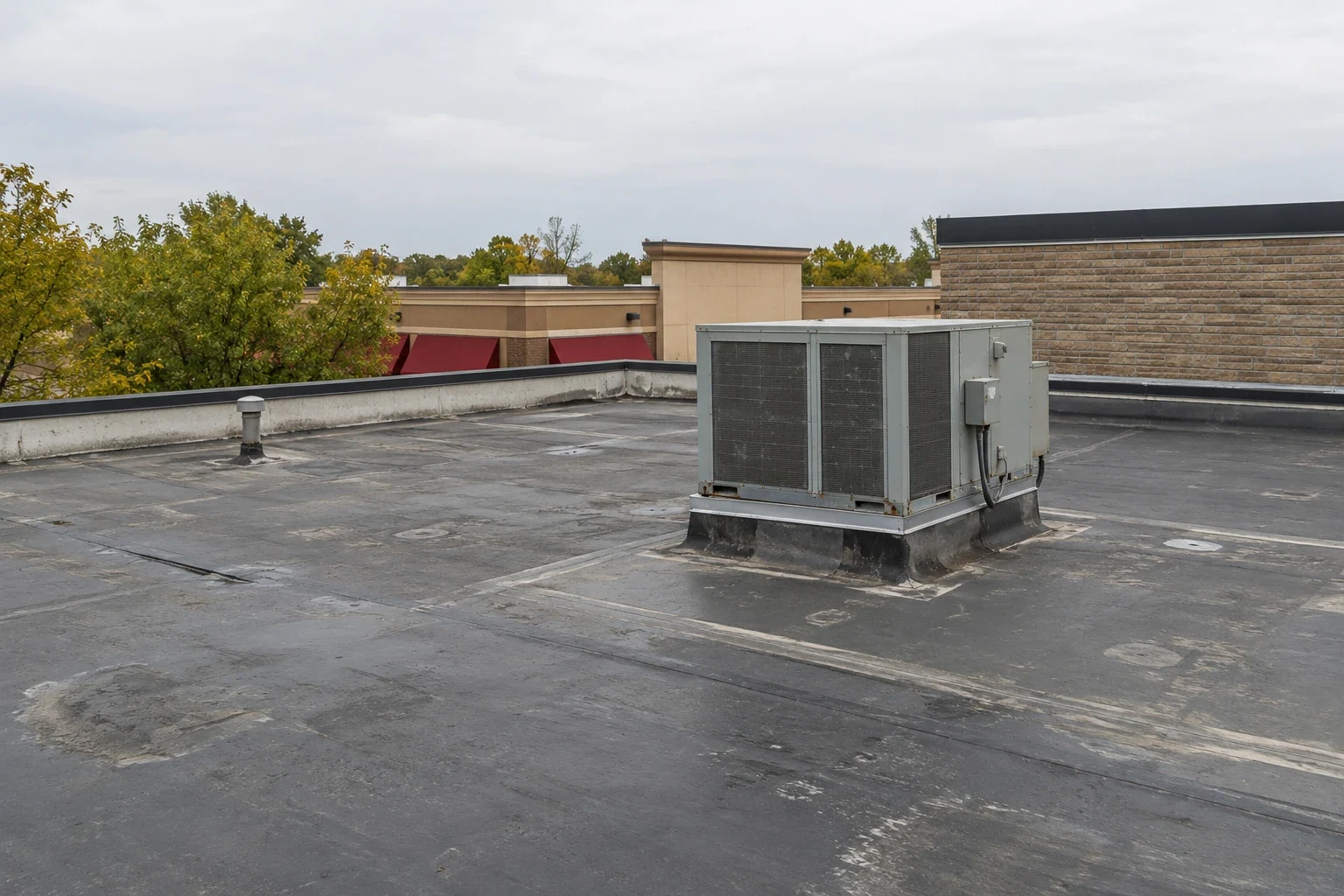
Exhaust fans, curbs, make-up air units, piping, and service penetrations create transitions where roof and mechanical responsibilities meet. We photograph visible flashing and surrounding membrane, note past patches, and request equipment service records when they can help explain prior work. Because an exhaust fan swap leaves a hole in the membrane, a curb and support review names the trade that restores it before replacement or repair starts. The field review does not establish hood performance, fire safety, or mechanical compliance. Those issues belong to the relevant specialist. We identify where an opening, curb, or support needs further examination and document who is expected to restore the membrane after another trade completes work.
Drainage and seasonal inspection
More than 75 percent of the annual precipitation falls between November and May. For a Nampa property, that supports seasonal attention to drains, scuppers, low points, and freeze-thaw conditions without predicting a specific roof outcome. We document outlet obstructions, debris, water marks, and visible deterioration on the date of the visit. A drainage review can clarify whether an issue is maintenance or a repair question. Snow or ice can obscure a detail, and the report should state when a condition could not be confirmed. Nampa's criteria list a 10°F winter design temperature and a 115 mph ultimate wind speed; these design references are not a substitute for building-specific analysis.
Trace symptoms before setting a repair boundary
A leak under a kitchen or dining area may relate to a nearby curb, seam, drain, or roof transition, but the interior symptom alone does not establish the entry point. We compare the report with accessible roof details and note whether moisture testing, selective opening, or an interior review is needed. A condition report lists observed findings, locations, confidence, limits, and follow-up questions. We keep a temporary repair distinct from a permanent assembly correction. If access to the ceiling or roof is restricted, that affects certainty and should be clear in the record. This gives the owner a basis for deciding whether to authorize additional testing before selecting materials or pricing a broader repair.
Plan work around service and guest periods
Work can be assigned to defined roof zones and approved time windows, with the schedule identifying deliveries, staging, lifts, noisy tasks, temporary openings, weather holds, and cleanup. The operator confirms if patio seating, loading, or customer access will be affected. A grocery store roof plan may have different equipment coordination, while a hotel roof review must account for guest access; those comparisons help name questions but do not replace site-specific planning. We record who issues notices, who can pause work, and how changes are communicated. A phase should not begin until the affected area, protection, and daily closeout responsibilities have been confirmed with the owner.
Changes to the plan are recorded by zone, date, and approving contact so the day's handoff remains clear to store staff during turnover and any follow-up review.
Make service records usable later
At turnover the operator receives the roof plan, the section identifiers, dated photographs, a materials list, the work limits, any test results, and a list of items held for later review. We identify completed tasks separately from recommendations that were not authorized. If the owner elects to renew a larger area, a roof restoration comparison should identify the assembly and preparation assumptions rather than promise a coating outcome. Several 2018 commercial codes are adopted in Nampa, and project requirements depend on scope and permit review. The manager should retain roof records with maintenance tickets so a later report can locate the same curb, drain, or penetration. The file should not imply that every section was inspected if access or weather prevented confirmation.
A useful service record also connects roof observations to the decisions made after inspection. We note whether a repair was authorized, deferred, or left for testing, and who accepted the work area at turnover. If a kitchen unit or exhaust system is scheduled for replacement, the roof and mechanical scopes should assign responsibility for the opening, temporary protection, and final flashing check. A photograph alone may not show whether a detail was repaired or simply observed. The closeout can include a short list of future inspection points and their mapped locations, giving the operator a practical reference without implying that maintenance will prevent every leak. Grease from a rooftop exhaust fan that lands on the membrane is recorded as its own line, with the unit it came from, so the cleaning interval and the membrane choice for the next renewal are set from what was seen on the roof.
Questions
Can roof work take place while a restaurant is open?
That depends on access, safety controls, noise, staging, and protection below. The work plan identifies affected areas, approved windows, and contacts before mobilization.
Are exhaust fan curbs part of a roof inspection?
Visible curb flashing and nearby membrane can be documented. Fan performance or mechanical compliance requires the appropriate specialist.
Does a kitchen ceiling stain prove the leak location?
No. Water can travel through the roof assembly. We compare symptoms with roof details and identify when testing or an interior review is needed.
What should the operator share before the visit?
Roof plans, prior leak and repair records, access rules, delivery hours, equipment service history, and the person who can authorize roof entry are useful.
How are temporary repairs tracked?
The record names the location, date, materials, purpose, and any follow-up needed, keeping temporary work distinct from a permanent correction.