Commercial Roofing Services
Roof Drains, Scuppers, and Ponding Correction in Nampa, ID
Drain, scupper, cricket, and ponding correction for commercial roofs in Nampa, ID, with measured water depth, drain tests, and a drainage path record.
Roof Drains, Scuppers, and Ponding Correction
Standing water is measured by depth and by how long it stays. Forty-eight hours after the last rain or melt, a crew walks the roof and records each puddle: where it sits, how deep it is, and which drain or scupper should have taken it. That measurement turns a vague complaint about ponding into a drainage path record, and it shows whether the cause is a clogged outlet, a deck that has deflected, insulation that has compressed, or a drain placed too high in the first place.
In Nampa, ID, drainage deserves attention for a seasonal reason. Drainage here is a seasonal question: the wet months run November through May, so a fault that stays hidden through the dry summer is tested hard in winter. Snow melts in daytime, refreezes at night, and any water left on the roof either freezes in place or finds a seam.
Drainage Path Survey
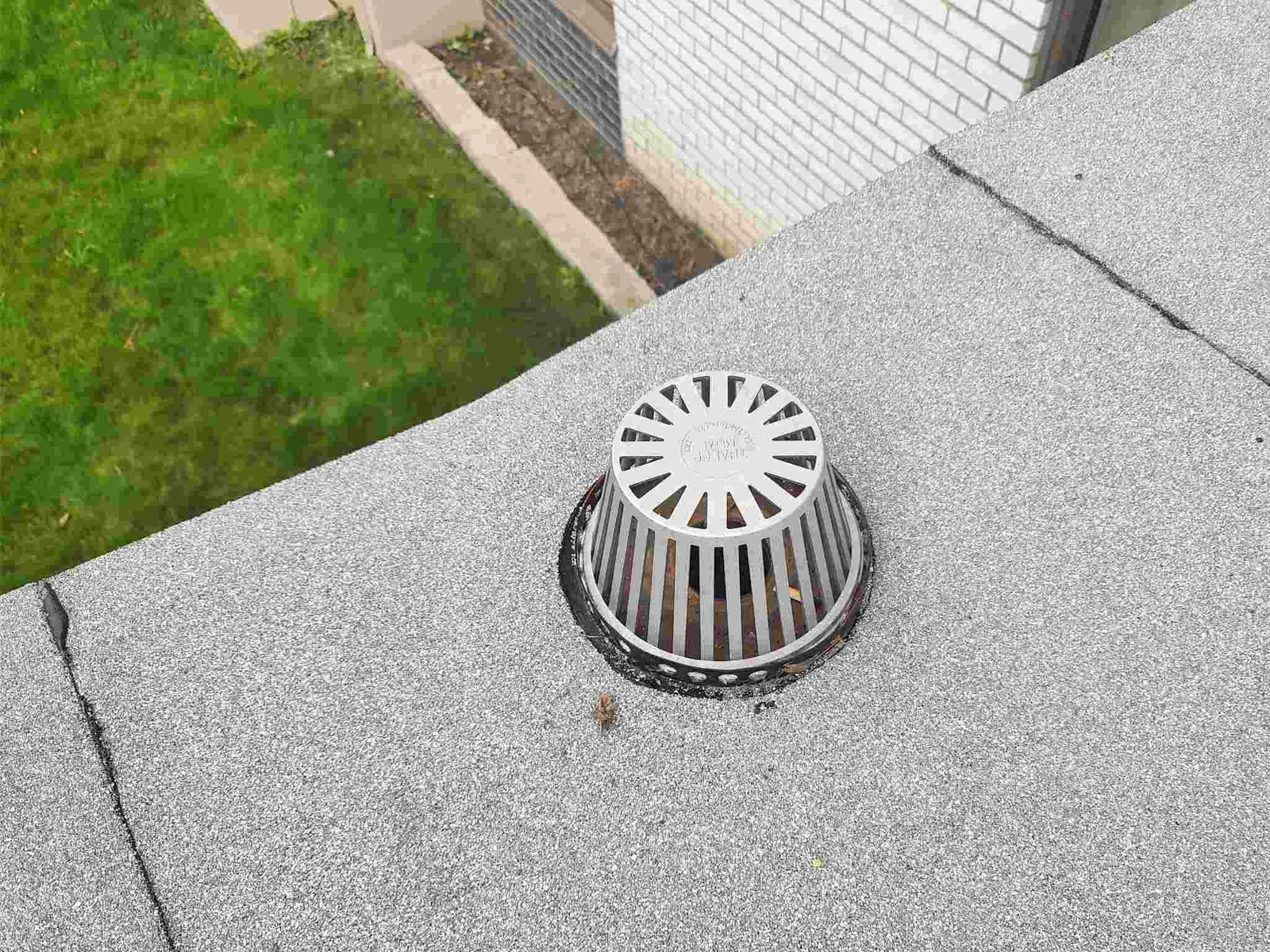
The survey starts at the outlets. Each drain is checked for its strainer, its clamping ring, the condition of the flashing around the bowl, and whether the line beneath it flows. Scuppers are checked for blockage, for the height of the opening above the roof surface, and for the condition of the metal liner. Gutters and downspouts are checked for slope, for loose joints, and for debris.
Then the roof surface is read. Low areas are marked, slopes are estimated, and the distance from each puddle to the nearest outlet is recorded. A roof plan with drain locations and water depths shows at a glance whether the outlets are doing their job. Where the plan shows a puddle far from any drain, the fix is not cleaning but a change in the roof's geometry, which is why the survey comes before the scope.
Causes of Ponding
Ponding has a short list of causes, and each has a different remedy. A blocked drain needs clearing and a new strainer, and any leak it caused is repaired afterward. A drain set above the surrounding membrane holds a ring of water around it, and the remedy is lowering the sump or building a tapered saddle. A deck that has deflected under load or equipment leaves a bowl in the middle of a bay. Compressed insulation, often from heavy foot traffic or a wet board, makes smaller depressions.
Standing water is not harmless. It accelerates membrane aging, supports algae and debris growth, adds weight to the structure, and when it freezes it can push against seams. The full record of ponding water repair begins with identifying which of these causes is present, since a repair aimed at the wrong cause comes back within a season.
Crickets, Saddles, and Added Drains
When a puddle cannot be cleared by cleaning, the roof shape has to change. A cricket is a small tapered section built behind a curb or a piece of equipment to divert water around it. A saddle serves the same purpose at a valley between drains. Tapered insulation can be added over a low area to create slope toward an outlet, and the new membrane is installed over it, usually during a re-insulation or cover board scope.
Where a roof lacks enough outlets, a new drain or scupper may be the only reliable fix. Adding a drain involves the plumbing connection, the structural opening, and the code. Nampa lists the 2017 Idaho plumbing code and the 2018 International Building Code among those it applies, so a new roof drain and its piping are reviewed against both. Overflow drains or scuppers are also checked, since a blocked primary outlet should never leave the roof with nowhere for water to go.
Scupper and Gutter Detail
A scupper is a hole through a parapet, and every hole in a wall is a place where flashing can fail. The membrane must turn into the opening, rise at the sides, and lap over the metal liner, with a termination that sheds water instead of trapping it. Many scupper leaks trace to a liner that sits too high, leaving a lip where water pools, or to a membrane that was cut instead of wrapped.
Gutters and downspouts carry the water away from the building, and in winter they are where ice builds. A downspout that discharges onto a lower roof can wear the membrane there, so a splash pad or a downspout extension goes under it. The edge metal and gutter work is scoped alongside the drains, since the two systems share the same flashing details at the perimeter.
Large Industrial Roofs
Industrial tracts fill much of the city's north quadrant, and the North Nampa Industrial Area program signals more to come. A flat industrial roof usually depends on interior drains and the piping beneath them, and a single blocked line can hold water across the bay it serves. In the North Nampa industrial area, drain tests under a flow of water confirm that lines run clear all the way to the system's outlet.
For a building in historic downtown Nampa, the first step is learning what each internal drain and scupper connects to before any repair is priced. The record we produce lists the outlet, its condition, and whether it was flushed, so later crews inherit a map instead of a guess.
Interior Signs of Drain Trouble
The first evidence of a drainage fault often appears inside the building. A stain that ring-marks a ceiling tile under a drain location, damp insulation near a roof leader, or water that arrives only after heavy melt all point toward the drainage system, not the membrane field. A facility manager who logs the date and weather of each stain gives the survey a useful starting pattern.
Drain lines that run through a building can also fail inside the walls. A cracked or disconnected pipe sends water down a chase, and the roof gets blamed for a plumbing problem. The drain test settles the question by filling the bowl and watching the line, and the finding goes into the same file as the roof photographs.
Closeout File
After corrections the roof is tested again. A hose or controlled water flow is run to each drain to confirm that it takes the water and that the line beneath it flows. The finished file shows the before and after depth readings, the photographs of each corrected area, the drain test notes, and any remaining low spots with a review date. Where a puddle cannot be eliminated, the file says why and which membrane or coating is suited to water that stays.
Questions
How long can water stand on a flat roof before it is a problem?
Water that remains forty-eight hours after rain or melt is treated as ponding and recorded. A few hours of runoff is normal. Repeated standing water in the same spot, especially in the cold months, points to a drainage fault that should be corrected.
Can ponding be fixed without a new roof?
Often it can. Clearing outlets, lowering a drain sump, building a cricket, or adding tapered insulation over the low area can solve the problem within an existing roof system. The survey shows which of these fits, and whether the membrane under the water is still sound.
Do scuppers need overflow protection?
Yes where the parapet could trap water if the primary outlet blocks. An overflow scupper set above the primary outlet gives water a safe path out before the roof reaches its load limit. The design is checked against the structure and the code.
What does winter do to a drain?
Daytime melt followed by overnight freezing can plug a drain bowl with ice, and the water behind it backs up onto the roof. Clearing strainers in the autumn, as part of seasonal inspections, and checking outlets after a cold snap prevents most of these backups.