Commercial Roofing Services
Edge Metal, Coping, and Gutters in Nampa, ID
Edge metal, coping, gutter, and downspout repair and replacement for commercial roofs in Nampa, ID, with attachment checks and a photographed perimeter record.
Edge Metal, Coping, and Gutters
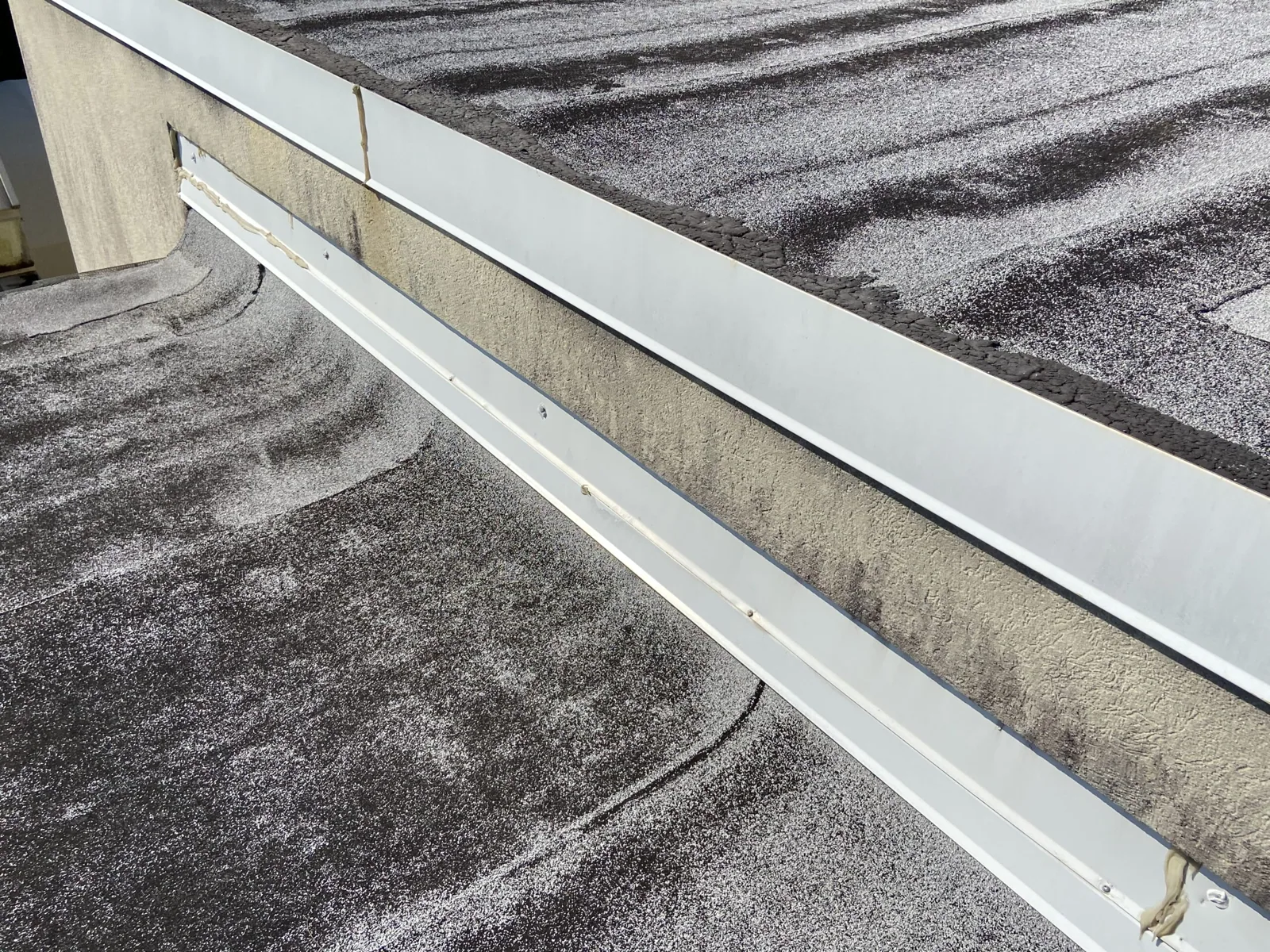
The perimeter is where a roof meets the wind, and it is where the record starts. A crew walks the full edge, section by section, pulling on each length of metal to see whether it moves, photographing every joint, and noting the fastener spacing at the cleat. A length of edge metal that looks tight from the ground can be held by a handful of fasteners and a bead of old sealant. The pull test and the photograph show the difference between attachment and appearance.
For commercial roofs in Nampa, ID, the numbers that govern the edge are local. Two local numbers frame the edge: a 115 mph ultimate wind speed and a 10 degree Fahrenheit winter design temperature, both from the city's design criteria. Wind pressure peaks at corners and eaves, and cold cycles move metal in and out as it contracts and expands. A perimeter detail has to hold under both, year after year, on every run of the building.
Edge Components
Edge metal is a group of parts with separate jobs. A drip edge or fascia cover terminates the roof at the eave and directs water into the gutter or off the building. A gravel stop does the same job on a built-up or ballasted roof and holds loose stone back from the edge. Coping caps the top of a parapet wall, shedding water outward and protecting the wall beneath. Counterflashing laps over the base flashing at a wall, closing the joint against driven rain.
Each component has a failure that looks different. A drip edge fails at its fasteners and lifts in wind. Coping fails at its joints, where sealant splits and water enters the wall. A gravel stop fails at its corners. Our inspection treats each type as its own line in the record, with a location, a photograph, and the observed condition.
Attachment and Wind Resistance
Edge metal needs a continuous cleat or properly spaced fasteners to resist uplift. A common fault is a face-fastened cover without a cleat, which pulls loose as the metal moves. Where the roof is a metal panel system, the same attention applies to the ridge, rake, and eave trims that tie into the panels, and the standing seam trim details follow the panel manufacturer's attachment pattern.
After a wind event the first checks are at corners and long unsupported lengths. A wind-damaged edge that remains in place invites water behind the membrane, and the membrane at the edge is often the first thing to lift. The fix replaces the failed lengths, installs the cleat, and restores the membrane termination in one sequence, and each step is photographed before the next covers it.
Coping and Parapet Walls
A parapet is a wall with a roof on top of it, and coping is the lid. When the lid leaks, water enters the masonry or framing below and may appear as a stain on the interior wall, well away from the roof surface. Joints between coping sections need a sealed splice plate or an expansion joint, and the sealant must be maintained, since sun and thermal movement wear it out.
Repair starts with a water test or a visual check of the joints, then replaces failed sealant, resets loose sections, and adds a splice plate where one is missing. Where coping is badly corroded or deformed, new sections are installed with a continuous cleat rather than face fasteners, and the wall below is checked for moisture damage before the new cap is closed. A failed flashing under the cap is repaired at the same time.
Gutters, Downspouts, and Ice
Gutters carry roof water to the ground, and their weak point is winter. Ice in a gutter adds weight, pries at the hangers, and can lift the edge metal beside it. Gutters with too little slope hold water that freezes in place. The valley's winter inversions and snow cover can make local temperatures colder than Boise airport readings, and a gutter that clears in one location may hold ice in another.
Repairs include rehanging sagging runs with closer hanger spacing, resealing joints, adding end caps and outlets, and replacing downspouts that have crushed or separated. Downspouts that discharge onto a lower roof receive a splash block. The drains and scuppers work is scoped with the gutters so the whole path from roof to ground is accounted for in a single record.
Corridor and District Conditions
Along the Highway 20/26 corridor in northern Nampa, the city's plan describes industrial and regional commercial uses replacing agricultural land, and the edge scope there is set for each building's own use. In the Gateway District, commercial buildings sit near light and heavy industrial uses, so perimeter metal on neighboring roofs may differ widely in type.
Along the State Highway 16 corridor, the city's specific area plan prohibits roof-mounted mechanical equipment within 500 feet of the highway, which changes what sits on a roof there. Where no rooftop units are allowed, the perimeter and parapet are the main details left to maintain. Where a project falls under a corridor plan, the scope names the plan so the finished metal meets what the plan requires.
Replacement Sequence
Replacing edge metal is sequenced so the roof is never left open overnight. Old metal is removed in lengths that can be replaced the same day, the substrate beneath is checked for rot or corrosion, and the membrane termination is cleaned and re-primed before the new cleat goes down. New metal is set with the joint lap oriented away from prevailing weather and sealed with a compatible sealant, then the membrane is flashed over or under it according to the system.
Where the edge is part of the roof warranty, the profile, gauge, and fastener schedule follow the manufacturer's published detail. Each length that comes off and goes on is logged against the plan, so the owner knows precisely which sections have been replaced and which remain original. That log is what the next inspector will want in hand first.
Perimeter Closeout
The finished record lists each run of edge metal by location, the profile and gauge used, the fastener pattern, the sealant at each joint, and the photographs before, during, and after. Pull tests are repeated on the new metal. A year later, the maintenance visit repeats the pull test at the same locations and compares the result with the closeout file.
Questions
How do you know edge metal is properly attached?
A pull test at each length, a look at the cleat or fastener pattern, and photographs of the joints. A length that moves under hand pressure is not holding, whatever it looks like from the ground.
Why does coping leak even when it looks intact?
Leaks usually come from the joints between sections or the sealant at splice plates, not the metal itself. Sunlight and thermal movement split sealant over time, and water enters the wall beneath through the opening.
Can gutters be repaired, or should they be replaced?
Short runs with sound metal can be reseated, resealed, and rehung. Gutters that are crushed, corroded through, or sloped wrong are replaced. The perimeter walk shows which condition applies on each run.
Does new edge metal affect the roof warranty?
Some manufacturers require specific edge profiles to maintain wind-rated coverage. Send the warranty terms and we match the profile and attachment to them where the terms allow, then document the installation.
What does ice do to a gutter?
Ice adds weight, pulls at hangers, and blocks the outlet so water backs up under the edge. Clearing gutters before the wet season and checking hangers afterward keeps most failures from developing.