Roofing Capabilities
Roof Capital Planning in Nampa, ID
Roof capital planning in Nampa, ID: condition-based replacement timing, repair limits, scope options, and phased budgets for owners with one roof or many.
Roof Capital Planning
Replacement dates are forecasts, and a forecast is only as good as the observations behind it. A capital plan that lists a roof as due in a certain year because of its age alone has skipped the work of looking at the roof. The plan we prepare begins with the condition entries from the most recent walk, adds the repair history, and then states a replacement window with the reasons written beside it, so the owner can see which findings move the date earlier and which could move it later.
For commercial owners in Nampa, ID, the planning question is rarely one roof. A property group may hold a distribution building near I-84, a retail center in the east quadrant, and an office building downtown, and each one competes for the same capital budget. The plan puts all of them on one schedule, ranks the sections by condition and consequence, and leaves room for the roof that fails earlier than expected.
Inputs to the Forecast
Four sets of records feed every forecast. The first is the condition report, with section ratings and photographs. The second is the repair history, which shows whether problems are isolated or recurring. The third is the moisture evidence: meter readings, an infrared map, and core results where a cut was made. The fourth is the building's own paperwork, including the original roof plan, any warranty documents, and the leak log kept by maintenance staff.
Where one of the four is missing, the plan says so and states what the missing item would change. A roof with no moisture evidence, for instance, carries a wider window than a roof with a clean infrared map, because wet insulation can force a replacement scope that a dry roof would not need. The forecast narrows as the evidence improves, and the plan names the cheapest test that would narrow it.
Condition-Based Timing
Age is a poor guide to timing because roofs of the same age age differently. A section with good drainage, few penetrations and shade from a taller wall may outlast a neighbor of the same age that ponds and carries a rooftop unit with a leaking condensate line. The plan therefore assigns each section to a window: replace within the budget cycle, replace within a few cycles, or monitor with repairs.
The assignment rests on observable triggers. Repeated failure at the same flashing, seams opening again after resealing, wet insulation across a widening area, and membrane splits at the field are all triggers that pull a section forward. A clean walk with intact seams and dry readings pushes it back. Each window carries a follow-up date, so the plan is reviewed against a fresh inspection instead of left to age.
Repair Limit and Replacement Threshold
Every roof section reaches a point where another repair costs time and disruption without changing the outcome. We write that point into the plan as a repair limit, expressed in terms the owner can check: a count of repeat repairs at one detail, a confirmed wet area above a stated size on the roof plan, or a seam condition that failed again within a season of resealing.
Below the limit, a repair or a maintenance visit is the sensible spend. At the limit, the section moves into the replacement column and the plan lists the scope choices: full replacement, a recover where the existing insulation is dry and sound, or coating restoration where the membrane is worn but the system beneath it is intact. The plan states which options the evidence supports and which it rules out.
Code and Equipment Review
A replacement is not only a roofing decision. Nampa lists the 2018 International Building Code, the 2018 International Energy Conservation Code for commercial buildings, and the 2018 International Existing Building Code among its adopted codes, and a replacement scope is checked against what the building department requires for that building. The plan flags items that tend to change the budget, such as insulation thickness, edge metal, and drainage that may need correction.
Corridors add their own rules. Along Highway 16, the area plan bars roof-mounted mechanical units on structures within 500 feet of the road. An owner there who expects to relocate or replace equipment during a roof project should settle the equipment plan before the roof budget is fixed. Where equipment will be lifted off and reset, the curb and support work goes into the same line item.
Phasing Across Budget Years
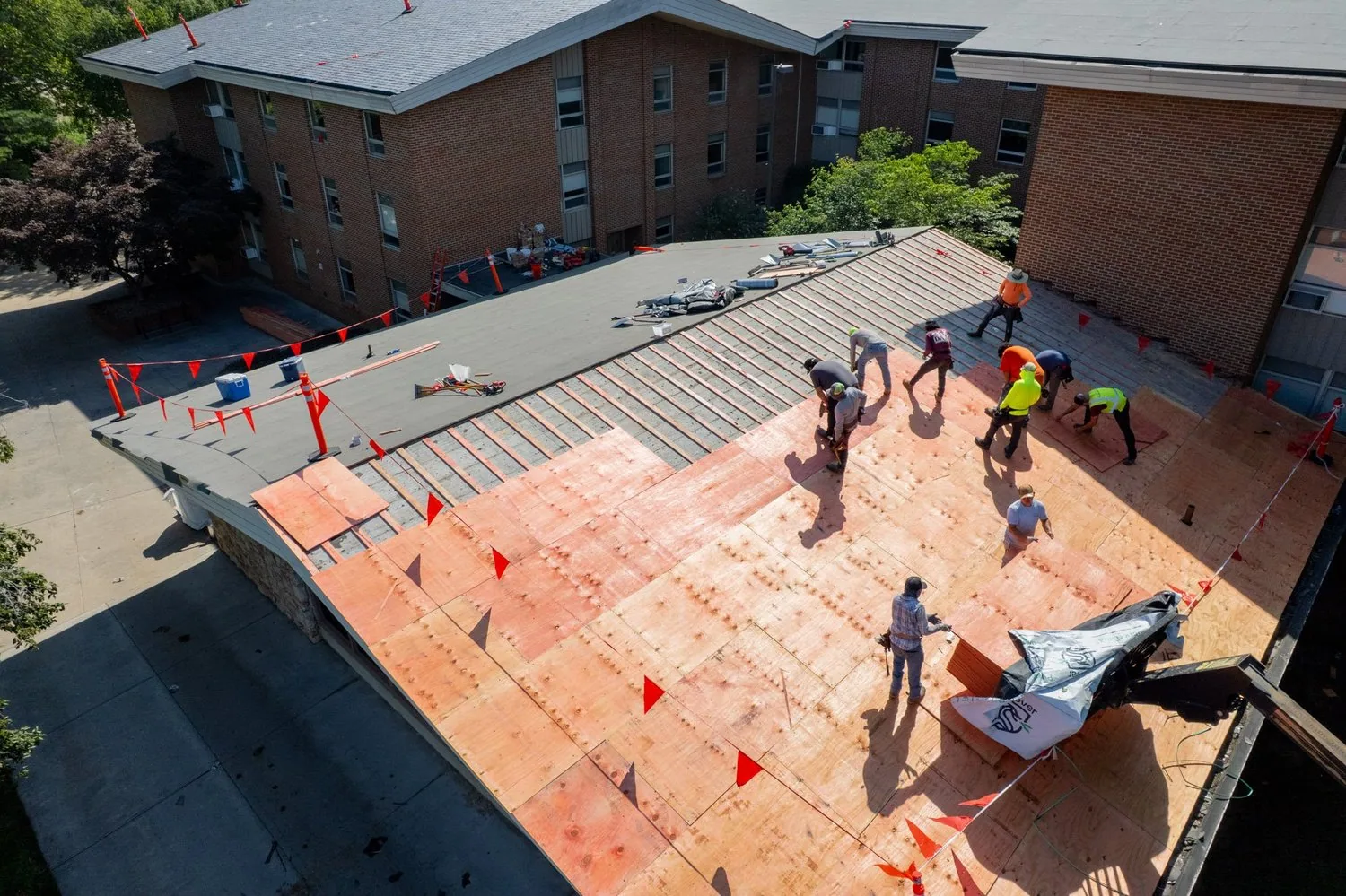
A portfolio rarely replaces everything in one year. The plan sequences work by condition first, then by access and by the operating calendar of each building. A cold-storage or food-processing tenant may allow work only in certain months, while an office tenant may care more about noise at certain hours. These constraints are written beside the roof section so the schedule reflects them from the start.
Valley weather sets the outer limits, and it also decides which months are spent on site walks and which on drafting scope documents, bid packages and tenant notices. A winter spent on those tasks means the dry stretch opens with materials ordered and access already agreed. Membrane replacement is planned for the dry warm stretch, with inspections and design work filling the wet months, since over 75% of the year's precipitation falls from November through May. A plan for the North Nampa industrial tracts, where an owner may hold several roofs that fall due close together, can stagger them across two seasons so crews, materials and tenant access are not stacked into one summer.
Budget Package and Closeout
The finished plan is a document an owner can hand to a lender, an investment committee or an insurer. It holds the schedule, the ranked section list, the evidence behind each window, and the open questions that could change the numbers. When work is done, the closeout file for each section updates the plan: installed system, test results, photographs, and the next review date.
The same file supports warranty management and feeds the asset register, so the capital plan is revised from facts and not from memory. For owners in the historic downtown and the south quadrant, where the plan notes the university district, a revised schedule after each closeout keeps older roofs from slipping off the list.
Questions
What should be in a roof capital plan for several buildings?
A ranked list of roof sections, a replacement window for each with the reasons, the repair limit for each, the scope options the evidence supports, and a follow-up date. Open questions sit beside the sections they affect.
Can a plan be built without knowing the roof's age?
Yes. Condition drives the windows, and age enters only as one input when it is known. Core cuts can reveal layers and insulation, which often tells more than a missing installation date.
When is a recover a better choice than replacement?
A recover fits when moisture readings show the insulation is dry and the deck is sound. Wet insulation or a deck problem rules it out, and the plan then carries the higher scope.
How much should be held back for a roof that fails early?
The plan reserves space in the schedule more than a fixed amount, naming which section would move up first. The dollar reserve is the owner's decision once the scope options are priced.
Does the plan change after a hard winter?
It is revised after the spring review. Ponding that froze, edges that lifted, and new leaks all move windows, and the revised plan shows what changed and why.