Roofing Manufacturers
GAF Commercial Roofing Systems in Nampa, ID
GAF commercial roof systems in Nampa, ID: how we identify, repair, and maintain thermoplastic, modified bitumen, and coated roofs with a written record.
GAF Commercial Roofing Systems
The first photograph on a manufacturer-specific repair is of the membrane's own markings, not of the damage. Printed lines, seam edges, the color of the surface and the pattern of fasteners tell a trained eye which system is on the roof, and that identification decides which cleaner, which primer and which welding or bonding method will hold. A repair made without it may look tidy on the day and open at the first freeze.
GAF manufactures commercial roofing in several categories, including thermoplastic single-ply membranes, modified bitumen sheets and liquid-applied coatings. Owners in Nampa, ID may hold roofs from any of those categories on the same property. Our job on any of them is to inspect, repair, restore and maintain, and the written record of what the roof is comes before the first repair, so the work follows the system and not a guess about it.

System Categories
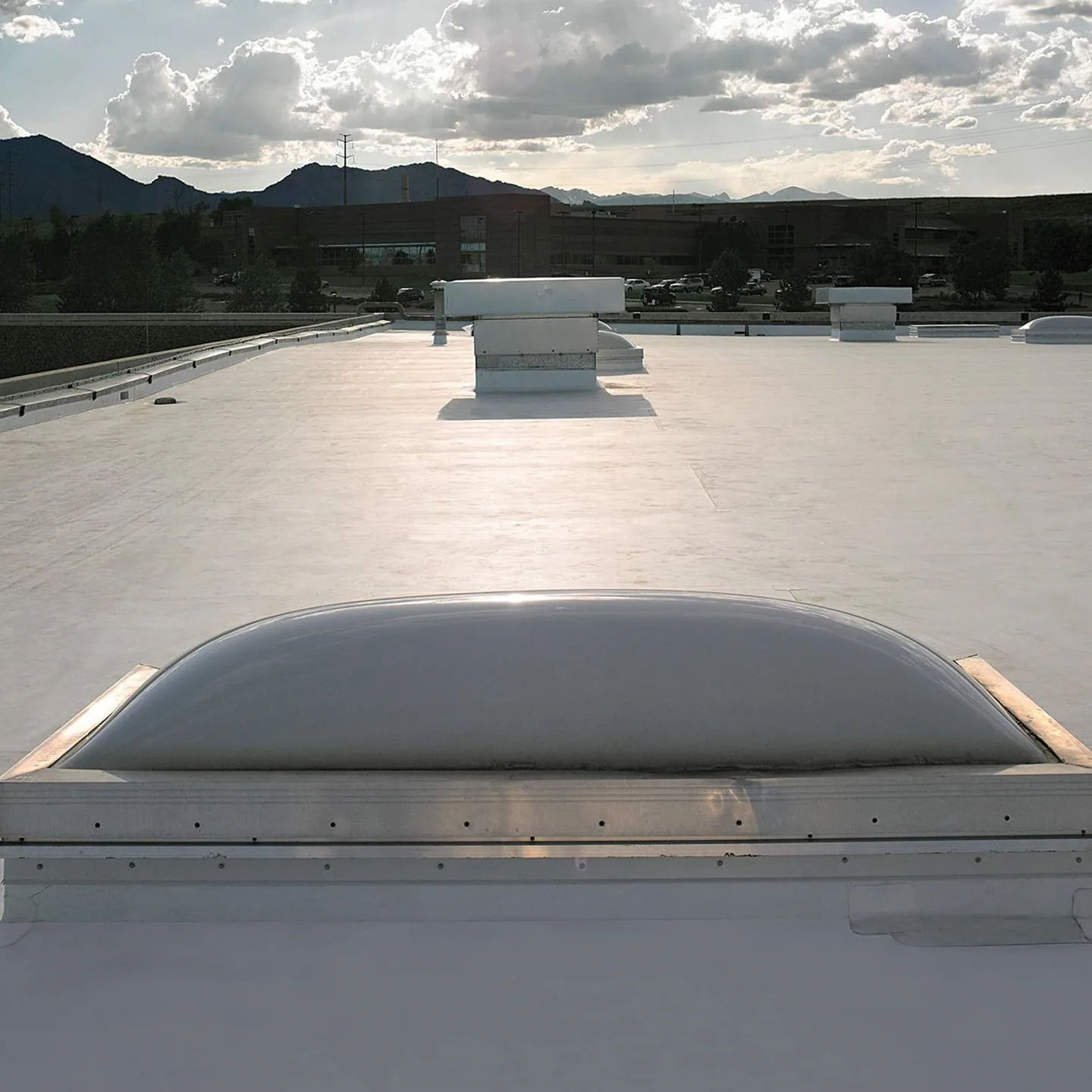
A thermoplastic single-ply membrane, such as TPO, is a sheet whose seams are fused with hot air, creating a continuous surface that can be probed and tested. A modified bitumen system is built from asphalt-based sheets, usually in plies, joined at laps by heat or adhesive. A liquid-applied coating forms a continuous film over a prepared surface.
Each category fails in its own way. Thermoplastic seams open when they were welded over dirt. Modified bitumen laps open where flashings move, and granulated surfaces lose their mineral cover to wear. A coating thins where traffic crosses it. Our walk looks for the failure pattern that belongs to the system, then records the section, the condition and the date.
Identifying the System on Site
Records come first. We ask for the roof plan, the warranty paperwork and any past reports, and then compare them with what is on the roof. Where the paperwork is missing, a small core cut shows the layers, the insulation and the fastening, and a photograph of the cut goes into the file with its location marked.
Identification matters because membranes of different families do not always bond to each other. Asphalt-based materials, for example, can attack some thermoplastic sheets if they touch, so a repair detail that mixes the two needs a separation layer. The file states what the roof is, how that was confirmed, and what remains uncertain, and any repair is specified against that statement.
The same sequence applies when the roof turns out to be from another maker. A property that holds a Carlisle SynTec roof on one building and a Johns Manville roof on the next is walked in the same order, rated on the same scale, and filed under the same section numbers.
Repair Preparation and Testing
Surface preparation decides whether a repair bonds. On a thermoplastic roof, the area is cleaned, weathered surface is removed where the method requires it, and a patch is welded with a probe check along its edge. On modified bitumen, the repair area is dried, loose granules are cleared, and a new sheet or reinforced mastic is set with overlaps sized to the detail. On a coated roof, an adhesion test patch is applied before a larger repair is approved.
Each of these steps leaves a record: before and after photographs, the method, the material used, and the result of the probe or pull test. A repair that cannot be tested is flagged on the work order, and the owner is told that the repair limit has been reached for that detail.
Flashing details get the closest attention, because most leaks on these systems begin at a termination, a pipe boot or a corner, not in the field of the sheet. The repair specification names the flashing type, the height of the termination, the fastening method, and the sealant, and a photograph is taken before the detail is covered.
Winter and Heat on the Surface
Cold is the test for these systems here: a 10 degree Fahrenheit winter design temperature and a 20 pound ground snow load sit in the city's criteria, and over 75% of the valley's precipitation arrives between November and May. A thermoplastic sheet stiffens in cold, and a seam under a thawing drift sees movement every day. The inspection before winter checks seam condition, flashing terminations and the drainage path, so meltwater has somewhere to go.
Summer brings long dry stretches and strong sun. Surface wear, chalking and thermal movement at penetrations show up after those months, and the spring walk records them. On the industrial tracts of North Nampa and along Ustick Road, where the city plan describes industrial and regional commercial uses, these seasonal checks go into the same photo sequence each year.
Warranty Paperwork and Records
A manufacturer warranty depends on its own terms, and an owner should read the issued document for the roof in question. We summarize the terms that affect maintenance and alterations, log the visits that meet any stated duties, and keep the installation evidence in a closeout file. Keeping that file current is the daily work of warranty management, and the routine is the same for any manufacturer's roof.
Nothing in our work changes the manufacturer's own conditions. When a repair, a coating or a penetration could affect coverage, we say so before work starts and recommend that the owner confirm the approach with the manufacturer. The record of that conversation goes into the file beside the work order.
Repair, Recover or Replace
When a roof of these system types reaches the end of its sensible repair life, the choices follow its condition. A sound thermoplastic roof with dry insulation can sometimes accept a recover. A worn but dry surface may suit coating restoration. A saturated roof needs replacement, with the wet insulation removed.
The decision comes from moisture evidence, not preference. An infrared survey and core cuts show where the water is, and the report ranks the options with the reasons. Building codes adopted by the city, including the 2018 International Building Code and International Existing Building Code, shape the final scope.
Staging matters on an occupied building. A recover or coating can often be done in sections, so tenants keep their space while one drainage area at a time is opened and closed in a day. The scope states the day's tie-in so that the roof is watertight at the end of every shift, with weather forecasts checked before the membrane is opened.
Questions
Can you tell which GAF system is on my roof if the paperwork is gone?
Usually the surface, seams and attachment give strong clues, and a core cut confirms the layers. We record what the evidence supports and mark any point that stays uncertain.
Do repairs on a GAF roof affect its warranty?
That depends on the terms of the warranty issued for your roof. We read them before work begins, tell you which items could matter, and suggest you confirm the approach with the manufacturer.
Can a thermoplastic roof be repaired in cold weather?
Hot-air welds need a clean, dry surface and workable temperatures. In deep cold we use temporary measures to stop water and schedule the permanent weld for a workable day.
Is a coating a substitute for replacing a worn membrane?
A coating extends a sound roof; it does not rescue a wet one. Moisture readings and an adhesion test patch decide whether the roof qualifies.
Which records should I keep after a repair?
Keep the work order, before and after photographs, the material used, and any test result. We deliver them in a closeout file and add them to the roof's history.