Roofing Manufacturers
Johns Manville Roofing Systems in Nampa, ID
Johns Manville roof systems in Nampa, ID: how we inspect, repair, and maintain built-up, modified bitumen, and single-ply roofs with core cuts.
Johns Manville Roofing Systems
A built-up roof is read in layers, and the layers are counted from a core cut. The cap sheet or gravel on top says little about the number of plies beneath it, the type of insulation below them, or whether any ply has been wetted by a slow leak. One cut, four inches across, answers all three, and the photograph of that cut is the most useful single image in the roof file.
Johns Manville produces commercial roofing in the built-up, modified bitumen and single-ply families, along with roof insulation boards. For owners in Nampa, ID with roofs of those types, our work is to inspect, repair, restore, and maintain them: we walk the roof, identify the assembly, test for moisture, and write the findings by roof section. The repair that follows is chosen to suit the roof that is there, not a catalog description of it.
Plies, Cap Sheets and Surfacing
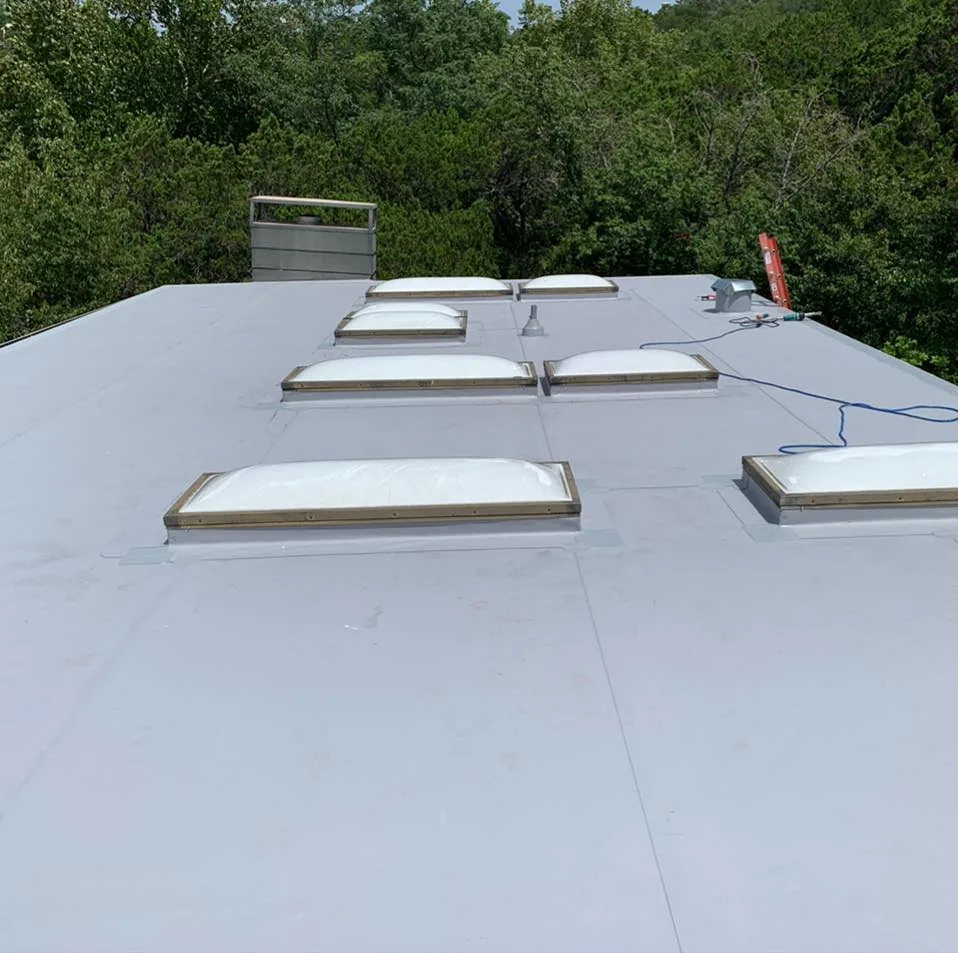
A built-up system is made of alternating layers of reinforcing felts and bitumen, finished with a gravel surface or a mineral-surfaced cap sheet. A modified bitumen system uses factory-made sheets with polymer-enhanced bitumen, applied in one, two or more layers. The finish layer takes the weather, and the plies beneath carry the waterproofing.
Wear shows first at the surface. Gravel can scour away from the field and pile near drains, leaving bare bitumen exposed to sun. A cap sheet loses granules, and the exposed mat ages quickly. The inspection records which surface is present, how much is bare, and where granules collect, then relates the finding to the plies beneath using a core cut where the evidence calls for one.
Age of the roof is entered as unknown unless a document gives it. Counting plies and noting the surfacing gives a rough picture of build-up history, but it is not an age, and the report keeps the two apart. A roof with several overlays may be thicker than its design loads were set for, so the number of layers is also noted for the structural reviewer.
Blisters, Ridges and Laps
Blisters are pockets of trapped moisture or air between plies. A small intact blister is monitored and photographed, and a broken one is opened, dried, and repaired with a patch that overlaps sound material. Ridging often follows the edges of insulation boards or the line of a deck joint, and it can crack the membrane when the building moves.
Laps are where modified bitumen leaks start. The side and end laps are checked for open edges, and a lap that has lifted is cleaned and re-adhered with the compatible method. Each defect is marked on the roof plan with its section number, and a photograph is taken from a repeatable position so the next visit can compare size and condition.
Flashing is the other major source of leaks on these assemblies. Base flashings at walls and curbs are checked for stretched or separated plies, open end laps and sealant that has dried out. Counterflashing and coping are checked for gaps where water can run behind them, and metal edge pieces are checked for fastener condition.
Heat, Flame and Fire Controls
Some bitumen work uses heat: torches, hot kettles or heat welding. Others use cold adhesive or self-adhered sheets. The method is chosen from the building, not from habit. On roofs with combustible decking, wood blocking or insulation that could ignite, a cold-applied method is the safer specification, and work areas near the building edge get additional protection.
Whenever heat is used, the plan names a fire watch, an extinguisher location, and a period after work ends during which the roof is monitored. These items belong on the work order and in the closeout file with the date and time. They also matter for occupied buildings, where the owner needs to know what the tenants below will experience during the work.
Insulation Boards and Recover Decisions
Roof insulation boards, often polyisocyanurate, sit under the membrane and set a large part of the roof's thermal performance. When boards are wet, they lose value and hold weight, and a roof over them cannot be trusted. A cover board adds a protective layer between insulation and membrane, which helps against hail, foot traffic and heat.
Where a built-up or modified bitumen roof is near the end of its life, the question is whether a recover is possible. The answer depends on dry insulation, a sound deck, and a roof drainage path that will not worsen with added thickness. The moisture survey and core cuts supply the evidence, and the report says whether the recover is supported or ruled out.
North of I-84 toward the Boise River, the city plan describes large industrial tracts, and a recover over dry insulation there avoids the debris and downtime of a tear-off. The moisture evidence shows whether that choice is open. Where wet insulation turns up, the removal area is mapped so replacement of only the wet boards can be priced.
Downtown and South Quadrant Buildings
In the south quadrant, historic downtown is its own activity area, and the university district sits there too. The adopted Downtown Nampa Plan is a current city document. A building's age and construction are not assumed from its district, so the roof's assembly is identified from the roof itself.
For an owner along downtown streets or in the south quadrant commercial area, an inspection that records the layers, the drainage path and the condition of parapet walls gives a base for decisions. A college or university building may have several roof levels and many penetrations, each of which becomes its own section on the plan.
Closeout Records
The closeout file for work on these systems holds the core cut photographs, the moisture results, the method statement for any heat work, the materials used, and the final photographs. Warranty terms, where a warranty exists, come from the issued document, and we log the maintenance that it asks for. A comparison with Soprema or GAF systems can use the same file, since the assembly is documented independently of the brand.
Winter planning enters the file as well. The wet months are the deadline: each section's follow-up date falls ahead of November, when the valley's heavy precipitation begins, and the city's 20 pound ground snow load is the winter reference. The first visit after the thaw checks gravel, laps and drain sumps for damage the season caused.
Questions
How do you count plies without tearing the roof apart?
A small core cut, resealed the same day, shows each layer, the insulation and the deck. The cut is photographed and its location marked on the roof plan.
Is a blister on a built-up roof an emergency?
Not by itself. An intact blister is monitored, and a broken one is opened, dried and patched. Several blisters in one area suggest trapped moisture and call for a moisture survey.
Why avoid torch application on some roofs?
Open flame near combustible decking or insulation adds fire risk. Cold-applied or self-adhered sheets remove that risk, and the work order states which method is chosen and why.
Can a modified bitumen roof take a recover?
Yes, when the insulation is dry, the deck is sound and drainage will still work. Moisture readings and core cuts decide it, and the report records the evidence.
What goes in the file after a repair on a Johns Manville roof?
Before and after photographs, the material used, the method, any test result, and the date. If heat was used, the fire-watch record is filed with it.