Roofing Manufacturers
Soprema Roofing Systems in Nampa, ID
Soprema roof systems in Nampa, ID: how we inspect, repair, and maintain modified bitumen sheets and liquid-applied flashing, with tested details.
Soprema Roofing Systems
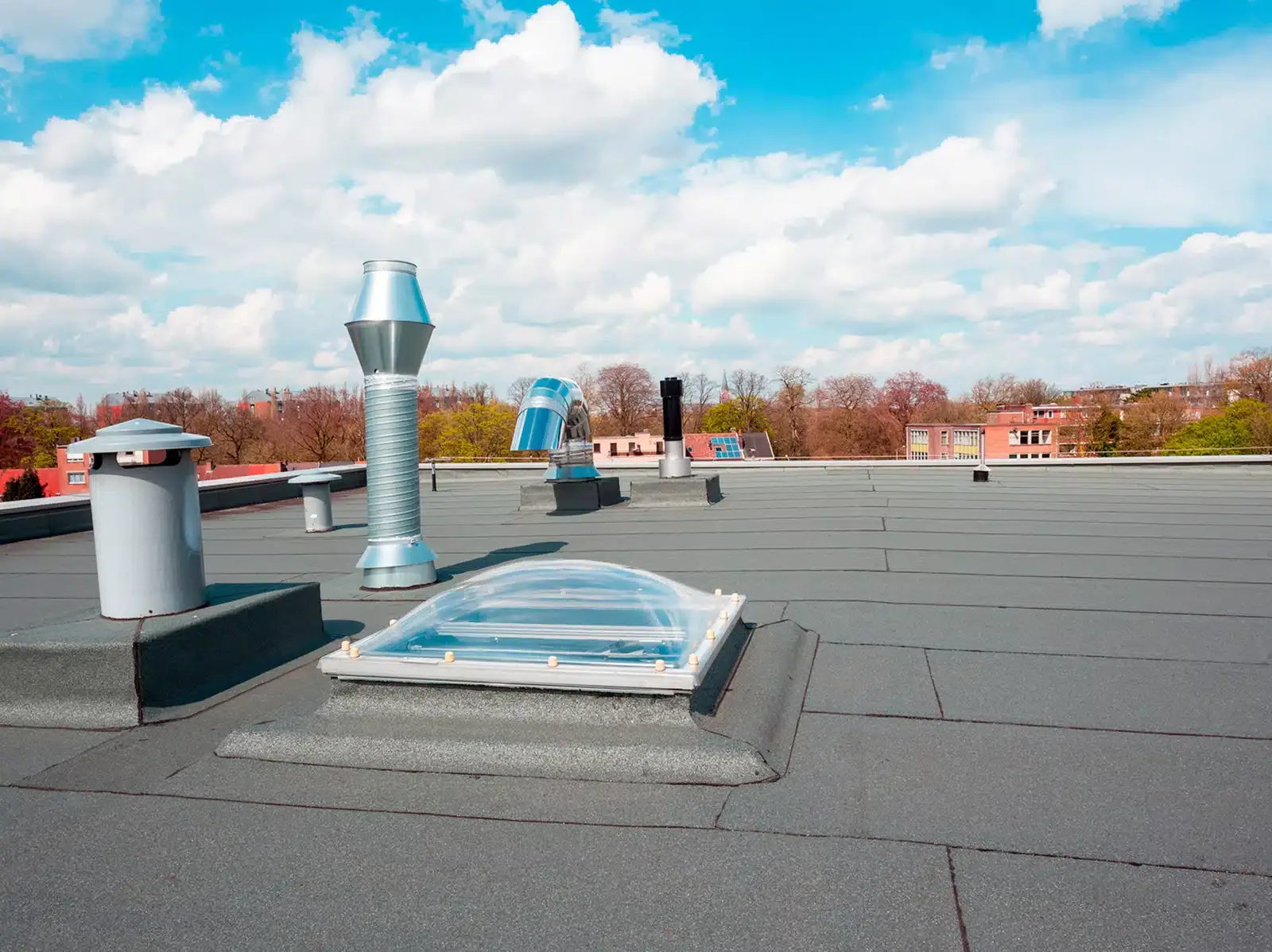
A penetration cluster is where the roof plan and the field differ most. Pipes, conduits, gas lines and equipment supports gather near a mechanical room, each added at a different time by a different trade, and the flashing around them is a record of that history. A cluster of that kind is often the part of the roof that leaks first, and it is the reason liquid-applied flashing resins are valued: they can follow a shape that a prefabricated boot cannot.
Soprema manufactures modified bitumen sheets and liquid-applied membranes and flashing resins, along with roof insulation. Owners in Nampa, ID can have roofs built from those product types inspected, repaired, restored and maintained. The record begins with the roof section and the condition of its details, because the details decide the condition of the roof more often than the field of the membrane does.
Sheet and Liquid Systems
A modified bitumen roof uses polymer-enhanced asphalt sheets, often in two layers, with a base sheet and a cap sheet. The sheets can be applied by torch, by hot asphalt, by cold adhesive, or in self-adhered form. A liquid-applied system is a resin brushed or rolled over a prepared surface, usually reinforced with a fabric, and it cures into a continuous layer.
The two families often meet on one roof. The field may be modified bitumen, while the flashings around curbs and penetrations are liquid-applied. The walk therefore reads each detail separately, and the report states which system forms each one. A crack in a resin flashing and a lifted lap in a sheet are different failures, and their repairs differ as well.
Age and layering are recorded rather than assumed. A modified bitumen roof may have had a second sheet added over the first, and a resin flashing may sit over an older mastic. A core cut or a careful lift at an edge shows how many layers are present, and that count is entered on the roof plan next to the section number.
Penetration Clusters
Each pipe, stack and conduit in a cluster is photographed from a marked position, and the spacing between them is measured. If two penetrations are too close for a prefabricated boot, a liquid-applied detail may be the only option that closes the gap. Equipment rails and supports are checked for pockets that hold water, and for fasteners that pass through the membrane.
The repair replaces the failed element and reconnects the new flashing to the field sheet. A penetration flashing is not complete until it has been tested, and the test may be a water run, a visual cure check, or a pull test of the reinforcement. The work order lists the product type, the number of coats, and the date of each coat.
Condensate lines and electrical conduit often run across a roof on supports that rest directly on the membrane. Each support is checked for a protective pad, and a line that drips onto the surface is rerouted or given a splash block. Small corrections of this kind prevent wear at spots where service staff cannot see the damage.
Reinforced Liquid Flashing
A liquid flashing performs well only if the surface is prepared. Loose material is removed, dirt is cleaned off, rust on metal is treated, and a primer is applied where the system calls for it. A reinforcing fabric is embedded in the first coat, and a second coat covers it. The layers must cure before rain, and manufacturers usually state a minimum time and surface temperature.
That is why scheduling matters. We check the forecast before opening a detail, apply the resin when the surface is dry, and cover or protect it if weather turns. Photographs show the substrate, the embedded fabric and the finished coat, and the file records the batch and the application temperature. These steps matter more to the result than the choice of brand, and they are what the closeout file proves.
Cured thickness is checked as the work proceeds. A wet film gauge during application and a measured sample after cure show whether the applied coat matches the quantity the system calls for, and the readings go into the closeout file next to the photographs of each coat.
Laps, Seams and Surfacing
In a modified bitumen field, the laps are the weakest line. Side laps and end laps are checked for open edges, wrinkles and voids. A lap that has failed is cleaned and re-adhered by the method suited to the sheet, and the repair is probed once it cools. Granule loss on the cap sheet is recorded, since an exposed mat ages faster in strong sun.
Where the surface is worn but the sheet beneath is sound, a flashing repair and a surface coating may extend the roof's service. The decision rests on moisture evidence. A roof with dry insulation can take the treatment, and a roof with wet insulation cannot, so the survey results come before the coating discussion.
Drains and scuppers receive the same treatment as other details. Debris is cleared, the flashing around the sump is checked, and any ring or collar that has loosened is reset. A scupper that has lost its sealant is resealed and the surrounding sheet is checked for water staining on the wall below.
Work Above Occupied and Clinical Space
Nampa's north quadrant plan names healthcare among the activities near I-84, and the city's economic profile lists healthcare as a target sector. Roof work above clinical and office space has to account for tenants below: noise, odors, hot work and access. A hospital roof or a medical office roof gets a work plan that names the quietest hours for noisy tasks, the air intakes to be protected, and a contact on the facility side.
The same planning applies to any occupied building. Cold-applied and self-adhered methods avoid open flame, and liquid resins are chosen with their odor and cure behavior in mind. The plan describes each step before work begins, so facility staff know what to expect on each day.
Local Conditions and Records
The wet season brings over 75% of the valley's moisture, and the city's criteria add a 20 pound per square foot ground snow load to the winter picture. Along the Highway 20/26 corridor, where the city plan describes industrial and regional commercial transition, details like flashings and laps are reviewed before the wet season and again after the thaw.
Warranty terms depend on the issued document, and the file we keep holds visit logs, photographs and test results. Owners comparing systems can check the assembly against Johns Manville or Duro-Last options using the same record.
Questions
Why use a liquid flashing around a cluster of pipes?
A resin follows irregular shapes and fills the gaps between closely spaced penetrations, where a prefabricated boot will not fit. Reinforcement fabric gives the cured layer strength.
What stops a liquid flashing from curing properly?
Moisture on the surface, dirt, or rain and cold during the cure period. We check the forecast, prepare the surface, and protect the detail until it sets.
Does a modified bitumen roof always need a torch for repairs?
No. Cold-applied adhesives and self-adhered sheets avoid open flame, and they are specified where decking or insulation could ignite or where occupants are close.
Can I coat over a worn cap sheet?
When the insulation is dry and the sheet still bonds, a coating can protect the surface. An adhesion test patch and moisture readings come first.
How are odors handled above a clinic?
The work plan names the products, protects air intakes, and schedules strong-smelling steps for hours the facility chooses. Low-odor or cold-applied options are used where they suit the detail.