Roof Damage Repair
Membrane Puncture Repair in Nampa, ID
Membrane puncture and foot-traffic damage repair on commercial roofs in Nampa, ID: holes located, wet insulation checked, and walk paths protected.
Membrane Puncture Repair
Look for the worn path before looking for the hole. A puncture on a commercial roof is usually a result of repeated traffic: a technician walking from the roof hatch to a rooftop unit, a contractor dragging a ladder, a delivery of materials set down on the membrane. In Nampa, ID, where a building may carry several units and a steady stream of service visits, the same route is walked month after month, and the membrane along it shows scuffing, then thinning, then a cut. The first photographs trace that route.
A repair that closes the hole without addressing the route will be reopened. The record therefore covers both: the puncture itself and the traffic that made it.

Sources of Damage
Punctures come from a short list. Dropped tools and fasteners are the most common. Debris carried by wind, such as a branch or a metal strap, can cut a membrane when it is dragged across it. Hail and heavy impact can bruise or split a surface. Equipment legs and conduit supports can wear through a membrane when they shift. Contractors adding pipe, cable, or antennas sometimes cut the membrane and leave the opening unclosed. Rodents and birds can damage insulation and membrane at edges and penetrations.
We record each defect with its location, size, and probable cause. An isolated cut near a hatch points to traffic. A cluster of small holes in one area may point to a repeated activity, such as a contractor's cable run. A puncture with a bruised ring around it points to impact. The cause shapes both the repair and the prevention.
Walk Paths and Traffic
Foot traffic is the damage no one schedules. A rooftop unit needs service several times a year, and the technician's route from the access point to the unit is almost always the same. We map the route on the plan and look for wear: dirt tracks, scuffed surface, thinned membrane, and cracked coatings. Where the route is established, the fix is a walkway pad set on the membrane, bonded or loose-laid according to the system, with enough width to keep boots off the seams.
Where equipment sits some distance from the hatch, the walkway runs the full path. Where traffic crosses a seam or flashing, the pad covers it. A curb or support that sits low and invites tripping may be raised. The aim is a roof that people can service without damaging it, and the plan shows where each pad goes. A pad is only useful if it is placed where people actually walk, so we ask the service technician which way they approach each unit and fit the pad to the habit instead of the drawing.
Insulation Under the Hole
A puncture lets water into the insulation, and a wet insulation board holds it long after the hole is closed. The first test is a moisture scan around the puncture, with cores if the scan suggests water. A dry area means the repair can be a simple patch. A wet area means the wet insulation must be removed and replaced before the patch goes over it, or the patch will trap moisture and fail.
The condition of the board also matters. A heavy impact can crush insulation and leave a soft spot that dips under foot traffic. A cover board over the insulation resists that kind of damage, and where punctures recur in one area, adding cover board under the new membrane is part of the repair. The record states the board type, thickness, and location of each replaced piece.
Patch Methods by Membrane
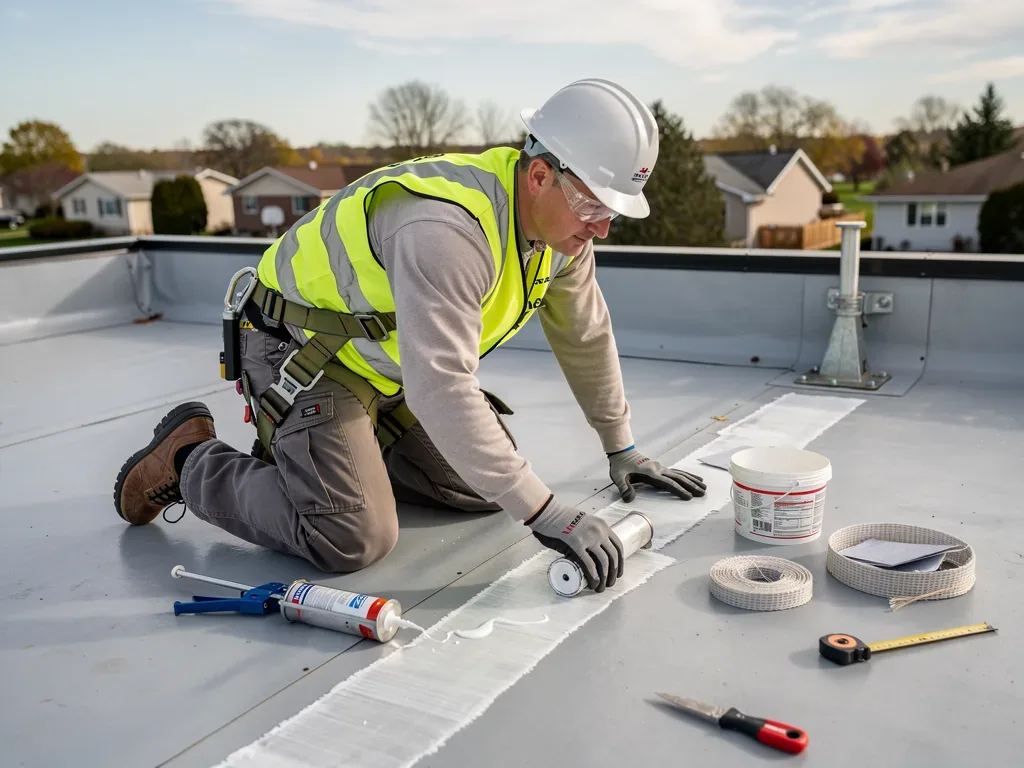
The patch matches the membrane. On heat-welded single plies, a patch with rounded corners is welded over the cleaned hole, extending beyond the damage on every side. On EPDM, a patch is bonded with the manufacturer's adhesive or tape after the surface is cleaned and primed. On modified bitumen, a patch of the same material is set in adhesive or torch-applied, with the granule surface removed where it bonds. On built-up roofs, damaged plies are cut out and replaced in sequence, with the surface flood coat renewed.
After the patch is applied, the edges are probed and the bond is tested. A photograph with a scale marks the finished repair, and the location is added to the roof plan. In a month or a season, a repeat photograph shows whether the patch held.
Contractor Damage and Open Penetrations
Other trades cause a large share of roof punctures simply by working up there. A cable installer drills through the membrane for a line, a mechanical contractor sets a unit on a curb and leaves a corner unsealed, a sign company bolts a bracket to the surface. Each opening is small and each is a leak path. After any such work, we recommend a walk with the contractor and a photograph of every opening before the crew leaves the roof.
A building on a busy route such as Caldwell Boulevard, where the city plan identifies commercial development, may see tenant improvements more often, and each one adds penetrations. The roof file lists them by number and date, which lets the owner trace an opening to the work that made it. When a puncture cannot be traced, the dated record at least shows when it first appeared.
Open penetrations are closed the same day they are found. Temporary closure with a boot, patch, or sealant is acceptable overnight, with a follow-up date for permanent flashing. Seam damage near a puncture, such as an adjacent open lap, is repaired in the same visit as in a seam failure repair.
Roofs With Heavy Equipment Traffic
In the east quadrant, Gateway district and Garrity corridor commercial activity shares the area with light and heavy industrial uses. Buildings in that mix can carry mechanical equipment, and their roofs may see regular service visits. Our reports on buildings in the Gateway district and along Garrity Boulevard record equipment locations and service routes as found, since the plan does not describe the roofs themselves. A commercial roof repair that includes walk pads can cost less than repeated patching.
Prevention Through Maintenance
A preventive maintenance visit finds small cuts before water does. We look at the walk routes, check the pads, probe the patches, and clear debris that can scratch the surface. The visit is documented, with photographs at the same positions as before. Any new penetration since the last visit, such as a cable or a vent, is flashed and logged. Contractors who work on the roof are asked to register their visits so the owner knows who opened what, and a flashing repair at a new penetration follows the same record.
Questions
How is a small puncture found on a large roof?
By walking the traffic routes and probing the surface, then scanning for moisture. Most punctures sit near equipment, hatches, and penetrations.
Is a patch enough after a puncture?
If the insulation under it is dry, yes. If it is wet, the insulation must be replaced first, or the patch will trap moisture.
What is a walkway pad?
A protective strip of membrane or pad material placed along a service route. It takes the foot traffic so the roof surface does not.
Can hail or debris cause the same damage as foot traffic?
They cause different patterns. Impact leaves bruised or split spots, while traffic leaves worn paths.
How do you keep contractors from damaging the roof?
A roof access log and walk pads on service routes help. The owner knows who was on the roof, and the pads take the wear.
Does a membrane puncture affect a warranty?
It can, depending on the terms. The warranty paperwork should be checked, and the dated record of the damage and repair supports the owner's position.