
Property Types We Roof
Aircraft Hangar Roofing in Nampa, ID
Roof repair, retrofit and replacement for aircraft hangars and aviation buildings near Nampa, ID, covering long spans, door headers and fall protection.
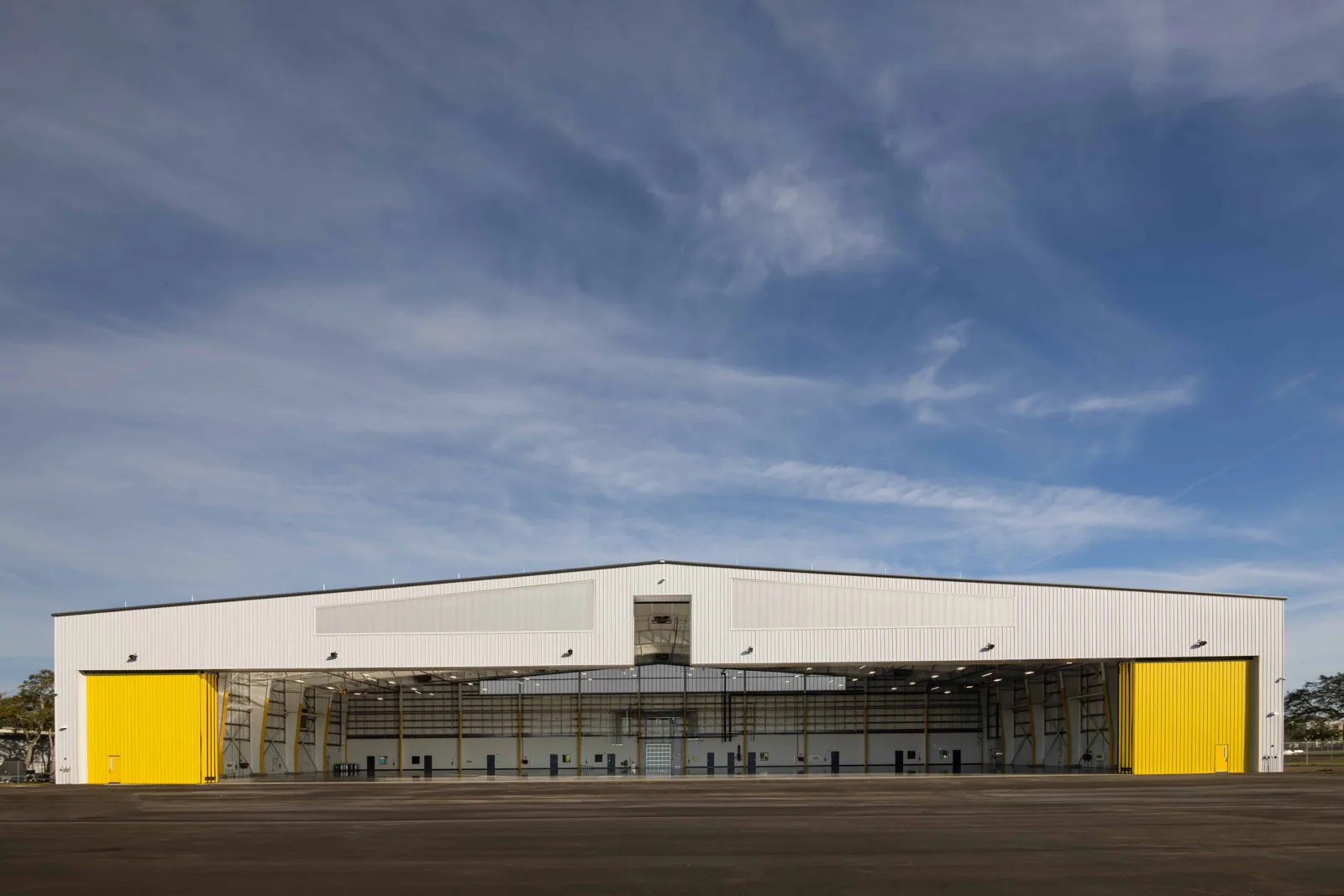
Aircraft Hangar Roofing
The first measurement on a hangar roof is the span, because the span decides what can be done to it. A hangar with a wide clear opening has few interior columns, a deck carried on long members, and a door header that holds the whole front wall together. Any added weight, any new opening and any change of roof system has to be checked against that structure before a scope is written, and the check is dated in the record.
Aviation buildings near Nampa, ID run from single-aircraft storage hangars to larger maintenance shops with offices, parts rooms and a hangar bay under one roof line. The roof types vary just as widely: standing seam metal, exposed-fastener panels, single-ply membrane over a metal deck and older built-up sections over the office wing. The inspection starts by naming each one.

Long Spans and Added Weight
Snow design in Nampa starts at 20 psf on the ground, with roofs required to carry at least 25 psf uniform. On a clear-span hangar those numbers matter because the framing was sized for a particular roof assembly, and a recover that adds insulation, cover board and a second membrane adds dead load. Before we propose a recover, the structural drawings are requested, and where they are missing, a licensed engineer's review is made a condition of the scope. We do not guess at capacity.
When the existing roof is metal, a metal roof retrofit over the old panels is sometimes lighter than a membrane recover and avoids a tear-off over aircraft. A standing seam panel system is one option, described in standing seam metal roofing, with clips that allow thermal movement along the length of the panel. The retrofit framing, the new fasteners and the attachment to the structure are shown on a detail drawing in the file.
Work Over Aircraft and Hangar Floors
A roof opened above a parked aircraft has to be dry-in-ready every evening. The file records how the deck is protected, who is responsible for sweeping debris, where fasteners could fall and what is hung under the roof to catch them. Hot work is a separate issue: torches, heat welders and some adhesives need fire watch and approval from whoever manages the hangar, so cold-applied and mechanically attached methods are preferred wherever the roof allows them.
Where aircraft cannot be moved, the interior receives protective sheeting and the work proceeds in sections, each section sealed before the next is opened. Fuel storage, fire suppression piping and hanging heaters are located first, and the roof plan shows any penetration that lines up with one.
Water testing is part of the closeout on these roofs. After the flashing at the header and the penetrations is finished, a controlled water test or a post-rain inspection confirms that the interior stays dry before the protective sheeting comes down. The result, with the date and weather, goes into the file with the photographs. A hangar manager who has parked an aircraft under a new roof should not discover the first leak with the aircraft in place.
Door Headers, Edges and Wind
The hangar door header is the most exposed detail on the building. Wind loads the door, the door loads the header, and the header moves, so the roof edge and the flashing above it see the largest movement on the structure. The 115 mph ultimate wind speed in the city's criteria is the load behind this edge, and a gust that lifts a panel or a trim piece there calls for a hard look at the attachment, beyond the cosmetic damage. Our wind damage repair record lists missing fasteners, bent trim, panel shifts and any gap that has opened at the header.
The edge metal is restored with fasteners spaced and sized to the edge detail, and the attachment is photographed. If the door track or the header sealant is the real source of water, the record says so and refers the item to whoever maintains the door.
Fall protection deserves its own entry on a high hangar roof. The eave is often at a height that makes a fall serious, and the roof surface of a metal panel is slick when frosted. The plan lists the tie-off points, the guardrail or warning line at the edge, the ladder or lift used for access and the weather conditions in which the crew will not go up.
Insulation, Condensation and Coatings
Condensation under a hangar roof is often mistaken for a leak. A large metal roof cools quickly on a clear night, and warm air from heaters and recently landed aircraft meets it. Water forms on the underside of the panels and drips on the floor. We check the underside of the panels for rust at the fastener points, the insulation facing for staining and the roof surface for wet spots, so a condensation problem is not repaired as a leak.
If the panels are sound but weathered, a coating or a sealant program may extend service after fasteners are replaced. Where more insulation is wanted, the choice of insulation and cover board is checked against the structure and the energy code, since the 2018 commercial energy code is among Nampa's adopted codes.
Insulation moisture is checked by infrared scan on membrane sections and by underside observation on metal ones. A wet blanket of insulation above a heated hangar produces rust in the deck, so wet sections are mapped and replaced before the new covering goes on.
Aviation Buildings in the Treasure Valley
The Treasure Valley has active flying operations. Gowen Field in Boise, roughly 17 miles east of Nampa, is where the Air National Guard places the 124th Fighter Wing, and military hangars carry their own access and criteria requirements, which come up in work on military hangars and maintenance facilities and on an Air Force base. Civilian and general-aviation owners are not subject to base access rules, but the structural, fire and fall-protection concerns are the same. A hangar owner in Caldwell or Meridian receives the same inspection record as one in Nampa.
Aviation owners who also run shop buildings beside the hangar will find the shop roof closer to flex industrial roofing, with rooftop equipment, dock-style doors and a mix of metal and membrane sections that are inspected as a set.
Closeout and Records
The closeout file includes the engineer's letter where one was needed, the detail drawings, photographs of the header and edge, fastener schedules, product data and the follow-up dates. For tenants who lease hangar space, the owner receives a short statement of what was done, which sections were affected and which items remain open.
Questions
Does a recover add too much weight to a hangar roof?
It can. The structural drawings or an engineer's review settle it before a recover is priced, because long-span framing is sized for a particular assembly and added insulation and membrane add load.
How is a roof opened over an aircraft?
In small sections that are sealed each evening. Protective sheeting, debris control and fastener catch measures are written into the scope, and the hangar manager approves the sequence.
Why does the hangar drip when the roof tests dry?
Condensation on the underside of metal panels produces drips without any opening. Underside inspection, fastener rust and insulation staining distinguish it from a leak.
Can hot work be avoided?
Often. Cold-applied adhesives, mechanically attached systems and screw-fastened metal avoid torches. Where heat welding is unavoidable, a fire watch and written approval come first.
Who decides if the door header is the source?
The inspection record separates roof edge defects from door and header defects. Items outside the roof are referred to whoever maintains the door and are tracked with a date.