Service Areas
Commercial Roofing in Star, ID
Commercial roof inspection, repair and replacement for Star, ID, a growing town with planned corridors along SH-16 and U.S. 20/26 and a photo-based roof record.
Star
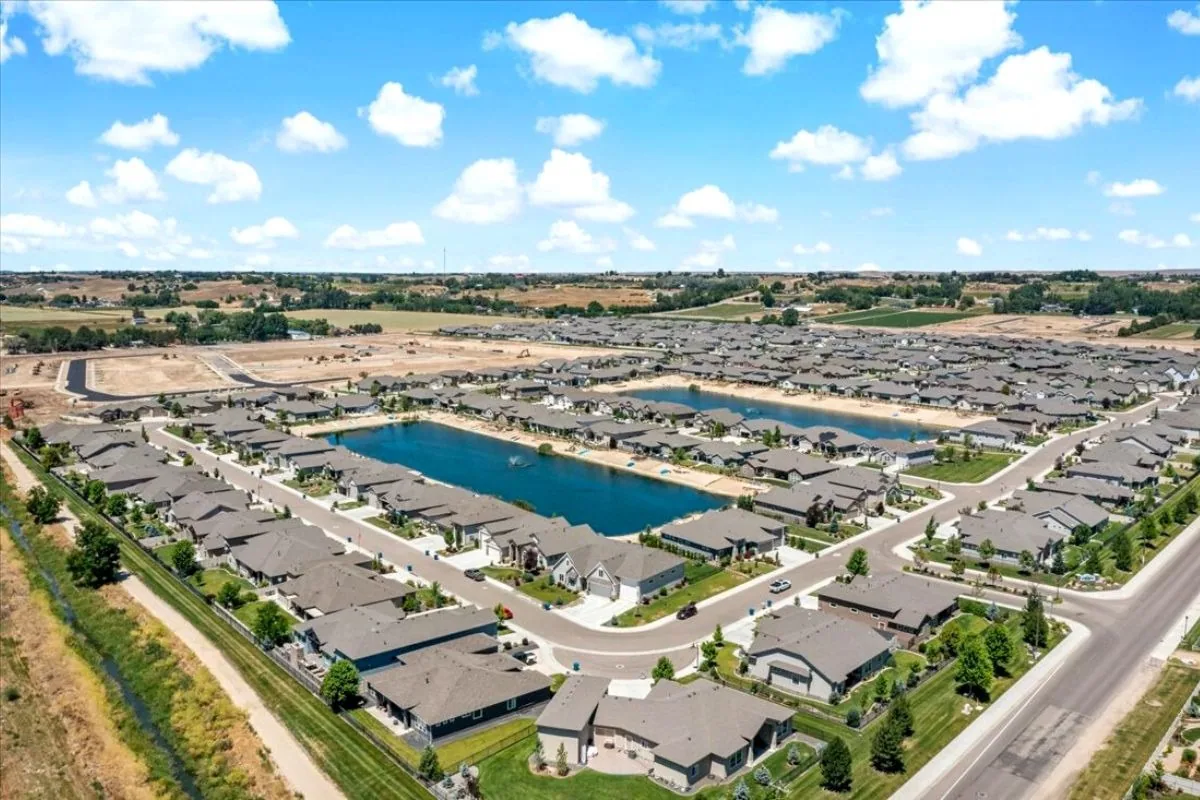
Star's 2023 economic-corridors access plan maps the roadway connections and regional routes that will carry commercial growth, and it names the future SH-16 and U.S. 20/26 corridors among them. A town planning its commercial corridors has two kinds of roof questions: the ones on buildings already standing, and the ones on buildings that will be roofed in the next few seasons. Star's center is about 9.1 miles northeast of Nampa's, so a crew reaches either kind of job without a long haul.
We begin with the record. For a standing building, that means a walk, a photo sequence from fixed positions, and a written condition report. For a building about to be roofed, it means reviewing the specified assembly and the submittals before material is ordered, so the owner has a baseline to measure the finished work against.
Corridors planned for regional routes bring trucks, deliveries and long-term traffic that change a building's surroundings. Access for a lift or a material truck may be easy today and constrained in two years, and we confirm access with the owner before every project so the schedule reflects how the site works at that time.
Roofs on New Construction
A new roof is not free from defects. Seams get welded in the cold, flashings are set before a wall finishes settling, and drains are installed a half inch high. Many of those faults show up in the first winter, when meltwater tests the slope. An independent inspection before the owner accepts the roof catches them while the installer is still obliged to fix them, and the photographs go into the file with the date.
We check the assembly against the permit drawings: insulation thickness, cover board, fastener pattern, membrane thickness and the details at curbs and edges. Where the drawings call for a cover board or tapered insulation, the walk confirms that it is present and drains correctly. If the closeout paperwork is missing, we list what is needed before the warranty period begins.
Warranty paperwork deserves a close read at this stage. Many manufacturer warranties start on the date of final inspection and require specific details at seams and flashings. A defect discovered after handover may be excluded if the installer's records are incomplete, so our warranty management work tracks the dates, the required notices and the maintenance the terms call for. The owner gets a calendar of obligations alongside the roof plan.
Growth Plans and Roof Timing
Star adopted its comprehensive plan in 2020 as its long-range growth guide. A plan like that can mean neighbors are coming: more construction, more traffic and more activity next to an existing building. We photograph an existing roof before nearby construction starts, so that any later damage from debris, dust or equipment can be tied to a date.
Owners planning an expansion also face a roofing decision at the joint. A new addition meets an older roof, and the transition flashing has to cover two different assemblies that move at different rates. We detail that joint with a termination that can flex, and we photograph it before it is covered. A well-recorded joint is much easier to maintain, since the next crew can see how it was built.
Utility and equipment coordination follow the same pattern. Solar installers, HVAC contractors and telecommunications crews all ask for roof access, and each visit risks punctures and loose flashings. A sign-in sheet at the roof hatch and a photograph of the area before and after each visit turn a damage dispute into a short conversation. If a new rack or curb is planned, we flash it once and mark it on the plan.
Climate Numbers From Nampa
The closest published figures come from Nampa's design criteria: 20 psf for ground snow, 25 psf or more for roof design loads and 115 mph as the ultimate wind speed. They describe Nampa, not any one Star building. A structural engineer's drawings for the building decide the actual load, and our role is to see that the roof as built matches them.
The Treasure Valley's wet season runs from November through May, and over 75 percent of annual precipitation arrives in those months. On any roof with open exposure, wind loads the perimeter first, so edge metal, parapet height and fastener spacing all matter. We check each in the inspection and record the results on the roof plan before proposing changes.
Hail and wind damage claims call for a different record. Photographs taken soon after a storm, with a date and a scale reference, show impact marks, torn seams and displaced edge metal, and the claim documentation we prepare ties each mark to a roof section. An insurer reads a file like that faster than a loose set of pictures.
Maintenance Versus Replacement
A young roof usually needs maintenance, not replacement. Preventive maintenance clears drains, reseals pipe boots, tightens fasteners at edge metal and replaces failed sealant before water gets in. An annual visit in autumn, before the wet season, keeps the roof's early problems small and the file complete.
When a roof has aged or been damaged, the choice moves to repair, recover or tear-off, and moisture testing decides which applies. Cost drivers are area, insulation depth, the number of penetrations, access and the schedule, and the scope states each one. A new owner who has no history for a building can have a condition report prepared as the starting point for the file.
Small-town and growing-town owners alike benefit from a budget horizon. A roof assessed today with an estimated remaining service life lets the owner place replacement in a future year, set aside funds and avoid an emergency decision in January. We express the estimate as a range and show the readings behind it.
Closeout File and Next Visit
Questions
Should a brand-new roof be inspected before the owner accepts it?
A walk at handover is a sound step. It checks the roof against the permitted drawings and the product data, and any fault found goes to the installer for correction while the contractor is still on the hook.
How do you handle the joint between an addition and an older roof?
We detail it as a movement joint, with flashing that can flex and a termination that stays sealed. The joint is photographed before it is covered and entered in the file.
What does Star's corridor plan mean for a building owner?
The plan shows where roadway connections and commercial activity are expected. For a roof, it means neighboring construction is likely, so a photo record taken before work begins protects the owner.
When is the best month for a membrane repair?
The dry warm months suit it best, since adhesives cure and seams weld cleanly. Winter repairs are limited to what keeps water out until the weather lets the permanent work proceed.
What paperwork should the owner keep after a roof is installed?
Keep the permit, the product data, the warranty terms, the test results and the photographs. We deliver them in a single file and note the date of the next scheduled inspection.