Roofing Manufacturers
Versico Roofing Systems in Nampa, ID
Versico single-ply roof systems in Nampa, ID: how we check attachment, wind resistance, drainage, and seams on TPO, EPDM, and PVC roofs, with a written record.
Versico Roofing Systems
The attachment method is the first line in a single-ply specification and the last thing a person can see from the ladder. Whether a membrane is fastened through the sheet, bonded to the substrate with adhesive, or held down by stone ballast decides how it responds to wind, how it can be repaired, and what happens when it gets wet. Versico offers single-ply membranes in the TPO, EPDM and PVC families with roof insulation, and a roof from that maker can use any of the three attachment methods.
Owners in Nampa, ID can have single-ply roofs of these types inspected, repaired, restored and maintained. The first entry on the file identifies the attachment, because that single fact steers the repair method, the scope of a recover, and the checks that belong in every seasonal walk. The rest of the record is built on top of it.
Attachment Methods
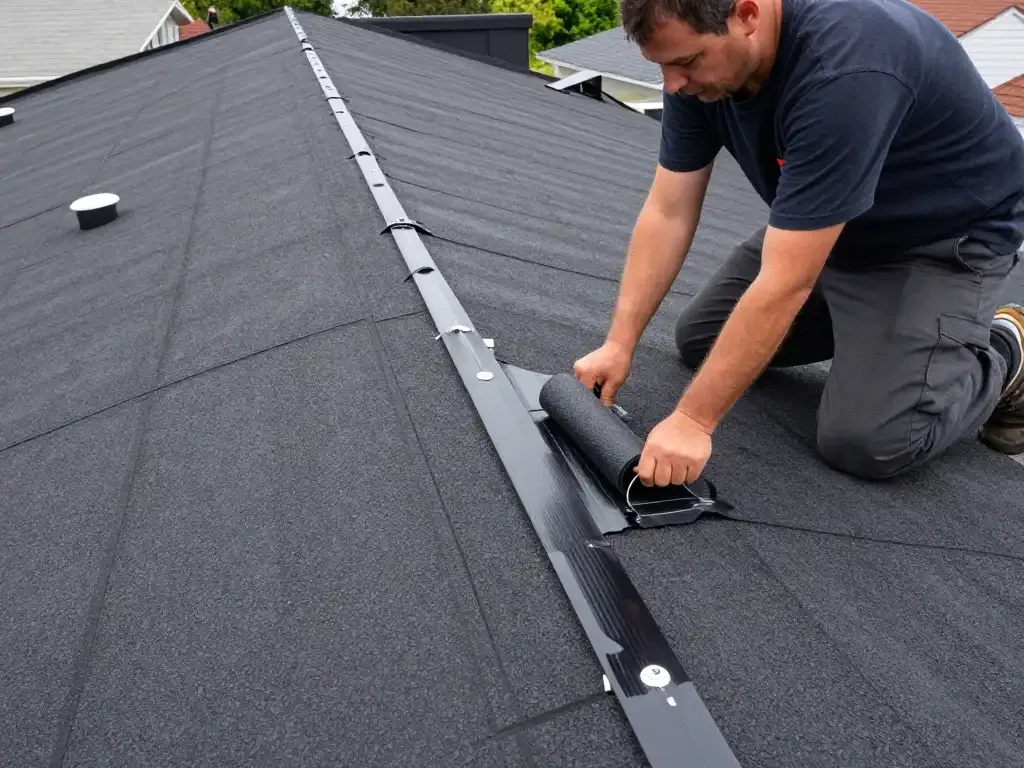
A mechanically attached sheet is secured with fasteners and plates placed along the seams or across the field. A fully adhered sheet is bonded over its whole area to the substrate. A ballasted sheet lies loose under a layer of stone or pavers. Each method has its own signs of trouble: fastener plates that back out and bulge the sheet, adhesive that lets go at an edge, stone that has migrated and exposed a seam.
The identification comes from the walk and, where necessary, from a core cut. We read the fastening pattern, probe the sheet for loose zones, and record the result by roof section. The repair that follows is matched to the attachment: a fastener reset on one, an adhesive reattachment on another, and a ballast redistribution on the third.
Ballasted roofs carry an added concern, which is weight. Stone adds load to the structure, and the city's roof design criteria set a 25 pound per square foot minimum for uniform roof loads. Before any repair adds material, the existing load is considered, and the report notes when a structural review is needed instead of guessing at capacity.
Wind and Uplift Checks
The city uses a 115 mph ultimate wind speed and maps no special wind region or wind-borne-debris zone. Even without a special region, wind moves single-ply sheets, and the corners and edges of a roof see the highest loads. On a mechanically attached roof, the perimeter and corner zones usually carry closer fastener spacing for that reason, and the walk checks that the pattern is intact.
After a wind event, the check is quick and specific: edges, corners, the area near rooftop units, and any section that was billowing. Lifted edge metal is reset, and loose seams are re-welded or re-bonded. The photograph set shows the condition before the repair and the finished edge, so a wind damage record exists if an insurer asks for one.
Seams are checked in the same pass. A welded or taped seam that has opened at a corner can let wind get under the sheet, and the opening grows each time a gust lifts it. The repair closes the seam, tests it, and records the condition of the adjacent seams, so the next visit can confirm the opening has not spread.
Fasteners, Plates and Deck
A fastener that has backed out leaves a bump in the sheet and a point of wear every time the membrane moves. Over time the plate can cut through, and the hole becomes a leak. The walk checks the sheet for ridges along fastener lines, and a pull test on a few fasteners shows whether the deck still holds them.
The deck is part of the answer. Corroded steel decking, a split wood panel or a joint that has moved can all reduce holding strength. Until the roof is open, the deck is listed in the report as not seen, and a recover plan states that limit.
Where new equipment is mounted after installation, the fastening around it is reviewed. Added penetrations should be flashed with prefabricated parts, and curbs that were set on the membrane need supports that carry load to the deck. The record lists each addition by date, so the roof's later history is traceable.
Insulation Slope and Ponding
Tapered insulation under the membrane gives a roof its slope to the drains, and a roof with sound taper should shed water within a day or two after rain. Water that stays longer marks a low spot: a deflected deck, compressed insulation, or a drain that sits above the surrounding surface. The walk marks each pond on the plan and records its depth and extent.
Repair choices follow the cause. A shallow pond on a welded system can be left under watch. A deep one may need insulation replacement or an added drain, and the report explains the options in the form of a ponding repair scope. Photographs taken after rain show the extent of the pond, and the same positions are used in later years.
Winter adds a second reason to care about slope. Winter carries most of the valley's precipitation, and standing water that freezes puts load and movement on seams. A pond that was minor in August may be a seam risk in January, so the autumn walk reviews every ponded area marked in the earlier record.
Interchange Corridors Along I-84
Nampa's plans list I-84 access overpasses at Franklin Avenue, Garrity Boulevard, Karcher Road and Robinson-Star Road, and name Robinson Road among the routes serving the east quadrant. A building's use, not its street, sets what its roof needs, so a retail center and a light industrial building on the same corridor are specified separately.
For a building along the Robinson Road corridor or the Franklin Boulevard corridor, the walk follows the order used on every roof, and the report states the attachment method, seam type and drainage pattern for each roof section. That keeps the record comparable when a single owner holds buildings in more than one corridor.
Warranty Terms and Comparison
A manufacturer warranty depends on the document issued for the roof. We read the terms, log the maintenance visits they ask for, and keep the installation evidence in the closeout file. If an owner is deciding between systems, the same record lets the existing assembly be compared with Carlisle SynTec or GAF alternatives on the basis of what the roof needs.
Questions
How can I tell whether my single-ply roof is fastened or adhered?
A fastened sheet shows rows of plates under the membrane and may ripple between them. An adhered sheet lies flat and sounds solid underfoot. A core cut settles it.
What do ridges along a single-ply roof mean?
Ridges often follow fastener lines, insulation board edges or a deck joint. They are watched for cracking at the seam and checked for backed-out fasteners.
Should ballast be put back after a repair?
Yes. Stone is returned to the pattern the roof was designed for, and bare areas are covered. Roofs with displaced ballast are checked for exposed seams at the next visit.
How long can water stand on a roof before it is a problem?
Water that remains after a day or two points to a low spot. The cause is traced, and the response ranges from monitoring to added drains or insulation replacement.
Does wind damage always show as a hole?
No. Lifted edges, loosened seams and stretched fastener holes can all appear without a visible opening. The post-event walk checks each of them.